The Philadelphia 76ers pulled off one of the biggest off-season moves in recent memory. They signed LeBron James, adding him to a group that already includes Joel Embiid, Tyrese Maxey, Jaylen Brown, and VJ Edgecombe. On paper, the roster looks like a championship contender.
Yet basketball rarely works out perfectly on paper. Before James even steps onto the court for a real game, one specific weakness stands out. That weakness involves shooting from long range, and it could shape the entire season.
A crowded lineup could alter LeBron’s role
James could serve as the team’s primary playmaker this season, but that role has not been formally announced. The surrounding roster includes several established scorers who will need opportunities with the ball. James may therefore continue spending more time away from the ball than he did earlier in his career.
That transition was already underway in 2025-26. James averaged only 3.8 minutes of possession per game, his lowest figure in the NBA’s 13-season tracking era, while 53.9% of his made field goals were assisted. However, he converted only 32.8% of his catch-and-shoot 3-point attempts.
Philadelphia must determine how often James initiates the offense and how often he plays away from the ball. Embiid, Maxey, Brown, and Edgecombe will also require defined offensive roles. Finding the right balance will be an important tactical task for Nick Nurse and his staff.
Philadelphia already struggled shooting from deep
Before James arrived, the Sixers were already below the NBA average from long range. In 2025-26, the team made 12.3 3-pointers on 35.3 attempts per game and shot 34.9%. The league-wide average was 36.0%.
That context matters when evaluating the new roster. James shot 31.7% from the 3-point range last season, so his arrival does not automatically resolve Philadelphia’s perimeter-shooting concerns. However, the team’s other additions and departures must also be considered.
The concern is therefore broader than James alone. Philadelphia must create enough spacing around Embiid, Maxey, Brown, and James while identifying which lineups work best. Until the new group plays together, the severity of the shooting problem remains uncertain.
His shooting numbers reveal a real concern
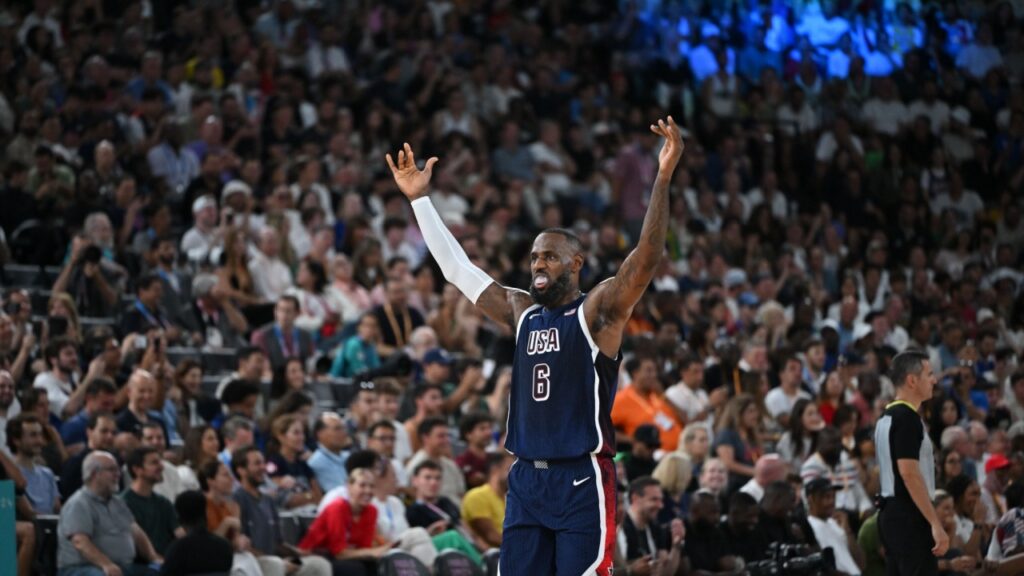
Last season, James made 31.7% of his 3-point attempts. NBA.com identified that as the fourth-worst mark of his career and his lowest percentage in 10 seasons. He also made 32.8% of his catch-and-shoot 3s.
James still provided considerable offensive value elsewhere on the floor. He averaged 7.2 assists and 6.1 rebounds per game, led the NBA with 5.7 fast-break points per game, and shot 64.1% in the paint. Those strengths can continue to influence Philadelphia’s offense.
Defenses may give James additional space beyond the arc if his percentage remains low. That approach could narrow driving lanes for Embiid, Maxey, and the team’s other scorers during half-court possessions. Improved shooting, cutting and screening would help Philadelphia preserve its spacing.
Replacing two steady shooters raises the stakes
Philadelphia lost 2 rotation wings this offseason. Paul George was traded to Boston for Jaylen Brown, while Kelly Oubre Jr. joined Indiana. George shot 39.2% from 3-point range in 37 games during the 2025-26 season.
Oubre shot 36.0% from deep in 50 games, while George made 2.7 3-pointers per game on 6.9 attempts. George provided the stronger combination of accuracy and volume. Their departures nevertheless changed Philadelphia’s perimeter-shooting profile.
James does not directly replace both players because the Sixers also added Brown, Anfernee Simons, Dean Wade, and other players. Shooting and wing responsibilities will be distributed across the rebuilt roster. James’ 31.7% mark remains relevant, but it is only one part of the team’s overall shooting outlook.
Fun fact: James had missed a total of 14,476 field goals in his illustrious NBA career. That left him just five shy of Kobe Bryant’s all-time record of 14,481 missed field-goal attempts.
Off-ball movement requires a new rhythm
Playing without the ball demands cutting, screening, relocating, and maintaining proper spacing. James spent less time possessing the ball in 2025-26 than in any other season of the NBA’s 13-year tracking era. He was also assisted on a career-high 53.9% of his field goals.
The coming season, therefore, does not require him to reverse his playing style entirely. Instead, Philadelphia may ask him to continue an off-ball transition that began during his final season with the Lakers. His catch-and-shoot accuracy will be important if he receives more stationary perimeter opportunities.
His teammates will also need to learn where and when he prefers to receive the ball. Maxey, Brown, Edgecombe, and Embiid already have established offensive responsibilities. Developing effective combinations may take time during preseason and the opening portion of the season.
Defenses will test his weakest tendency
Opposing defenses are likely to test James’ perimeter shot after he made 31.7% of his 3s last season. Defenders may give him additional space until he proves he can consistently punish that approach. The precise coverage will vary according to the matchup and lineup.
That strategy is not guaranteed to succeed because James remains an effective passer and interior scorer. He shot 64.1% in the paint in 2025-26 and continued creating opportunities for teammates. Philadelphia can use those strengths to counter defenses that sag away from him.
The central question involves shot quality rather than whether James should take every open 3. He and the Sixers must balance perimeter attempts with drives, cuts, screens, and playmaking opportunities. His 31.7% season makes that decision worth monitoring.
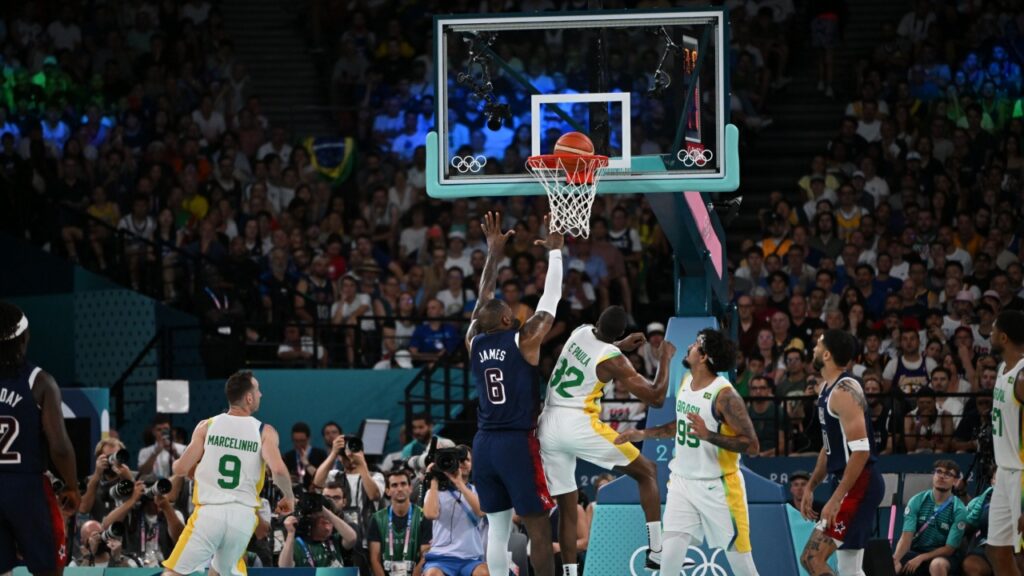
Coaching adjustments could ease the transition
Head coach Nick Nurse can build lineups and actions around James’ passing, transition scoring, and interior finishing. Philadelphia does not need to rely on a high volume of standstill 3-point attempts from him. The priority will be creating efficient opportunities for the entire lineup.
James could attack closeouts, screen for teammates, or facilitate from different areas of the floor. Those approaches would use his versatility without making perimeter shooting his only off-ball responsibility. The coaching staff can evaluate those options before regular-season games begin.
Philadelphia’s preseason schedule begins in October, giving the team time to test different combinations. The roster includes several new rotation players who must learn Nurse’s system and one another’s tendencies. How quickly the group establishes effective roles will matter.
Championship hopes hinge on this fix
The 76ers enter the 2026-27 season among the leading championship contenders. After James signed, DraftKings listed Philadelphia at +900, tied for the third-shortest championship odds. Talent alone, however, does not guarantee postseason success.
Stronger 3-point shooting from James would improve Philadelphia’s spacing, but it is not the only factor shaping the team’s ceiling. Embiid’s availability, lineup chemistry, defense, and the distribution of offensive roles will also matter. The season cannot be reduced to one shooting statistic.
James’ early games will show whether his 2025-26 shooting decline continues. They will also reveal how Nurse uses Maxey, Brown, Edgecombe, Embiid, and James together. That broader lineup fit will define the experiment more accurately than James’ percentage alone.
Little-known fact: James is the only player in NBA history with at least 30k points, 10k rebounds, and 10k assists.
TL;DR
- LeBron James has joined a talent-heavy 76ers roster for the 2026-27 season.
- Philadelphia shot 34.9% from the 3-point range in 2025-26.
- The Sixers lost Paul George and Kelly Oubre Jr., but also added Jaylen Brown and other perimeter players.
- He replaces 2 shooters who performed much better from range.
- Coaching adjustments and shot selection could determine team success.
If you liked this story, don’t forget to follow us for more exclusive content.
This article was made with AI assistance and human editing.
If you liked this, you might also like: