
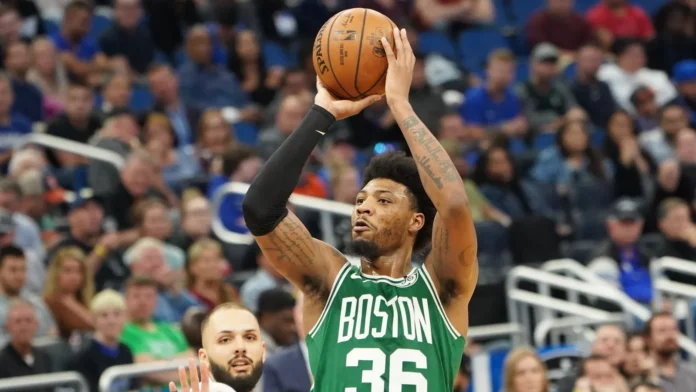
The NBA’s three-point revolution didn’t just change how teams score; it reshaped the entire identity of modern basketball.
Over four decades, the three-pointer went from a novelty to the centerpiece of nearly every offensive system in the league. Today’s players shoot more threes than ever, analytics drive decision-making, and spacing has become the heartbeat of every successful scheme.
This shift has created faster games, bigger scoring nights, and new types of stars built for long-range dominance. From the pioneers of the 1980s to today’s all-time leaders, the journey of the three-pointer tells the story of a league transformed.
Let’s take a closer look.
The early years: Was the three-pointer really taken seriously at first?
The three-point line entered the NBA in 1979, but players and coaches didn’t see it as a real weapon for years.
At the start, most teams viewed the three as a gimmick borrowed from the ABA, not a core part of NBA offense. The average team attempted fewer than three threes per game in the early 1980s, and most coaches discouraged players from taking them at all.
Even early stars rarely relied on it. Players like Magic Johnson and Larry Bird used threes situationally rather than strategically.
While Bird showed flashes of long-range mastery, league-wide volume barely moved, and defenses treated the arc as an afterthought.

What triggered the shift in the 1990s?
The 1990s pushed the three-pointer closer to legitimacy thanks to specialized shooters and evolving offensive spacing.
Sharp-shooting role players, like Reggie Miller, Glen Rice, and Steve Kerr, showed how a well-timed three could swing momentum instantly. Their success forced defenses to stretch farther than ever before.
A temporary rule change accelerated the rise even more. The NBA shortened the three-point line from 1994 to 1997, leading to a spike in attempts and conversions. Coaches gained a new appreciation for floor spacing, and teams began designing sets specifically to generate open threes.
How did analytics reshape everything?
The analytics movement of the mid-2000s cemented the three-pointer as the most efficient shot in basketball.
Teams realized that three points on a single possession, combined with higher expected points per shot, outperformed long twos by a wide margin. Organizations like the Houston Rockets, Dallas Mavericks, and San Antonio Spurs began experimenting with data-driven spacing and pace.
Front offices built rosters around mathematics, not tradition. Executives embraced the idea that a good three was better than a contested midrange jumper, regardless of narrative. This shift paved the way for a league driven by efficiency charts, shot profiles, and new offensive principles.
How did Steph Curry accelerate the three-point revolution?
Steph Curry became the defining force of modern long-range shooting and pushed the revolution into overdrive.
His ability to hit threes off the dribble, from deep distances, and under intense pressure broke every traditional rule of shot selection. Curry’s style didn’t just increase volume; it changed what coaches believed was possible.
The Golden State Warriors built a dynasty around this philosophy. Their motion-heavy, spacing-first system weaponized shooting gravity and forced defenses into impossible decisions. As the Warriors won three championships in four years, the rest of the league raced to copy their blueprint.

How did the coaching strategy evolve with the boom?
Modern coaching places the three-pointer at the center of offensive design.
Teams prioritize spacing, drive-and-kick actions, and five-out formations to create open looks from beyond the arc. Big men who once lived in the paint now step out to stretch defenses and keep lanes free for guards.
Defensive strategy changed just as dramatically. Coaches deploy switching schemes, closeouts, and perimeter-heavy matchups to handle high-volume shooting attacks. Stopping the three has become as important as protecting the rim, forcing defenders to guard more ground than ever.
What types of players thrive in today’s NBA?
The three-point era created new prototypes of NBA success.
Stretch-fours and stretch-fives became essential because they pull defenders away from the paint. Guards with deep range and quick releases can dictate tempo and spacing instantly.
Role players benefit too. “3-and-D” wings; those who hit open threes and guard multiple positions became some of the league’s most valuable contributors. Teams now chase versatile shooters who fit into fast-paced, perimeter-focused lineups.
How did the three-pointer impact scoring and pace?
NBA scoring rose sharply as three-point volume exploded.
Teams discovered they could build large leads quickly or erase deficits in minutes with efficient long-range shooting. The result is a faster, higher-scoring league with more possessions and more offense.
Pace increased as well alongside scoring. Transition threes became a staple of modern game flow, especially for teams built around versatile ball-handlers. With more spacing and quicker shots, games feel faster, lighter, and more explosive than previous eras.

Has the revolution changed the midrange game?
The midrange shot declined but didn’t disappear.
While analytics reduced its overall usage, elite players like Kevin Durant, Kawhi Leonard, and DeMar DeRozan still use it effectively. Coaches recognize that in playoff settings, tough midrange jumpers often become necessary when defenses tighten.
The three-pointer simply reshaped priorities. Teams now treat midrange attempts as specialized tools rather than default shots. The best scorers mix all levels: three-pointers, rim attacks, and midrange, to stay unpredictable.
Are fans and former players split on the new era?
Many fans love the excitement of long-range shooting, while some former players criticize the style shift.
Supporters enjoy quicker games, dramatic scoring swings, and the highlight-friendly nature of deep threes. Younger fans especially see the three-pointer as central to the modern identity of basketball.
Critics argue that the game became too perimeter-heavy. Some believe the emphasis on threes reduces physical play, post skills, and variety in offensive sets. Regardless of perspective, the revolution sparked one of the biggest debates in basketball culture.
What does the future of the three-pointer look like?
The three-pointer’s role is secure, but its evolution isn’t over.
Teams continue pushing range boundaries, with players routinely practicing from 30 feet and beyond. Youth basketball programs now train long-range shooting earlier than ever.
The next breakthrough may come from efficiency, not volume. As defenses adapt, teams will likely refine shot selection, cutting down on contested threes and maximizing high-quality attempts. Whatever direction it takes, the three-pointer will remain the centerpiece of the NBA’s offensive identity.
TL;DR
- The NBA introduced the three-pointer in 1979, but teams didn’t embrace it until decades later.
- Analytics cemented the three as the league’s most efficient weapon.
- Steph Curry and the Warriors accelerated the revolution to unprecedented levels.
- Modern offenses revolve around spacing, pace, and high-volume shooting.
- The three-pointer reshaped roster building, strategy, and the future of the sport.
Read More:
How G-League Development Shapes NBA Futures
The Evolution of NBA 3-and-D Play and Its Importance
How NBA Rule Changes Keep the Game Fast and Exciting
This article was made with AI assistance and human editing.