

The final hole separates champions from contenders in ways no other test can.
Golf rewards consistency across 72 holes, but the 18th hole carries disproportionate weight in shaping how players are remembered. From Augusta’s uphill dogleg to St Andrews’ iconic finish, closing holes amplify pressure like nowhere else on the course.
The combination of mental fatigue, physical exhaustion, and championship stakes creates a crucible where legends are forged. When you step onto that final tee with everything on the line, your legacy hangs in the balance with every swing.
Let’s explore why these moments matter so much.
The Intense Build-Up Effect
Closing holes magnifies stress in ways that earlier holes simply cannot.
After walking miles and making dozens of full swings, golfers arrive at the 18th tee mentally and physically depleted. The claustrophobic atmosphere of Masters Sunday creates an environment where even champions struggle to breathe normally under gallery scrutiny and mounting tension.
Four to five hours of decision-making drains cognitive resources, making it harder to commit to shots when it matters most. Your swing mechanics can falter when smaller control muscles lose their edge and fatigue clouds judgment completely.
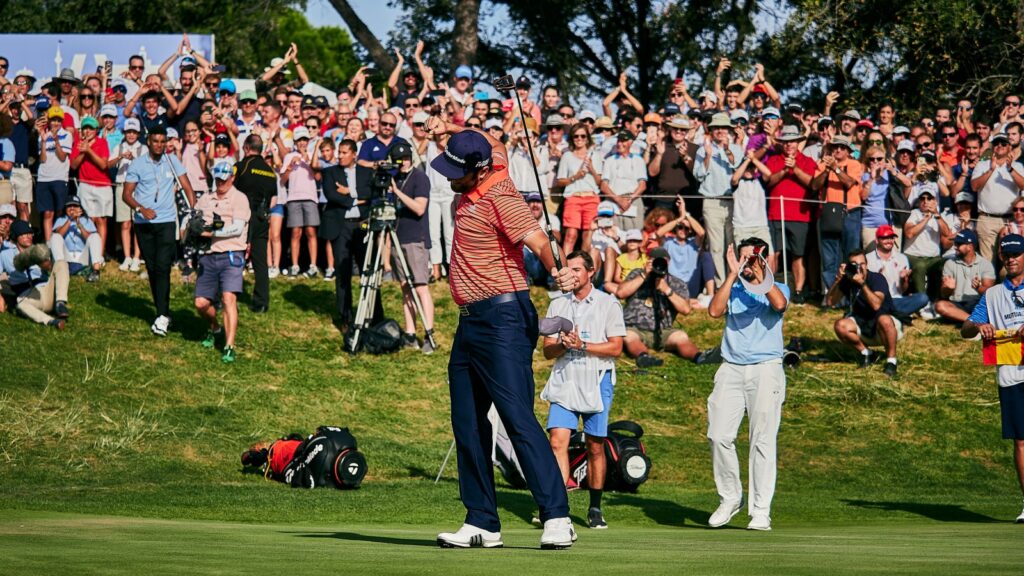
Tiger’s Transformative Moment
Woods cemented his place in history with a dominant closing performance in 1997.
Tiger Woods arrived at Augusta National as a phenomenon and left with his first major championship victory that shattered 27 tournament records simultaneously. At just 21 years old, he became the youngest Masters winner while posting a record score under incredible pressure.
His performance over the final 63 holes after a shaky start demonstrated championship composure under the brightest spotlight imaginable. Woods played those holes in 22 under par, showcasing dominance Augusta had never witnessed before.
The Golden Bear’s Finest Hour
Nicklaus proved age is just a number with his stunning 1986 Masters victory.
Jack Nicklaus entered the final round four shots behind the leaders, dismissed by many as a nostalgic presence. At 46 years old, he hadn’t won a major in six years and seemed destined for ceremonial status only.
Then he shot a back-nine 30 that defied logic and rewrote the narrative of athletic aging forever. His charge included an eagle at 15 and a birdie at 17 that sent Augusta into absolute pandemonium.
The Ultimate Test of Nerves
Augusta’s 18th hole consistently ranks among golf’s most demanding closing stretches.
The 465-yard uphill par 4 features a narrow chute of trees and massive bunkers guarding the dogleg right. Drives that drift too far right end up buried in pine straw with no clear path forward to the green.
The two-tiered green sits well above the fairway, creating blind approach shots that must clear front bunkers. Poor execution here has crushed championship dreams more times than any golfer cares to remember at this venue.

Where Champions Are Made
The 18th hole serves as golf’s ultimate proving ground for greatness.
History remembers players not just for winning tournaments but for how they finished under maximum championship pressure. A clutch birdie on the final hole can transform a solid career into legendary status overnight for any professional.
The ability to execute when exhausted and nervous separates true champions from talented players who never quite deliver. These moments become the stories fans retell for decades, cementing reputations that transcend simple victory statistics alone.
The Social Amplification Factor
Gallery presence and clubhouse visibility intensify pressure exponentially on the final hole.
Members and guests watching from the second-floor clubhouse porches create a fishbowl environment around the 18th tee. Fans lined deep on both fairway sides, studying every movement with binoculars and unwavering attention to detail.
Even without large crowds, the awareness that your round is ending creates an invisible gallery effect. Every swing feels more significant, and every poor result feels dramatically more embarrassing than it would elsewhere on the course.
Course Architecture’s Final Statement
Designers craft closing holes to create drama and test every skill in a golfer’s arsenal.
Augusta National’s 18th demands precision off the tee through a narrow, tree-lined chute with no margin for error. Strategic bunkers force decisions about aggressive lines versus safer routes that leave longer approach shots to elevated greens.
Water hazards and deep bunkers punish even slightly offline approaches on many championship closing holes worldwide. These architectural features ensure that players cannot coast to victory; instead, they must execute under maximum pressure.

Legacy Defining Moments
How players perform on closing holes often outweighs their overall tournament performance in collective memory.
Arnold Palmer’s double bogey on the 18th in 1961 cost him a second consecutive Masters title. That single hole failure haunted Palmer for years and changed tournament history when Gary Player won instead of him.
Conversely, clutch performances like Watson’s birdie to edge Nicklaus in 1977 become the defining images of careers. The final hole condenses four rounds of golf into one moment that fans remember decades after scorecards fade away.
TL;DR
- The 18th hole creates unique pressure through mental fatigue, physical exhaustion, and championship stakes combined.
- Tiger Woods announced his dominance with a record-setting performance culminating in a birdie on Augusta’s 18th.
- Jack Nicklaus at 46 proved age doesn’t limit greatness with his stunning final round charge in 1986.
- Closing holes separate champions from contenders through tests of nerves when exhaustion peaks and pressure maximizes.
- Legacy-defining moments on the 18th hole often outweigh overall tournament performance in how players are remembered.
Read More:
- The strategy elite golfers apply that amateurs overlook
- How pro golfers use mental tricks to sink impossible putts
- Golf swing adjustments that quietly revolutionize performance
This article was made with AI assistance and human editing.