The U.S. Department of Justice has launched a formal investigation into the NFL to determine if the league’s media distribution strategy violates federal antitrust laws.
This federal probe, which gained significant momentum following reports in the spring of 2026, focuses on whether the league’s shift toward streaming services and pay-walled platforms has created an unfair environment for consumers. With professional football moving more games behind subscription services like Amazon Prime, Netflix, and Peacock, government officials are questioning the legality of the league’s current broadcasting model.
As the league navigates this significant legal challenge, fans and broadcast partners alike are watching closely to see how the federal government might reshape the way America watches football.
Here is what we know about the investigation so far.
Why is the Justice Department investigating the NFL?
Federal investigators are specifically looking into potential anticompetitive practices that may harm consumers by driving up the cost of viewing games.
A government official familiar with the matter stated that the probe is centered on affordability for fans and creating an even playing field for providers. For decades, the NFL has operated under the Sports Broadcasting Act of 1961, which provides a limited antitrust exemption allowing the 32 teams to pool their broadcast rights and sell them as a single package to networks.
The Sports Broadcasting Act refers to “sponsored telecasting,” and courts have ruled in past cases that the Act does not extend to other media such as cable, satellite, and streaming. Public reporting says the DOJ is examining the NFL’s broadcast agreements, but the full scope of the probe is not public.
Little-known fact: The Sports Broadcasting Act of 1961 was originally passed after a federal judge ruled that the NFL’s collective television contract with CBS violated antitrust laws.
What is the role of the Sports Broadcasting Act?
The Sports Broadcasting Act of 1961 is the cornerstone of the NFL’s business model, but its protections may not extend to the modern digital landscape.
This legislation was intended to ensure that fans could watch their local teams on free television while allowing the league to maintain financial parity among its franchises. In recent years, legal experts and lawmakers have argued that the exemption should only apply to traditional “sponsored telecasting” on broadcast networks like CBS, NBC, and FOX.
Because streaming services like Amazon Prime Video and Netflix require monthly fees, they do not technically fit the historical definition of broadcast television. If the DOJ determines that these digital deals fall outside the scope of the 1961 Act, the NFL could lose its ability to negotiate these multi-billion dollar contracts collectively.
This would be a seismic shift for the league, as it could theoretically force individual teams to negotiate their own local or national TV deals, similar to how European soccer or some MLB regional networks operate.
How does the shift to streaming impact fans?
The increasing fragmentation of NFL broadcasts has led to a significant financial burden for the average American household.
The FCC said NFL games in 2025 aired on 10 different services, and some estimates put the cost of watching all games at more than $1,500.
While the NFL maintains that the vast majority of its games remain on free, over-the-air television, the federal government is focused on the growing portion that requires a paywall. The Justice Department is concerned that the league is leveraging its popularity to force consumers into a “pay-to-play” model that ignores the original intent of the antitrust exemption.
What has the NFL said in response?
The NFL said its media distribution model is the most “fan and broadcaster-friendly” in sports and entertainment, that over 87% of its games are on free broadcast television, and that all games are shown free in the local markets of the participating teams.
In an official statement following the news of the probe, the league noted that it remains the only major professional sports league in the U.S. that broadcasts every local game on free television for fans in those markets. The NFL and AP reported that the 2025 regular season averaged 18.7 million viewers per game, the second-highest regular-season average since audience records began in 1988.
League officials argue that by partnering with tech companies like Amazon and Google, they are reaching a younger, more tech-savvy demographic that has moved away from traditional cable. They contend that their distribution strategy is a necessary evolution in a changing media landscape.
Despite the investigation, the NFL has not yet received an official notification from the DOJ, and the league appears prepared to fight any legal challenge that threatens its current broadcasting framework.
What happens if the DOJ wins?
A successful challenge by the Justice Department could result in a total overhaul of how sports media rights are sold in the United States.
If the court agrees that the NFL’s streaming deals violate antitrust laws, the league might be forced to make more games available on free television or allow for more competition among providers. This could lead to a “de-bundling” of packages, where fans could potentially buy access to a single team or even a single game without a season-long subscription.
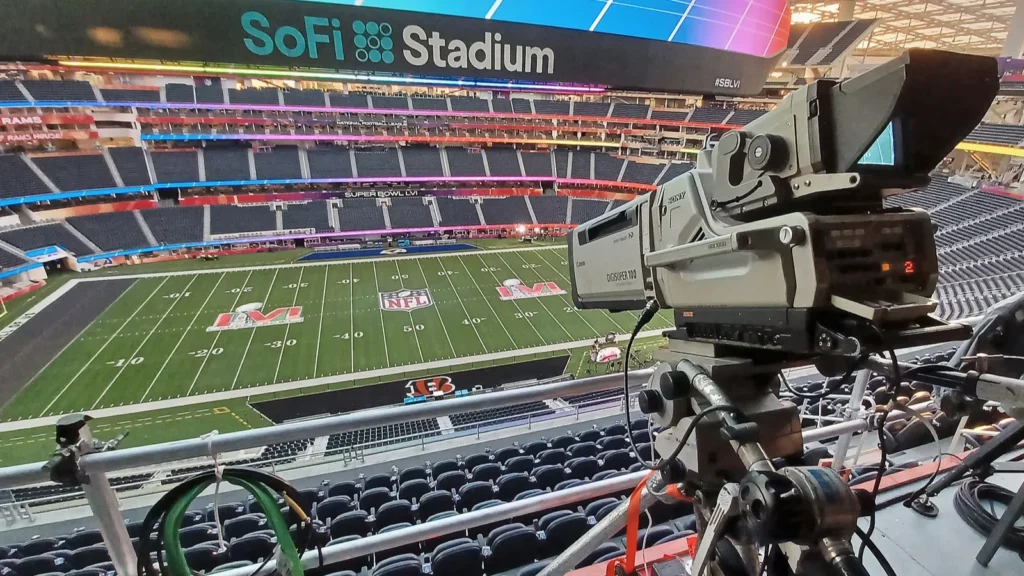
Furthermore, a loss of antitrust immunity would threaten the revenue-sharing model that has made the NFL the most profitable league in the world. The league currently generates roughly $11 billion annually from media rights, which is split equally among the 32 teams. Without the ability to negotiate collectively, big-market teams like the Dallas Cowboys or New York Giants would likely command significantly higher rights fees than small-market teams, potentially destroying the competitive balance that defines the league.
Fun fact: The NFL’s current media rights deals are worth a combined total of over $113 billion and are scheduled to run through the 2033 season.
TL;DR
- The U.S. Department of Justice is investigating the NFL for potential anticompetitive practices regarding its media and streaming deals.
- The investigation focuses on whether moving games to paid streaming platforms like Amazon and Netflix violates the Sports Broadcasting Act of 1961.
- Regulators are concerned that fans are being forced to pay for multiple subscriptions to watch a league that historically benefited from free broadcast protections.
- The NFL maintains that the majority of its games are still free and that its model provides the greatest reach of any sports league.
- If the DOJ wins, it could end the NFL’s ability to negotiate TV deals collectively, potentially altering the league’s financial structure forever.
If you liked this story, don’t forget to follow us for more exclusive content.
This article was made with AI assistance and human editing.
If you liked this, you might also like: