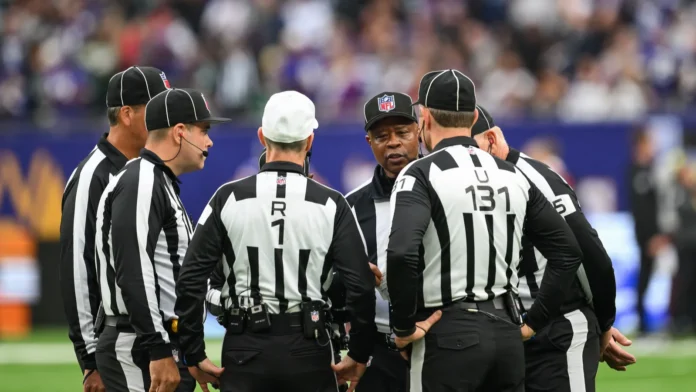
The NFL suspended line judge Jeff Seeman for 2 games and referee Adrian Hill for 1 game on Monday after separate incidents involving players during Sunday’s games. The league classified both cases as “unprofessional conduct toward a player.”
The most visible incident involved Seeman and Cardinals tight end Trey McBride during Arizona’s 36-24 loss to the New York Giants. A video clip circulated showing Seeman apparently shouting profanity at McBride after a disputed late-game non-call.
The second incident happened during Minnesota’s 15-10 victory over Miami, when Vikings linebacker Eric Wilson accidentally collided with Hill. Wilson later said he apologized and described the exchange as ultimately being handled calmly.
Jeff Seeman’s exchange with Trey McBride
Seeman’s suspension followed an incident with McBride late in the Cardinals-Giants matchup. With fewer than 5 minutes remaining, McBride challenged the lack of a defensive penalty after Giants cornerback Dru Phillips made contact before a pass arrived.
The play came on a third-and-2 situation involving quarterback Jacoby Brissett. Officials did not call pass interference or illegal contact, leaving McBride visibly frustrated as he spoke with Seeman near the sideline.
Video posted online then appeared to show Seeman responding with profanity. The footage quickly became the central piece of evidence surrounding the controversy, although the available clip captures only part of the exchange between the player and the official.
NFL moved quickly after the video surfaced
The league announced its disciplinary decision Monday, only about a day after the incidents occurred. NFL Vice President of Officiating Ramon George issued both suspensions, identifying each as an instance of unprofessional conduct toward a player.
The NFL Players Association had already called attention to Seeman’s behavior. Executive Director JC Tretter shared video of the exchange and argued that officials should be held to the same standards expected of players when conduct crosses a line.
That response matters because officials occupy a unique position during games. Players can receive penalties or other discipline for inappropriate conduct, while referees are responsible for enforcing those standards. The league’s action signals that the relationship works both ways.
Adrian Hill’s collision created a second controversy
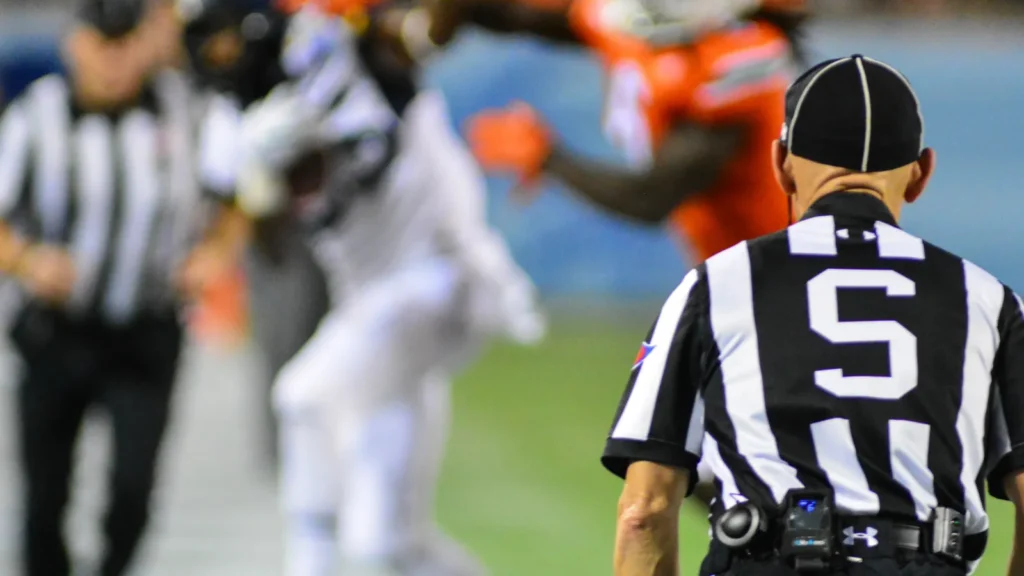
Hill’s case developed from a very different sequence. During the Dolphins-Vikings game, play had been stopped because of a neutral zone infraction when Vikings linebacker Eric Wilson collided with Hill. The contact appeared accidental.
Wilson was involved with Dolphins running back Ollie Gordon II when the collision occurred, sending Hill to the ground. Wilson then appeared to try helping the official up, but Hill reacted angrily and directed Wilson away from him.
Wilson later offered a more forgiving account of the exchange. He said he apologized to Hill and explained what had happened, adding that Hill accepted the explanation and said he had been trying to prevent what he believed could become a confrontation between players.
Why the NFL considered both incidents unprofessional
The NFL did not announce that either official had made an incorrect game call. Instead, the discipline centered specifically on their interactions with players and the league’s expectation that officials maintain professional conduct during games.
That distinction is important in Seeman’s case. The disputed pass-interference situation created frustration for McBride, but the league’s punishment was directed at what happened during the ensuing exchange rather than simply at the original no-call.
Hill’s incident similarly involved circumstances that were not necessarily intentional. Wilson characterized the collision as accidental, yet the league still determined that Hill’s response warranted a 1-game suspension under its conduct standards.
The Cardinals’ loss added more attention to Seeman’s incident
Arizona ultimately lost 36-24, with the Giants scoring the final points on Deonte Banks’ interception return for a touchdown as time expired. The result added an additional layer of attention to the late-game officiating exchange.
McBride’s argument with Seeman came shortly before Arizona punted. The Cardinals did not receive the penalty they were seeking, and the Giants eventually secured the victory after the game’s late sequence.
Still, there is no evidence that the NFL’s disciplinary announcement was intended to overturn or otherwise change the game result. The league’s action addressed official conduct, while the game’s calls and final score remained unchanged.
The incidents put officiating conduct under a spotlight
NFL officials make split-second decisions under intense scrutiny, often while surrounded by players, coaches, cameras, and thousands of fans. That environment can create difficult moments, but the league expects officials to maintain control regardless of the circumstances.
The NFL’s own officiating system emphasizes detailed evaluation. League officials, supervisors, and former coaches grade each member of a 7-person crew on every play, with crews reviewing performances and receiving feedback after games.
That process shows why discipline is only one part of officiating accountability. Officials are evaluated on positioning, judgment, mechanics, and decisions throughout games, while incidents involving player interactions can raise separate concerns about professionalism and game management.
The league’s response sends a clear message
The suspensions serve as a visible reminder that NFL officials are subject to discipline when their conduct falls short of league expectations. Seeman will miss 2 games, while Hill will miss 1 under the penalties announced by George.
For players, the decision also reinforces the principle Tretter raised, officials are expected to enforce standards without placing themselves outside those same expectations. The NFL’s response gives that principle practical weight rather than leaving the issue at criticism.
The larger challenge will be maintaining professionalism when disputes happen in real time. Players will continue challenging calls, officials will occasionally face heated reactions, and the league will have to distinguish normal game tension from conduct that warrants formal discipline.
What happens next for the suspended officials
The NFL Referees Association announced on October 6 that it would challenge the severity of Seeman’s 2-game suspension and Hill’s 1-game suspension.
The union acknowledged that the officials’ conduct fell short of professional standards but argued that the punishments were excessive and inconsistent with precedent.
It also announced plans to meet with the NFL’s officiating department about disciplinary standards and with the players’ union about on-field interactions. The suspensions concern the officials’ conduct and do not alter either game’s result.
Fun fact: An NFL game is supervised by 7 on-field officials, with each assigned specific responsibilities. The league says officials are evaluated on every play, with supervisors reviewing their performance after games.
TL;DR
- The NFL suspended line judge Jeff Seeman for 2 games after an incident involving Cardinals tight end Trey McBride.
- A video appeared to show Seeman directing profanity toward McBride after a disputed no-call.
- Referee Adrian Hill was suspended for 1 game following his interaction with Vikings linebacker Eric Wilson.
- NFL Vice President of Officiating Ramon George issued both suspensions for unprofessional conduct.
- The league’s action reinforces that officials, like players, can face discipline for inappropriate on-field behavior.
Read More From This Brand:
- Klobuchar’s NFL post draws criticism over outfit choice and prompts online backlash
- NFL fans question officiating after Mahomes call
- NFL fans question roughing call involving Patrick Mahomes
This article was made with AI assistance and human editing.