The roar of the crowd, the clash of helmets, and the thud of pads are the sounds that make NFL games thrilling.
But there is another layer to the football experience that many fans may not fully think about, which is the voices calling the game. For decades, iconic broadcasters have shaped how fans understand and feel the sport.
Their passion, insight, and unique styles have turned simple games into unforgettable moments. These legendary voices, such as John Madden, Al Michaels, and Pat Summerall, have become part of the soul of football.
In exploring their legacy, we can see how they influenced not just how games are watched, but also how fans connect with the sport itself.
The Pioneers Building The NFL Broadcast Tradition
Pat Summerall and Simplicity
One of the most respected voices in NFL history is Pat Summerall. After his playing career, Summerall became a broadcaster, first working as a color commentator and later moving to play-by-play. What set him apart was his minimalist style. Rather than filling the air with words, he often let the game speak for itself.
His calls were calm, deliberate, and measured, and he used short, spare phrasing so the action came through clearly. Summerall’s understated presence allowed his analyst partners to shine, especially John Madden. Over his long career, he worked many Super Bowls, a total of 26 across television and radio, with 16 of those on network television, which cemented his place in NFL broadcasting history.
For fans, Summerall’s voice became a dependable anchor. His steady tone made big games feel both serious and accessible. During tense moments, you did not feel like the commentator was overdoing it because he simply gave you what you needed to understand what was happening.
John Madden, The Teacher In The Booth
If Pat Summerall was the calm, then John Madden was the teacher. Madden came to broadcasting after a successful coaching career with the Oakland Raiders. In the booth, he introduced fans to parts of the game they might not otherwise notice, such as what was happening in the trenches, why certain plays worked, and how strategy unfolded across a series of downs.
Madden was famous for his enthusiastic, larger-than-life personality. He used emphatic exclamations such as Boom to highlight big plays. He also popularized tools that helped viewers see the game differently, with the telestrator being the best example. This tool lets him draw on the screen to diagram plays visually and explain them in real time.
His passion made football more than just a sequence of plays. He made it accessible and understandable. Over his broadcasting career, he received many industry honors that reflected his reach and influence.
Madden’s impact went beyond the TV booth, as his name and approach helped shape the long-running Madden NFL video game franchise, which introduced generations of people to football strategy and excitement.
Howard Cosell: The Voice That Challenged Norms
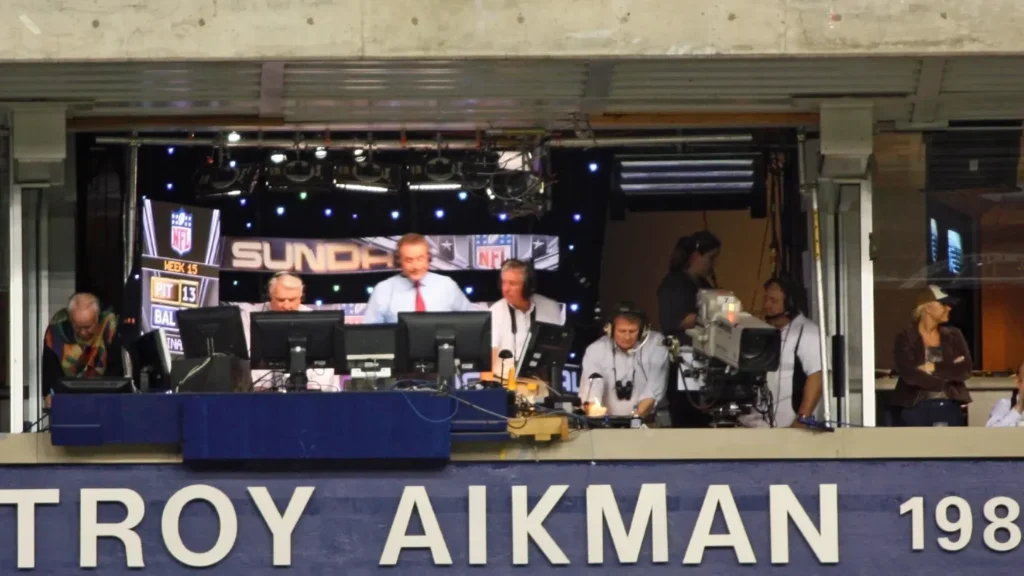
While Summerall and Madden focused on clarity and education, Howard Cosell brought opinion, personality, and sometimes controversy. Cosell never played or coached football, but as a commentator, he became famous on Monday Night Football for his blunt and often provocative views.
His on-air dynamic with former players such as Don Meredith and Frank Gifford helped make Monday Night Football a national cultural event.
Cosell often spoke frankly and did not shy away from criticizing players, coaches, or institutions. That honesty made him polarizing because some fans loved his sharp critique while others did not, but many respected his intelligence and willingness to address issues beyond the scoreboard.
His distinctive cadence and storytelling helped make broadcasts feel like more than a game. They often invited discussion about sports and society.
The Modern Legends Influence And Legacy
Al Michaels: The Prime Time Storyteller
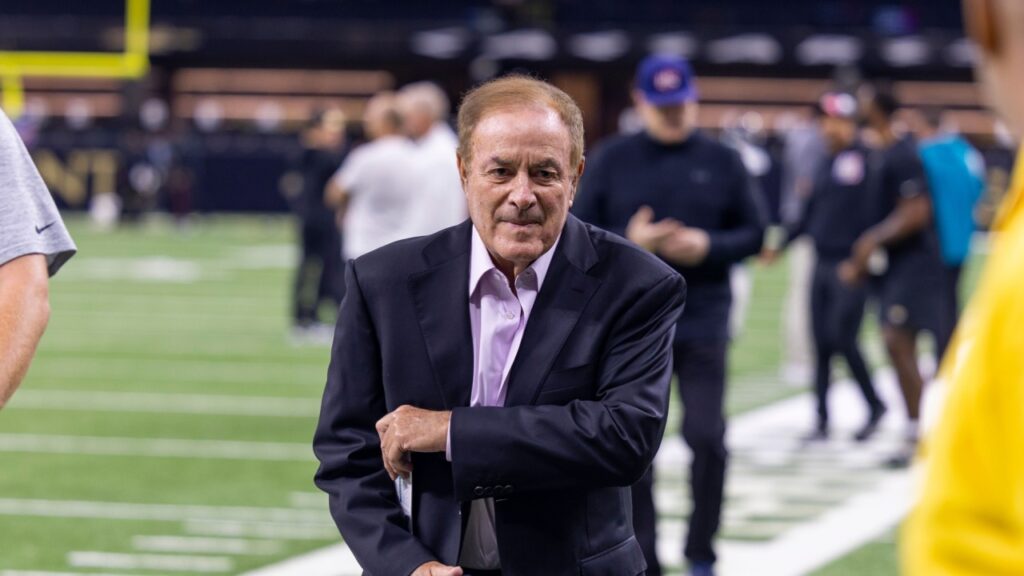
Al Michaels is widely considered one of the most trusted play-by-play announcers in modern American sports broadcasting. He has called many of the sport’s biggest moments across networks, and he is well known outside football for his famous line during the United States hockey victory over the Soviet Union in the 1980 Winter Olympics.
Michaels spent many years on Monday Night Football and later became the lead voice for Sunday Night Football. His baritone delivery, clear pacing, and ability to build suspense helped make primetime games feel monumental. Fans knew they were watching something special when Michaels was in the booth.
He was also willing to offer perspective as events unfolded. He did not just call plays; he added context and emotion. That mix of storytelling and steady play-by-play made him a trusted part of the viewing experience.
The Broadcast Duos: Why Chemistry Matters
One of the most significant elements of iconic NFL commentary is the pairing. Broadcasters often work as teams, with a play-by-play announcer and an analyst. The relationship between the two can make or break the listening or viewing experience for fans.
Summerall and Madden
This duo is among the most famous in NFL history. Summerall’s calm, minimal play-by-play was the perfect match for Madden’s high energy and deep analysis. Together, they worked for many years across multiple networks and many major games.
Michaels and His Analysts
Over his career, Michaels has partnered with several analysts to create balanced broadcasts, with Michaels calling the play and his partner offering insight and context.
That chemistry amplifies what fans feel. A great team can make even a regular-season game feel epic. When announcers trust each other, it shows, and that trust connects with the audience.
Broadcasters As Cultural Influencers
Voice commentators do more than call games because they shape football culture.
Education: Broadcasters such as Madden taught viewers the how and why of football strategy and helped deepen understanding for casual and young viewers.
Memory making: Iconic calls and signature lines stick in fans’ minds, and years later, people recall games through those phrases.
Personality: Distinct personalities made broadcasts more than sports because they became commentary on competition, culture, and ethics.
Legacy through media: Through video games, archives, and rebroadcasts, many retired announcers continue to reach new generations and keep the connection between fans and football history alive.
Frequently Asked Questions
Q Who was the most influential NFL broadcaster ever
A That depends on how you define influential. John Madden was hugely influential for teaching the game, popularizing visual analysis, and expanding football’s reach through media tied to his name. Pat Summerall set a standard for understated and dependable play by play. Al Michaels provided steady and dramatic primetime narration of many defining moments. Each shaped the audience’s experience in different but powerful ways.
Q Why is John Madden so beloved by fans
Madden’s clear explanations, energetic delivery, and love for the sport made complex football ideas easy to understand. His telestrator work and his role in the Madden NFL video game series also helped him connect with a wide audience.
Q Did Howard Cosell hurt his popularity by being controversial
A Cosell did polarize audiences with his strong opinions, but many respected him for his directness. His commentary often brought broader issues into the broadcast, and Monday Night Football felt like more than a game because of his voice.
Q How do modern commentators compare to these legends
Modern commentators still build on the foundations set by earlier legends. Today’s voices mix storytelling, analysis, and advanced technology such as instant replay and analytics to inform and entertain.
Q Can younger fans who play Madden NFL appreciate what Madden did as a broadcaster
A Yes. The game franchise carries Madden’s instincts for teaching and strategy into how football is presented. Many gamers explore real football history and classic broadcasts because of the game.

Conclusion
• The legacy of iconic NFL broadcast voices is deeply connected to the growth of football fandom
• Broadcasters such as Pat Summerall, John Madden, Howard Cosell, and Al Michaels shaped how fans understand and feel the sport
• Their different styles made games more memorable, educational, and exciting
• Their influence continues through modern media, archives, and the Madden NFL video game franchise
• Their work reminds us that football is not only about what happens on the field but also about the stories told through the voices calling the game
Read More:
- NFL Players Who Overcame Career-Threatening Injuries To Make A Comeback
- How Jackie Robinson Changed American Sports Forever
- Greatest Super Bowl Moments That Shaped Football History
This article was made with AI assistance and human editing.