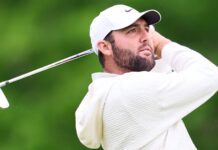
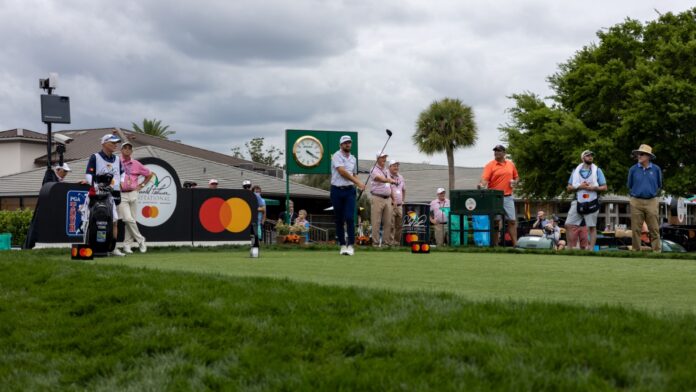
Moments after Cameron Young secured his dominant victory at the Cadillac Championship, the focus shifted from his brilliant performance on the greens to the complex intersection of sports and national politics. The Blue Monster crackled with energy as the PGA Tour returned to one of golf’s most recognizable venues after a decade away.
Young’s six-shot win marked a career-defining moment, but the tournament’s setting on a property owned by the president pushed every post-round remark into a partisan spotlight.
Victory meets political firestorm
The tournament at Trump National Doral concluded with a display of elite skill that would normally dominate the sports cycle for several days. However, because the event took place on a property owned by President Donald Trump, the narrative quickly expanded beyond the scorecards and the technical precision of the final round. The presence of the president on-site to witness the conclusion of the event added a layer of historical significance that few other golf tournaments can claim in the modern era.
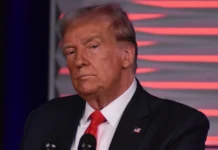
Reporters in the post-victory news conference were eager to hear Young’s perspective on the unique circumstances surrounding his win and his brief interaction with the commander-in-chief. Young remained composed as he navigated these inquiries, focusing his responses on the hospitality of the venue and the mutual respect shared between the sport’s top players and the president. This immediate shift in questioning showed that reporters and fans increasingly push elite athletes to address issues far outside their professional expertise.
Respectful comments spark debate
Young told reporters the president was an interesting, powerful figure who seemed to genuinely appreciate the PGA Tour’s talent. He also thanked the host organization and the family behind the venue for maintaining the championship course. His tone stayed formal and focused on the tournament. He acknowledged the significance of playing in front of a sitting president without making it political. Overall, it was standard professional courtesy in a post-round setting.
Online reaction quickly reframed those remarks as a political signal. Many pointed out that athletes have long shown respect to the presidency as an institution. But in a polarized climate, neutral comments get treated like endorsements. Even a routine thank-you to a tournament host can become a loyalty test. That dynamic turned a conventional media exchange into a broader controversy.
Partisan lenses distort facts
Social media users split Young’s press conference into competing political narratives. Supporters of the president treated his polite comments as an endorsement. They assigned him labels and motivations he never stated. This shows how quickly online discourse can rebrand an athlete for tribal purposes. A routine, diplomatic answer becomes campaign material in minutes.
Critics, meanwhile, attacked him for offering any praise at all. They framed acknowledging the president’s role and hospitality as taking a side. In that view, neutrality is impossible, and courtesy equals complicity. The backlash reflects a culture that rewards outrage over context. It also pressures public figures to either denounce or be condemned.
Athletes face social pressures
Modern pro athletes now navigate constant scrutiny, as audiences hunt for political signals in every preference and interaction. The assumption that a player’s background, religious beliefs, or choice of words during a trophy ceremony must indicate a specific voting pattern is a trend that many find exhausting. Cameron Young’s experience serves as a clear example of how the “everything is political” mindset can overshadow individual achievements and professional milestones.
The pressure to conform to specific societal expectations can be particularly heavy for those who prefer to keep their private lives separate from their professional duties. Many athletes fear that any slip of the tongue or perceived association will lead to a backlash that could damage their personal brands or endorsement deals. Despite these looming threats, Young chose to maintain a level of dignity and decorum that prioritized the traditions of the sport over the demands of the digital mob.
Fans prioritize the game
While the loudest voices on social media often drive the narrative, most sports fans tune in for the competition and the athletes’ skill. These everyday viewers tune in to escape the constant bickering of the news cycle and to appreciate the dedication required to win a major championship. For the typical fan, the most important aspect of the weekend was Young’s ability to navigate the hazards of the Blue Monster and emerge as a deserving champion.
A significant portion of the population appreciates it when a public figure can show basic respect for national institutions without veering into partisan rhetoric. This silent majority recognizes that showing gratitude to a host and acknowledging a world leader is a sign of maturity rather than a declaration of political war. By sticking to a script of professional appreciation, Young actually satisfied the desires of those who believe that sports should remain a unifying force in society.
Fun fact: Doral hosted a PGA Tour event for 54 consecutive years before the tournament moved to Mexico in 2017 due to sponsorship and logistical shifts.
Professionalism remains the approach
Cameron Young addressed the Doral win by sticking to golf, the course, the event’s history, and the competition. That kept his comments centered on performance rather than headlines. He acknowledged he can’t control how others frame his words. He focused on representing the PGA Tour professionally. His approach offers a template for handling intense media scrutiny.
The Cadillac Championship dispute shows how quickly routine remarks can become politicized. Not every interaction needs to be treated as a cultural or ideological fight. Comments can be neutral without implying endorsement or disloyalty. Young’s restraint helped keep attention on the golf itself. That composure may stand out over time as much as the victory.
TL;DR
- Cameron Young won the Cadillac Championship at Trump National Doral by six shots, marking a major career milestone.
- The golfer’s polite comments regarding President Trump and the hosting venue sparked an immediate divide on social media platforms.
- Partisans on both sides attempted to frame Young’s professional courtesy as either a political endorsement or a cause for criticism.
- Young’s responses focused on the history of the Blue Monster course and the honor of competing in front of a powerful world leader.
- The situation highlights the intense pressure modern athletes face to navigate political topics while maintaining their professional focus.
- Most sports fans prefer that athletes remain focused on the game rather than being forced into ideological categories by the public.
If you liked this story, don’t forget to follow us for more exclusive content.
This article was made with AI assistance and human editing.
If you liked this, you might also like: