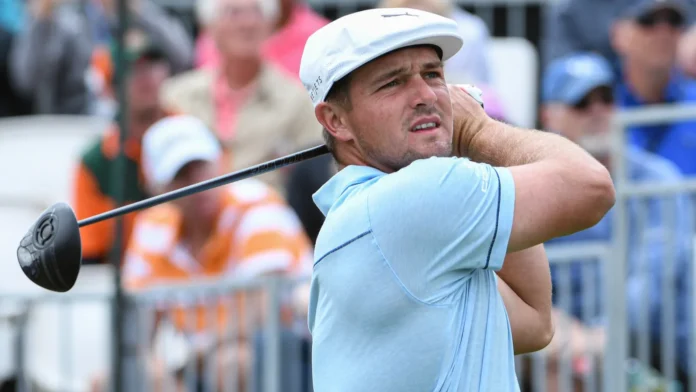
The 154th Open produced a major rules controversy at Royal Birkdale. Bryson DeChambeau received a 2-stroke penalty after his second round on July 17 for inadvertently improving the area of his intended backswing on the par-4 5th hole. The ruling changed his second-round score from 66 to 68 and dropped him from 1 shot off the lead to 3 shots back.
A later report alleged that DeChambeau wanted President Donald Trump involved in the dispute, although The R&A did not confirm that claim, and Chief Executive Mark Darbon said he received no call from Trump. The penalty remained in place, and DeChambeau finished T14 at 4-under, 6 shots behind champion Ryan Fox.
A tense penalty rattles the Open field
DeChambeau arrived at Royal Birkdale after winning back-to-back LIV Golf titles in Singapore and South Africa earlier in 2026. He opened The Open with a 3-under 67, keeping himself in contention. Friday’s controversy centered on the redesigned par-4 5th, a 321-yard risk-reward hole whose green is now visible from the tee.
DeChambeau drove well right into long grass while trying to attack the short par-4. After locating his original ball, he played his second shot from the rough. Video footage later became central to a rules review.
The R&A determined that DeChambeau had flattened long grass in the area of his intended backswing, improving conditions affecting the stroke. That finding led to the penalty that reshaped his position entering the weekend.
What happened on the 5th hole
Rules officials reviewed DeChambeau’s actions under Rule 8.1, which restricts a player from improving conditions affecting a stroke. The R&A determined that he had inadvertently improved the area of his intended backswing by flattening long grass near his ball.
The R&A specifically said the improvement was accidental, so officials did not reject DeChambeau’s position by finding that he had deliberately altered the grass. Under the rule, however, an accidental action can still result in a penalty if it improves conditions affecting the stroke.
Officials assessed a 2-stroke penalty. DeChambeau’s bogey 5 on the hole became a triple-bogey 7, his second-round 66 became a 68, and he fell from solo 2nd at 7-under to T5 at 5-under.
Why officials ruled against DeChambeau that day
Rule 8 requires golfers to play the course as they find it. Under Rule 8.1, players cannot improperly improve their lie, stance, swing area, or line of play. Pressing down tall grass to improve a stance or swing area can result in a penalty.
The R&A determined that DeChambeau had inadvertently flattened grass in the area of his intended backswing and gained a potential advantage. Because the rule can apply even when the action is accidental, officials assessed a 2-stroke penalty.
Rory McIlroy publicly said the ruling was justified, but players’ reactions were not unanimous. Several golfers were more sympathetic toward DeChambeau or defended his integrity while still acknowledging the rules issue.
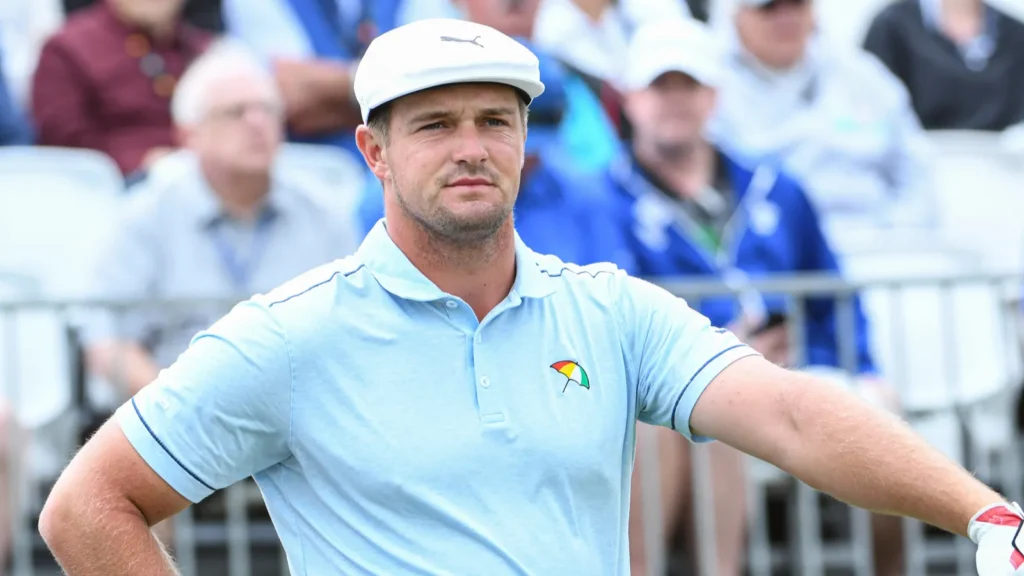
Inside the lengthy rules dispute
DeChambeau strongly contested the ruling after his round and returned to the 5th hole with R&A officials to review the area where the incident occurred. R&A officials, including senior rules personnel, discussed the situation with him before the penalty was finalized.
The visit to the 5th lasted roughly 20 minutes, while the wider post-round process continued considerably longer. Because the dispute occurred after DeChambeau had completed his round, it did not hold up a group playing behind him on the course.
The R&A ultimately confirmed the 2-stroke penalty, changing DeChambeau’s second-round score from 66 to 68. The extended process contributed to a late night at Royal Birkdale and delayed the release of Saturday’s third-round tee times.
Golfers react to the frustrating delay
DeChambeau’s post-round dispute created a logistical headache rather than an on-course backup. Saturday’s 3rd-round tee times were not released until around 11 p.m., leaving players, volunteers, and tournament staff waiting late into the evening.
Rory McIlroy strongly criticized DeChambeau’s response, calling aspects of it “performative” and saying the 2-stroke penalty was justified. Marco Penge also criticized the disruption, while other players offered more sympathetic or cautious reactions.
The response among golfers was therefore mixed rather than largely silent. The episode became one of the biggest talking points of the championship weekend.
Fun fact: Jordan Spieth won The Open at Royal Birkdale in 2017 at age 23.
DeChambeau reportedly sought presidential help
A report alleged that DeChambeau wanted President Donald Trump brought into the discussion over his Open penalty and that the request was denied. The R&A did not publicly confirm the alleged request. DeChambeau has a documented relationship with Trump and currently serves as chair of the President’s Council on Sports, Fitness, and Nutrition.
R&A Chief Executive Mark Darbon later said he had not received a call from Trump and described the rules decision as clear-cut. There is no verified evidence that Trump intervened in the Open ruling.
The episode drew comparisons with the 2026 World Cup, when Trump asked FIFA President Gianni Infantino to review U.S. forward Folarin Balogun’s suspension. FIFA subsequently suspended the 1-match sanction, although FIFA maintained that its judicial bodies make disciplinary decisions independently.
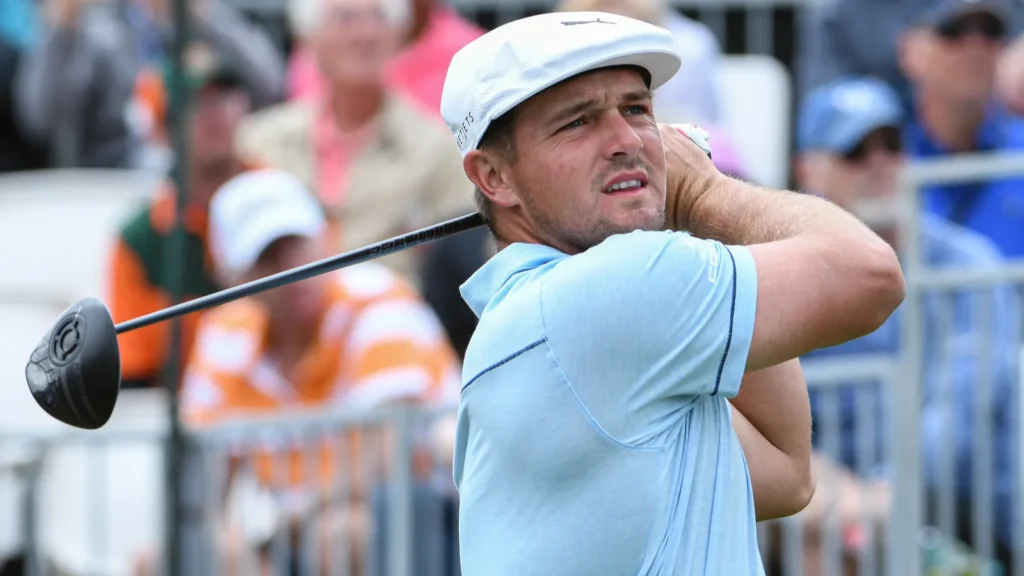
A costly 2-hour wait to continue
DeChambeau’s uncertainty after the ruling stretched late into Friday night. Roughly 2 hours after he finished his round, questions remained about whether he would return for the third round. Saturday’s tee times were not released until around 11 p.m.
DeChambeau finally confirmed at 12:02 a.m. that he would continue in the tournament, saying he remained disappointed with the ruling but was moving on to the weekend. The prolonged uncertainty left players and tournament personnel waiting late for the finalized schedule.
After his third round on Saturday, DeChambeau went to R&A Chief Executive Mark Darbon and asked to take possession of his scorecard from Friday. His request was declined.
How does the finish compare to his season?
DeChambeau finished The Open T14 at 4-under, 6 shots behind champion Ryan Fox. It was his best major finish of 2026 after a difficult year in the first 3 men’s majors. The result came despite the controversy surrounding his second-round penalty.
Fox won the Claret Jug at 10-under after birdieing the 72nd hole. DeChambeau remained in England and later competed in LIV Golf United Kingdom at JCB Golf & Country Club, which began on July 23.
The controversy added another memorable chapter to Royal Birkdale’s long Open history and sparked renewed discussion about how Rule 8.1 is applied when broadcast footage reveals a potential violation.
Little-known fact: Peter Thomson won 2 of his 5 Open titles at Royal Birkdale, triumphing there in 1954 and 1965.
TL;DR
- DeChambeau was assessed a 2-stroke penalty at The Open for improving his backswing area.
- The ruling followed a lengthy post-round review in which he returned to the hole with R&A officials.
- Reports say he wanted President Trump involved, but the request was denied.
- He waited nearly two hours before confirming he would continue the tournament.
- He finished T14 at 4-under, his best major result of 2026.
If you liked this story, don’t forget to follow us for more exclusive content.
This article was made with AI assistance and human editing.
If you liked this, you might also like: