
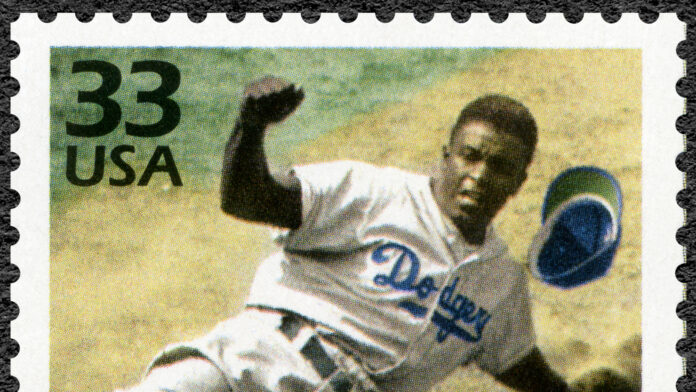

The cinematic tribute to a legend
The biographical film ’42’ serves as a powerful tribute to the life and career of Jackie Robinson. It focuses on the specific historical moment when he broke the color barrier in baseball.
This production aims to educate modern audiences about the immense pressure Robinson faced during the 1947 season. It highlights his role as a pioneer who changed the landscape of American professional sports forever.
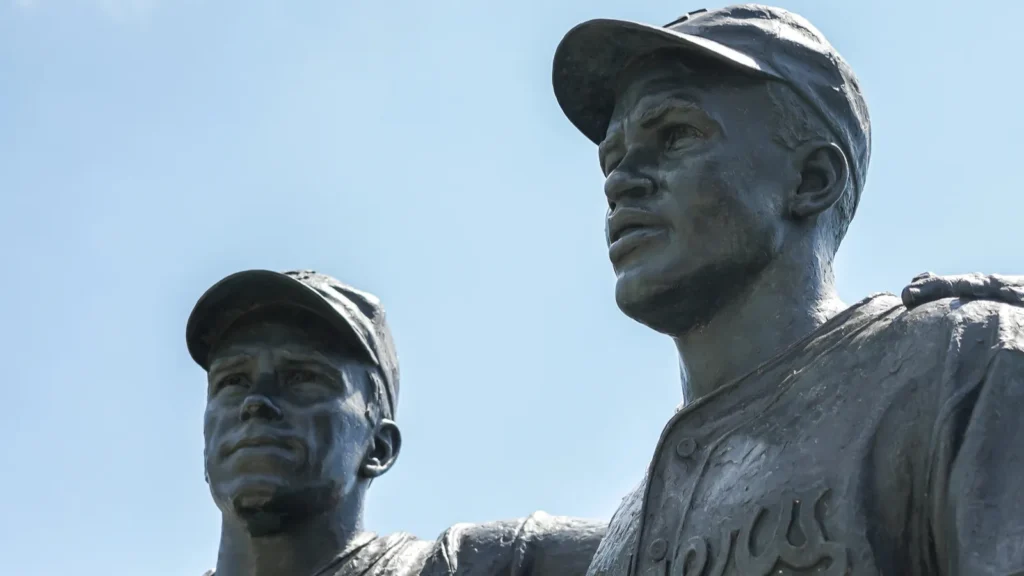
Branch Rickey and the bold experiment
The story begins with Brooklyn Dodgers executive Branch Rickey making the controversial decision to integrate Major League Baseball. He sought a player with the talent and character to withstand inevitable public scrutiny.
Rickey understood that the success of this move depended on Robinson showing immense restraint. This partnership between executive and athlete formed the foundation for 1 of the most significant changes in history.
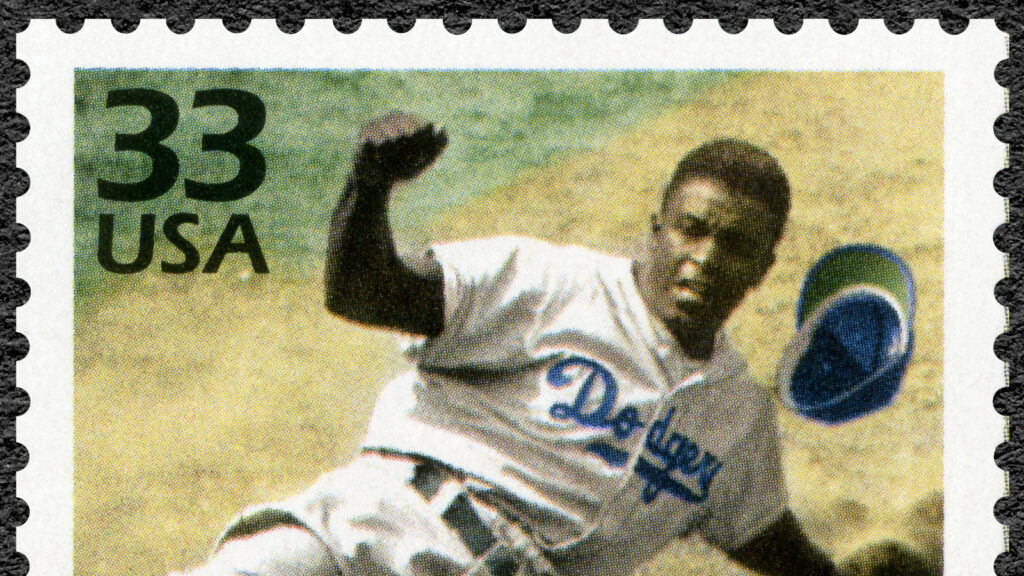
Selecting the right man for the job
When scouting for the perfect candidate, Rickey looked beyond simple athletic ability on the field. He specifically chose Robinson for his internal strength and his ability to ignore others’ racial slurs.
The film depicts the intense meeting where Rickey demanded that Robinson have the guts not to fight back. This moment established the non-violent strategy that Robinson would have to maintain throughout the play.
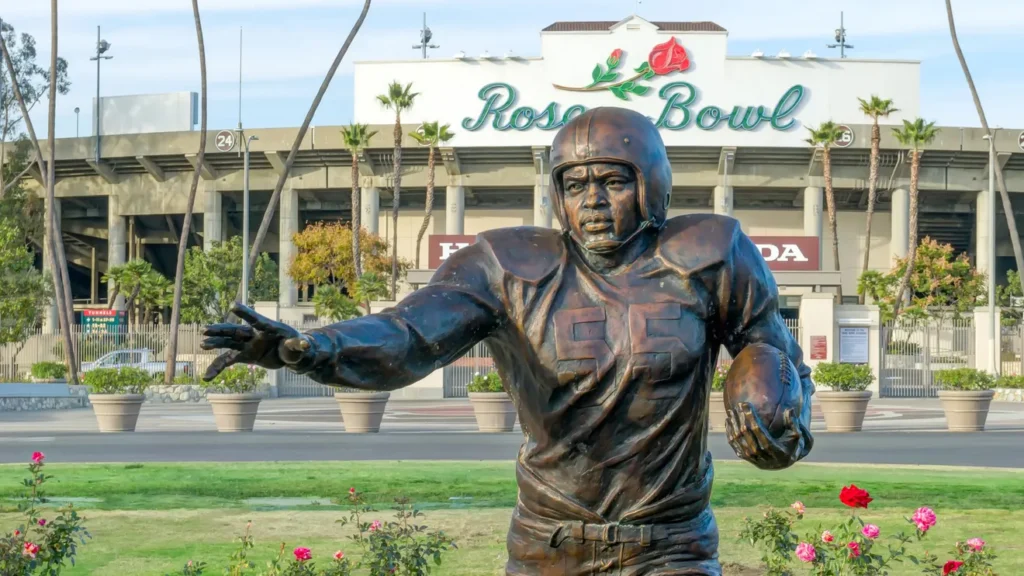
The heavy burden of number 42
Wearing the number 42 jersey became a symbol of both immense pride and a constant target of harassment. The film illustrates how Robinson carried the weight of an entire race on his shoulders.
Every time he stepped onto the grass, he represented more than just a baseball team. The movie captures the isolation he felt while standing alone in the spotlight of a divided nation.

Facing hostility from the dugout
One of the most intense sequences involves the verbal abuse Robinson received from Philadelphia Phillies manager Ben Chapman. The film does not shy away from the harsh reality of the period’s language.
This specific conflict tests the resolve of the young athlete as he struggles to maintain his composure. It serves as a narrative turning point where his teammates begin to show their support.
Support from the home front
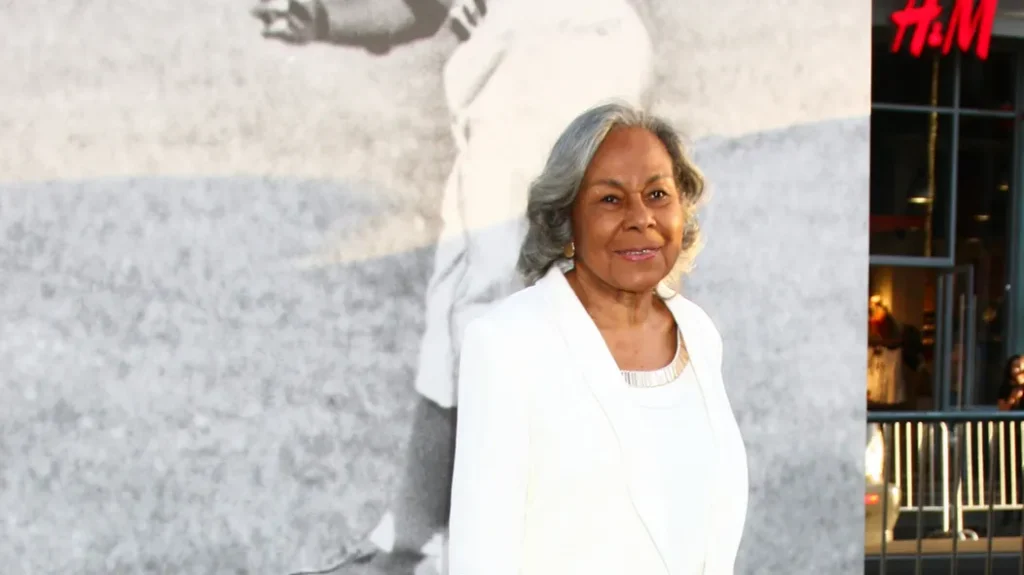
Rachel Robinson is portrayed as a vital pillar of strength who provided a safe haven for her husband. Her character highlights the personal sacrifices made by the entire family during the integration.
The movie shows how their relationship served as an emotional anchor amidst the chaos of the season. Her presence reminded him of why the struggle for equality was worth the personal pain.
The turning point on the field
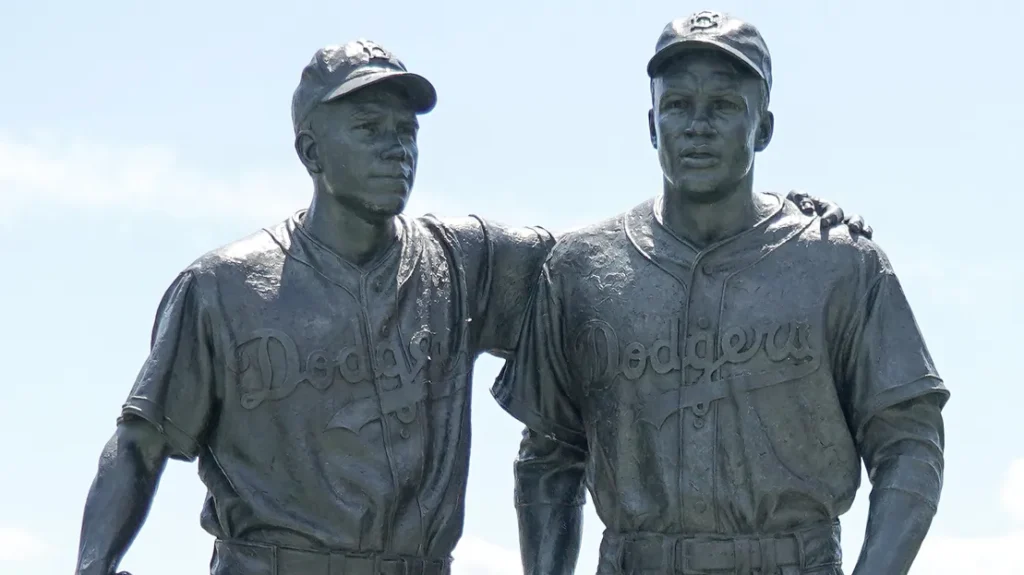
A significant moment occurs when teammate Pee Wee Reese publicly embraces Robinson during a game in Cincinnati. This simple gesture of putting an arm around him spoke volumes to the hostile crowd.
This act of solidarity signaled to the world that the Dodgers were becoming a unified team. It helped shift the narrative from a solo struggle to a collective effort by the players.
The physical toll of the game
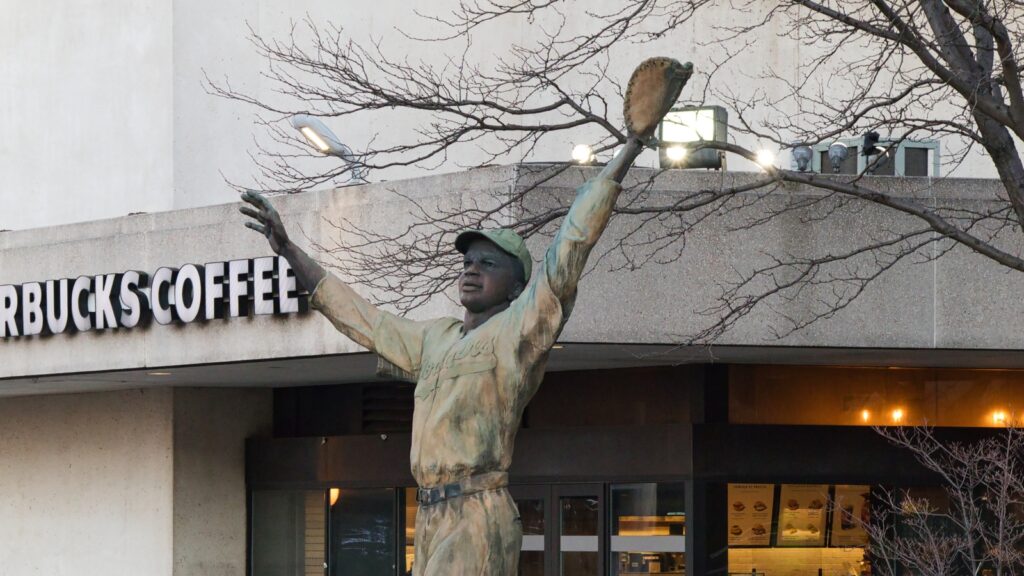
The film emphasizes that Robinson was not only verbally attacked but also physically targeted by opposing pitchers. He was frequently hit by pitches as a way for opponents to show their deep resentment.
Despite the physical pain and the constant threat of injury, he continued to play with incredible focus. His resilience on the basepaths became a signature part of his aggressive and successful style.
Impact on the Black community
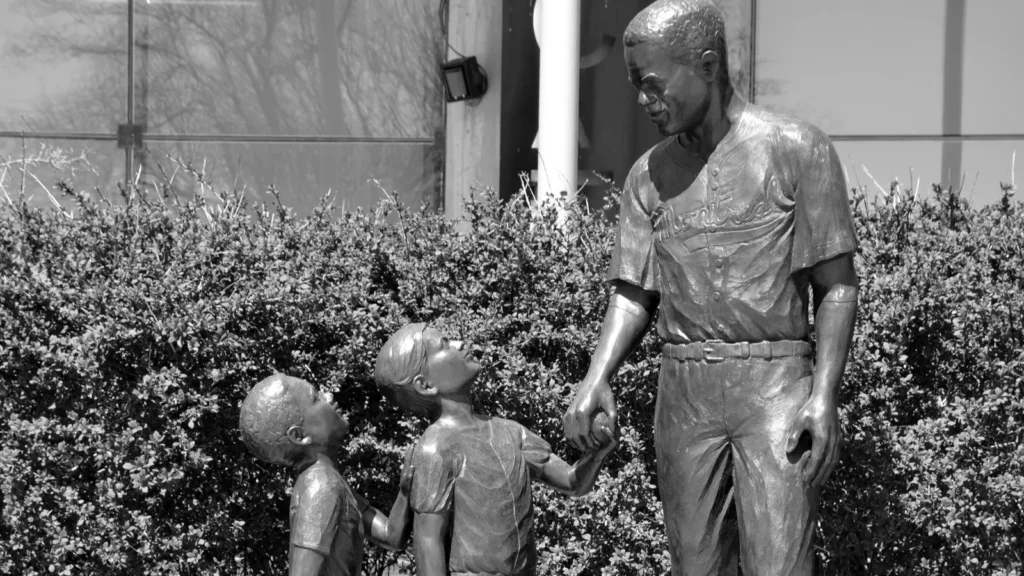
The movie illustrates the joy and hope Robinson brought to African American fans who traveled miles to see him. These fans saw their own aspirations reflected in his success on the diamond.
His presence in the big leagues validated the dreams of many who had been excluded from society. The film captures the vibrant energy in the stands when he made a big play.
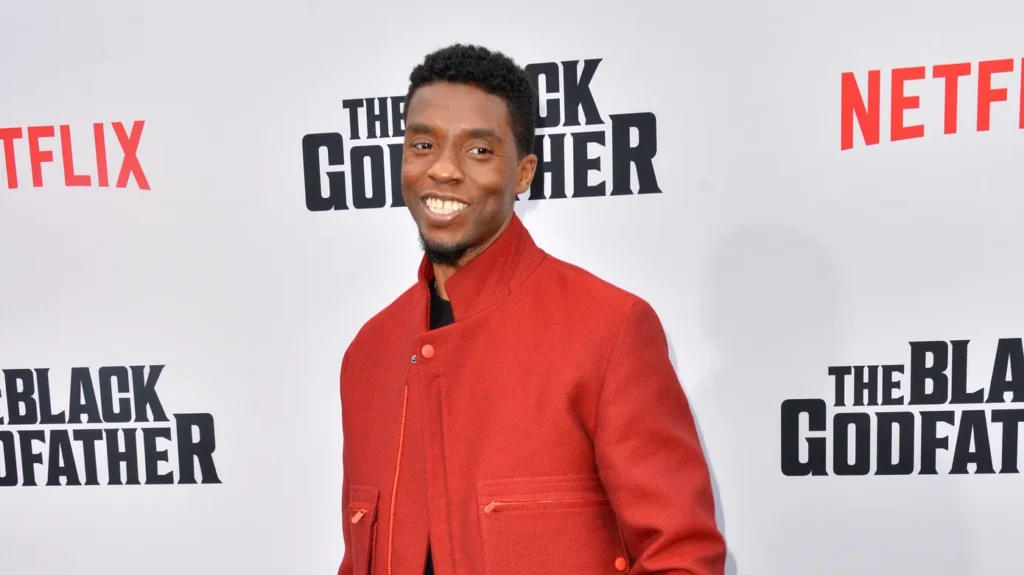
Chadwick Boseman and a breakout performance
Actor Chadwick Boseman delivered a nuanced performance that captured both the athleticism and the quiet dignity of Robinson. He spent 4 months studying Robinson’s unique movements to ensure the portrayal felt authentic.
Boseman was able to convey deep emotion through silence and facial expressions rather than just dialogue. This performance helped honor the legacy of both the actor and the historical figure he played.
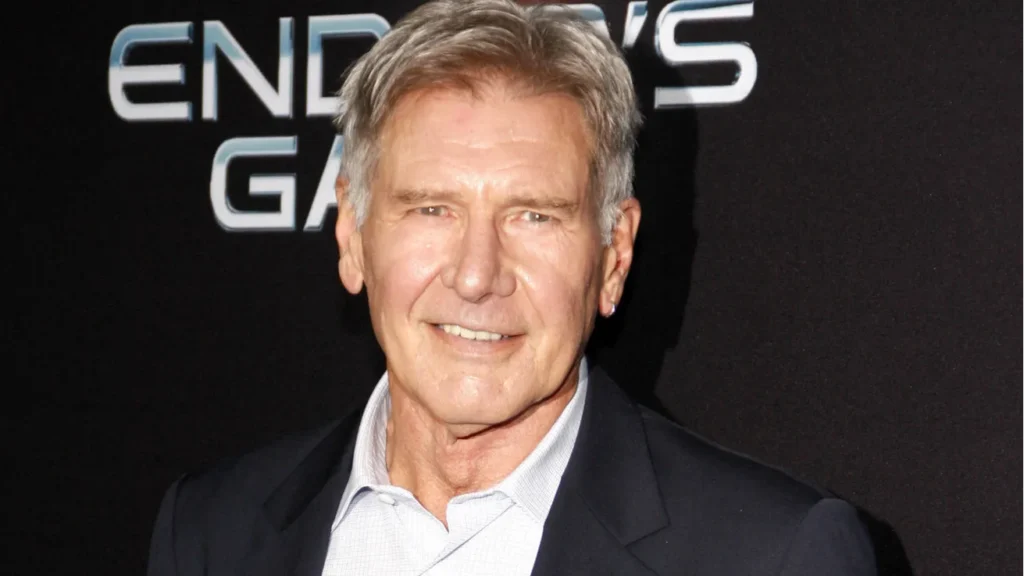
Harrison Ford as the visionary executive
Harrison Ford took on the role of Branch Rickey, bringing a sense of grizzled determination to the character. He portrayed Rickey as a man motivated by both moral conviction and a desire to win.
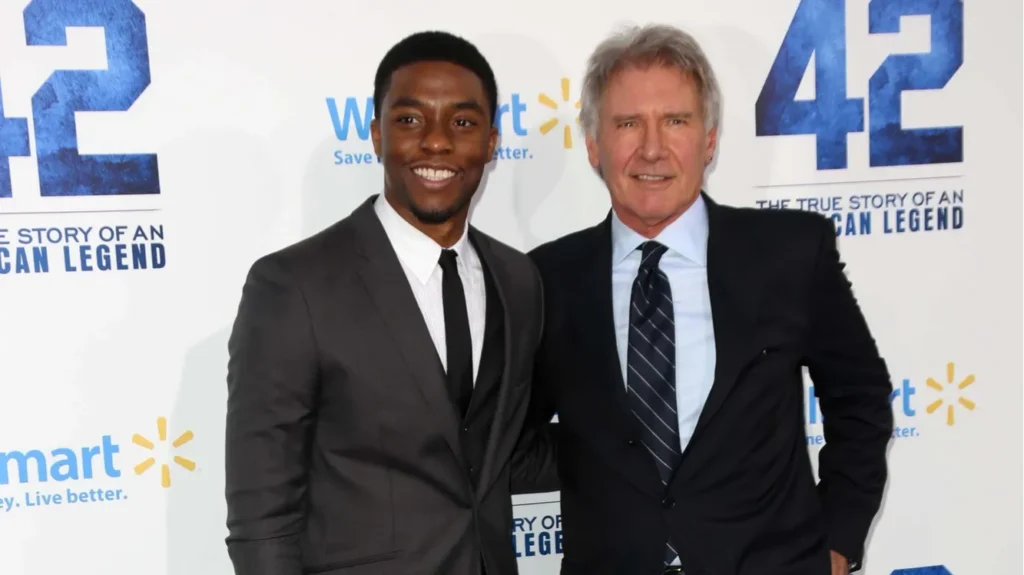
The chemistry between Ford and Boseman highlighted the mentor relationship that was crucial to Robinson’s success. Ford’s performance added a layer of gravitas to the high-stakes decisions made in the office.

Authenticity in the production design
The filmmakers went to great lengths to recreate the look and feel of 1940s baseball stadiums. This attention to detail helps transport the audience back to a specific era in American history.
From the wool uniforms to the classic equipment, every element was designed to feel historically accurate. This realism enhances the emotional impact of the story by making the setting feel lived-in.
The historic integration of Japanese stars like Shohei Ohtani and Yoshinobu Yamamoto has transformed Major League Baseball into a truly global powerhouse. Explore the unique cultural exchange and scouting pipelines that are currently shaping the next decade of international dominance.
The enduring legacy of courage
The final scenes of the movie reflect on how Robinson’s bravery paved the way for future generations of athletes. His story continues to inspire people to stand up against injustice in all forms.
Today, the number 42 is retired across all of Major League Baseball as a permanent mark of respect. The film ensures that his specific journey of courage is never forgotten by viewers.
True leadership is often defined by how an athlete handles unexpected setbacks. Randy Arozarena recently demonstrated this maturity following his surprising exclusion from the World Baseball Classic roster. Dive into the full story to explore his inspiring response.
Which scene from ’42’ do you think best captures the immense courage Jackie Robinson displayed during his rookie season? Share your favorite moments and join the conversation about his enduring legacy in the comments below!
This slideshow was made with AI assistance and human editing.
Read More From This Brand: