Few FIFA controversies have escalated as quickly as the fallout from Gianni Infantino’s abandoned FIFA Forward Enterprise proposal. The plan to bring private investors into a new commercial subsidiary holding rights connected to the World Cup triggered a confrontation between FIFA and several major regional confederations.
UEFA and its 55 member associations threatened to withdraw from FIFA competitions, while the AFC and Concacaf also opposed the proposal. FIFA ultimately abandoned the plan on July 31.
The dispute has since moved into the legal arena. UEFA is seeking evidence in U.S. courts as it prepares a possible criminal complaint in Switzerland over alleged financial mismanagement linked to the failed proposal.
FIFA’s plan to bring private investors into the World Cup business
FIFA proposed allowing outside investors to acquire a roughly 20% minority, non-controlling interest in a new commercial subsidiary called FIFA Forward Enterprise. The plan was based on an initial equity valuation of $20 billion and aimed to raise up to $4.2 billion.
Thrive Eternal, an investment vehicle launched by Joshua Kushner’s Thrive Capital, was expected to lead the investor group. Greg Maffei served as a commercial adviser, while J.P. Morgan worked alongside FIFA, and OpenEconomics helped engage prospective investors.
FIFA Forward Enterprise would have brought together FIFA’s commercial rights, including broadcasting, sponsorship, ticketing, and licensing, with the operational delivery of tournaments such as the World Cup.
Why Infantino pushed this risky deal
Infantino reportedly sought fresh capital soon after the successful 2026 World Cup concluded. Some reports suggested the deal could eventually create a lucrative commissioner-style role for him well beyond that.
His current annual salary reportedly sits near $6 million. Critics argued the private sale could have paid him far more money once his lengthy FIFA presidency eventually came to a close.
FIFA had already pursued several big expansion ideas before, including a much larger Club World Cup format. Infantino’s constant push for private funding clearly fit his broader pattern of chasing bigger global revenue streams overall.
UEFA leads a global backlash
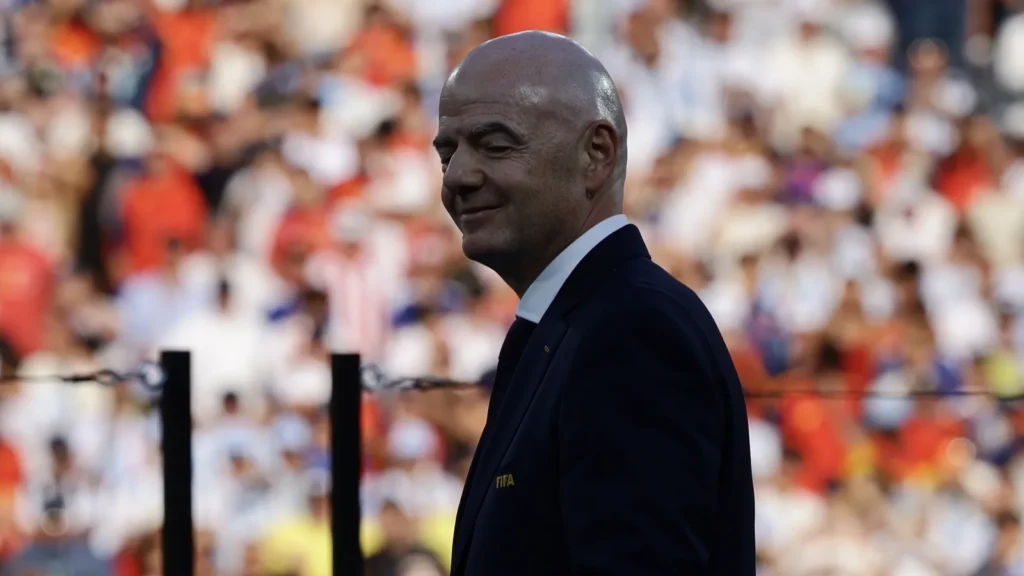
UEFA and its president, Aleksander Čeferin, became leading opponents of the proposal. UEFA argued that the World Cup should not be treated as an investment product and said its ownership interests should not be transferred to private investors.
The Asian Football Confederation and Concacaf also opposed the proposal, criticizing the lack of consultation and the failure to follow established governance procedures. Infantino nevertheless retained stronger political support in parts of Africa and South America.
Opposition also emerged inside FIFA. Senior adviser Carlos Cordeiro resigned over the proposal, calling it a bad deal for football, while FIFA chief operating officer Kevin Lamour said staff had been “deceived” and described the proposal as “the project of one person.”
The boycott threat that transformed the dispute
On July 30, UEFA and its 55 national associations unanimously rejected the FIFA Forward Enterprise proposal and announced that European national teams would not participate in FIFA competitions while the proposal remained active and until binding assurances were provided against a repeat.
The threat applied broadly to FIFA competitions, including senior World Cups and youth tournaments. It significantly increased pressure on FIFA, which abandoned the investment proposal the following day.
On Aug. 27, UEFA provisionally suspended the planned withdrawal after FIFA gave written assurances that FIFA Forward Enterprise had been permanently abandoned and would not return in another form. UEFA said the wider governance dispute remained unresolved.
Infantino drops the investment plan
Infantino announced on July 31 that the FIFA Forward Enterprise proposal would not proceed. He said the project had created divisions that were no longer compatible with its original goal of uniting and strengthening football.
The decision came one day after UEFA and its 55 member associations announced they would withdraw from FIFA competitions while the proposal remained active. The AFC and Concacaf had also opposed the plan.
The withdrawal represented a significant political setback for Infantino and did not end criticism of his leadership. UEFA subsequently said it had lost confidence in his presidency and continued to push for governance reforms.
Little-known fact: FIFA has leased a 17th-floor office in Trump Tower for roughly a year, paying an estimated $40,000 a month to the Trump family business.
UEFA warns FIFA to preserve evidence
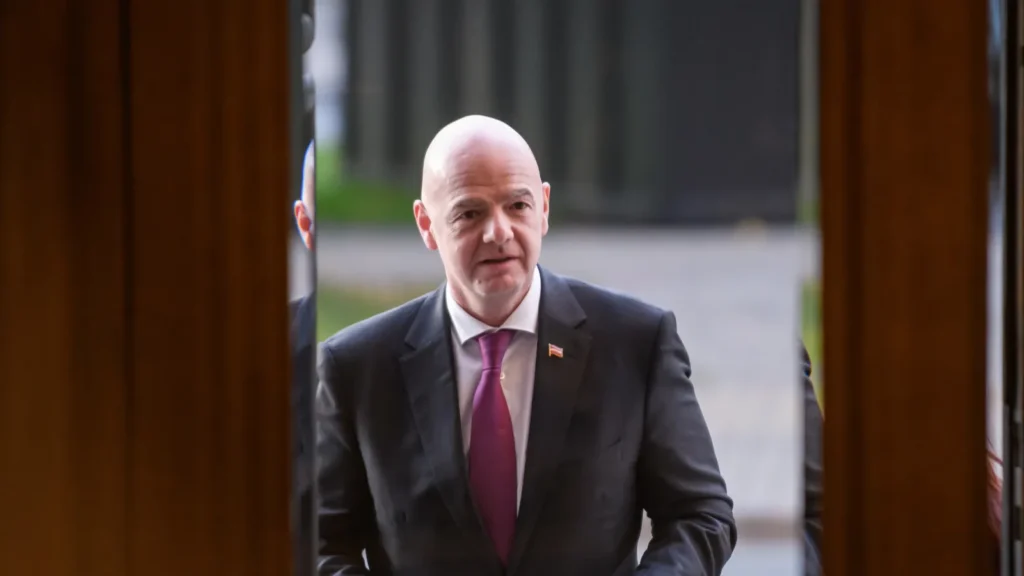
UEFA sent FIFA a formal document preservation letter after the FIFA Forward Enterprise proposal was abandoned. The notice instructed FIFA to preserve documents, data, and electronic communications that could become relevant to potential legal proceedings.
Reports also said UEFA contacted people and organizations associated with the proposed transaction, including Joshua Kushner, Greg Maffei, J.P. Morgan, and OpenEconomics, informing them that legal action was under consideration.
A preservation letter does not itself begin a lawsuit or criminal proceeding. Its purpose is to ensure that potentially relevant evidence is retained when litigation, arbitration, or regulatory proceedings are anticipated.
Criminal complaint filing in Switzerland
UEFA’s lawyers are reportedly now seriously contemplating a formal Swiss criminal proceeding against Infantino directly and personally over the matter. The complaint centers on alleged financial mismanagement under Article one 158 of Swiss law.
UEFA also filed two separate discovery requests in United States federal courts recently on both coasts. One request targeted Thrive Capital in Manhattan, while another sought FIFA records through a southern Florida district court.
A lengthy 60-page legal document suggested the $4.2 billion valuation might have actually been quite unfairly low. Critics claim the strange pricing could have personally benefited Infantino at FIFA’s own expense.
What this means for Infantino’s future
The growing scandal now seriously threatens Infantino’s previously assumed unopposed re-election bid. He was widely expected to easily win a fourth term, extending his FIFA presidency through 2031.
Public support has visibly weakened across several member federations ever since the story first broke. Some national associations reportedly withdrew their earlier public backing following fresh revelations about the secretive investment negotiations involved.
FIFA’s overall credibility now faces some tough questions from fans, sponsors, and league administrators across the sport. Many worry this messy episode exposes deeper transparency problems within global soccer’s entire governing structure.
Fun fact: Infantino holds Swiss, Italian, and Lebanese citizenship, the last of which he acquired through his family heritage rather than by birth.
TL;DR
- Infantino backed a proposal to sell a roughly 20% minority stake in FIFA Forward Enterprise, a new commercial subsidiary valued at about $20 billion, to raise up to $4.2 billion from outside investors.
- Thrive Eternal, launched by Joshua Kushner’s Thrive Capital, was expected to lead the investor group, while J.P. Morgan served in an advisory role.
- UEFA and its 55 associations threatened to withdraw from FIFA competitions, and FIFA abandoned the proposal on July 31. UEFA provisionally suspended the boycott threat on Aug. 27 after receiving written assurances that the plan would not return.
- UEFA sent evidence-preservation notices and is seeking documents through U.S. courts while preparing a possible Swiss criminal complaint alleging criminal mismanagement under Article 158 of the Swiss Criminal Code.
If you liked this story, don’t forget to follow us for more exclusive content.
This article was made with AI assistance and human editing.
If you liked this, you might also like: