

The final nine holes of a major championship carry a weight few athletes ever experience. Every putt feels longer. Every decision feels heavier. The back nine on Sunday is where golf history gets written, erased, and rewritten all in the same afternoon.
These moments do not belong only to the winners. Collapses and comebacks share equal space in golf’s greatest stories, reminding fans why no lead is ever truly safe at Augusta or anywhere else. The sport’s cruelest and most beautiful chapters unfold between holes 10 and 18.
Let’s take a closer look.
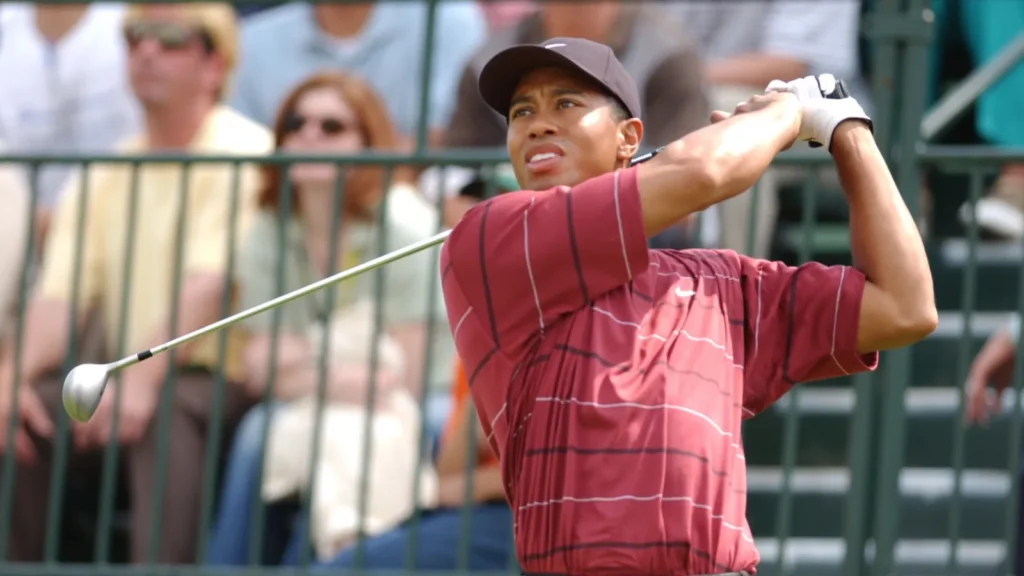
Tiger Woods rewrites the record books in 1997
Woods had shot a rough 40 on the front nine of round one, making what came next even more stunning. He turned that same day with a back-nine 30, sparking a dominant four-round performance that left the field speechless. His composure under the enormous weight of history was truly extraordinary.
By Sunday, the tournament was already decided. Woods cruised to a final-round 69 and finished at 18 under par, winning by 12 shots. That remains the single largest margin of victory in Masters history. He also became the youngest champion the tournament had ever seen, at just 21 years old.
Nicklaus turns back the clock in 1986
At 46, Nicklaus had not won on the PGA Tour in two years and had not claimed a major in six. He trailed the Sunday leader by four shots and spent most of the week as an afterthought.
What followed became the most celebrated back nine in golf history. Nicklaus eagled 15 and birdied 16 and 17, shooting a back-nine 30 at Augusta National. That final-round 65 delivered his record sixth green jacket, making him the oldest Masters champion in the tournament’s long history.
Jordan Spieth finds Rae’s Creek in 2016
He was 22, the defending champion, and trying to become only the fourth back-to-back Masters winner. Two bogeys at holes 10 and 11 trimmed the lead but felt manageable. The gallery was still tense, but believed in the young Texan heading into Amen Corner.
Then hole 12 happened. Spieth put his tee shot into Rae’s Creek, then chunked his drop back into the water. He made a quadruple-bogey seven, going from leading by five to trailing by three in three holes. Danny Willett claimed the green jacket Spieth had seemed absolutely destined to wear.
Fun fact: Spieth lost a five-shot lead on the back nine Sunday, one of the tournament’s most famous collapses.
Phil Mickelson threads a needle through the pines in 2010
His drive on the par-5 had found the trees, leaving him an almost impossible line to the green. Caddie Jim Mackay wanted him to lay up. Mickelson refused. He later said winning that day required a great shot under real pressure, and he chose that exact moment to deliver it.
From 187 yards over Rae’s Creek, Mickelson threaded the 6-iron through that narrow opening onto the green. Augusta National later requested the club for its collection, making Mickelson the only champion with two clubs stored there.

Rory McIlroy collapses and then returns
Mcllroy had led for three straight days and was playing the best golf of his young career. Augusta was supposed to be the stage for his first major title. He was 21, fearless, and in excellent form. The golf world was preparing to crown a new champion that Sunday afternoon.
A snap-hooked drive into the cabins on hole 10 triggered a triple bogey and complete unraveling. He shot 43 on the back nine and finished the day in tears. South African Charl Schwartzel birdied the final four holes to win, a feat no previous Augusta National champion had ever accomplished.
Amen Corner, golf’s most dangerous real estate
The 12th hole has swallowed many great careers. It is a short par 3 over Rae’s Creek with a green tilted toward the water. Augusta’s famous wind swirls and deceives even the most experienced players there. Norman found the water in 1996, and Spieth sent two balls in during 2016.
What makes Amen Corner brutal is that it arrives exactly when the mind is most vulnerable. Players reaching it on Sunday know the tournament can shift on one swing. Many players and observers view the 12th as Augusta’s most dangerous turning point.
Fun fact: The nickname “Amen Corner” was coined by writer Herbert Warren Wind in 1958. He borrowed the phrase from a jazz record called “Shoutin’ in That Amen Corner” by Mildred Bailey.
What these moments tell us about the sport
No teammate can rescue a golfer who is falling apart on Sunday. No timeout can stop the bleeding. The player must find answers alone, often while tens of millions watch from home. That isolation under extreme pressure is what sets professional golf apart from nearly every other sport on the planet.
These moments decades ago share the same thread. Talent alone was never the deciding factor. Nicklaus needed nerve. Tiger needed focus. Norman needed a belief he never found.
TL;DR
- Jack Nicklaus shot a back-nine 30 at age 46 in 1986 to win his record sixth Masters title.
- Tiger Woods won the 1997 Masters by 12 shots at 18 under par, the largest margin of victory in tournament history.
- Jordan Spieth made a quadruple-bogey seven at the 12th hole in 2016, turning a five-shot lead into a three-shot deficit.
- Phil Mickelson’s 6-iron from the pine straw in 2010 remains one of the most daring shots ever hit at a major.
- The psychology of Sunday pressure and Amen Corner make the back nine the most compelling nine holes in sport.
If you like this post, don’t forget to follow us for more news and stories like this one.
This article was made with AI assistance and human editing.
If you liked this, you might also like: