The WNBA playoffs produced another heated moment Tuesday night when A’ja Wilson confronted an Indiana Fever fan during Game 2. The incident quickly moved beyond basketball, sparking debate about players, spectators and acceptable boundaries.
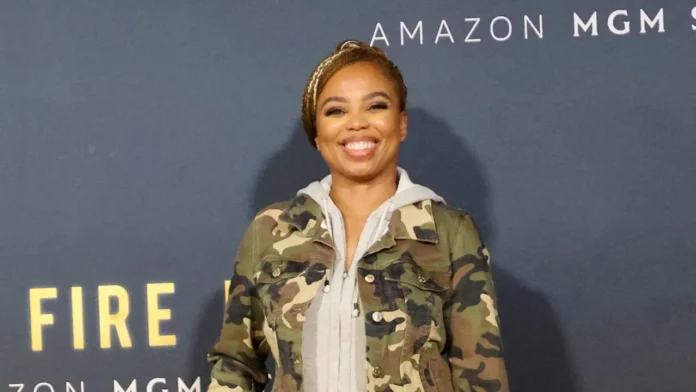
Former ESPN personality Jemele Hill entered that conversation by defending Wilson’s reaction, while acknowledging the Aces star could have handled the situation differently. Her comments soon drew criticism online, adding another layer to an already contentious playoff night.
What happened between Wilson and the fan
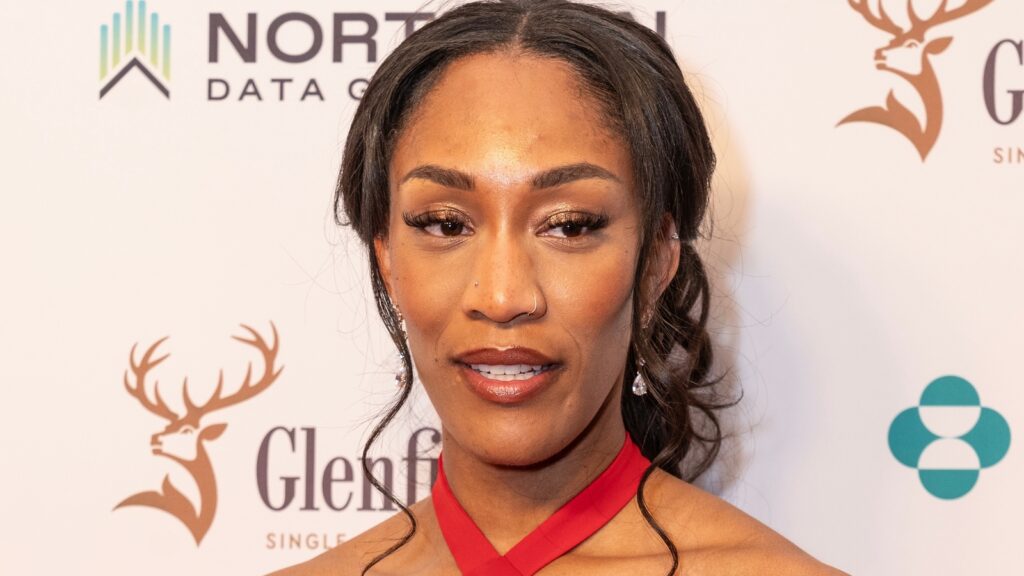
The confrontation occurred during the fourth quarter of Indiana’s 99-89 victory over Las Vegas. After Wilson was involved in a foul against Sophie Cunningham, a fan near the baseline pointed and yelled in Wilson’s direction, and Wilson approached him before teammates intervened.
Wilson received a technical foul for unsportsmanlike conduct. The fan was briefly removed from his seat, but the Fever later said security determined there was no violation of its Fan Code of Conduct and allowed him to return.
Wilson said afterward that she objected to the fan pointing at her and taking steps toward her. She described that behavior as unacceptable.
Becky Hammon weighs in
Aces coach Becky Hammon said she had never seen A’ja Wilson react that way during a game. Hammon acknowledged that she did not see the entire exchange, but said Wilson clearly felt disrespected by what happened with the fan.
Hammon said there are rules and expectations for both players and spectators inside an arena. She also said she could not speak specifically about what the fan said or did because she saw only the aftermath of the confrontation.
Why Hill’s comments attracted criticism
The response quickly became controversial because critics argued that the specific incident should be judged separately from other incidents involving WNBA spectators. That criticism focused on the documented sequence involving Wilson, the fan and arena security.
Hill’s initial post also attracted an X Community Note. The note disputed her description that the fan had walked toward Wilson, saying available video showed him taking roughly half a step before being pulled back.
The disagreement illustrates why the incident has generated competing interpretations. Wilson said the fan approached and pointed at her, while reports noted that the Fever determined his behavior did not violate its fan conduct policy.
Wilson explains her reaction after the game
Following Indiana’s 99-89 victory, Wilson apologized to her teammates for receiving a technical foul but stood by her decision to confront the fan. She said she normally focuses on basketball but believed the fan’s actions crossed a personal boundary.
Wilson said the fan had pointed at her and taken steps toward her, which she considered unacceptable. Aces coach Becky Hammon said she had never seen Wilson react that way and believed Wilson felt disrespected, while noting that she had not seen the entire exchange.
The Fever’s decision added another wrinkle
The fan was initially removed from his seating area after the confrontation but was later allowed to return. The Fever said arena security spoke with the fan and witnesses and determined that there was no violation of the Fan Code of Conduct.
Wilson received a technical foul for unsportsmanlike conduct during the incident. The WNBA later reviewed the confrontation and determined that Wilson remained in the player escape lane, meaning she did not face additional league discipline.
The available footage does not establish every word exchanged between Wilson and the fan. Wilson said the fan pointed at her and moved toward her, while video and eyewitness accounts have provided different descriptions of the exchange.
The wider WNBA fan debate
Hill’s comments also touched on a larger issue surrounding the league: how players respond to increasingly visible and sometimes disruptive fan behavior. The WNBA has experienced substantial attention around spectator conduct as its audience has expanded.
Recent controversies have included confrontations, provocative behavior and objects being thrown onto courts. Hill referenced such incidents when explaining why she believed players could be particularly sensitive to perceived threats or confrontational behavior.
At the same time, fans attending professional games remain subject to arena rules, while players are governed by league regulations. The Wilson incident therefore raised questions about where appropriate fan interaction ends and unacceptable player-fan confrontation begins.
Indiana’s win kept the series alive
The confrontation unfolded during a game that carried significant stakes for Indiana. The Fever entered Game 2 needing a victory after losing the opening contest, and they responded with a 99-89 win over the defending champion Aces.
Caitlin Clark led Indiana’s performance with 27 points and 15 assists, while Kelsey Mitchell contributed 26 points. Clark also became the first player in WNBA history to record a points-assists double-double during the first half of a playoff game.
The victory forced the best-of-three series to a deciding Game 3 in Las Vegas. That meant the Wilson-fan confrontation became part of a much larger night, one that kept Indiana’s postseason hopes alive while intensifying attention around the series.
Hill’s defense keeps the conversation going
Hill’s defense of Wilson has become another chapter in the ongoing debate over WNBA players, fans and media coverage. Her position does not erase the documented facts surrounding the technical foul or the Fever’s decision.
Instead, her comments emphasize a broader argument about context. Hill believes previous incidents involving WNBA spectators help explain why players may remain cautious, while critics contend individual incidents should still be assessed according to their specific circumstances.
For Wilson, the message after Game 2 was straightforward: she believed the fan crossed a line by approaching and pointing at her. For Hill, the surrounding history of fan behavior helps explain Wilson’s response. Both perspectives remain part of the discussion.
Fun fact: Jemele Hill landed her first full-time sports journalism job after a three-month internship at The News & Observer in Raleigh in 1997.
TL;DR
- A’ja Wilson confronted an Indiana Fever fan during Game 2 of the WNBA playoff series.
- Wilson received a technical foul for unsportsmanlike conduct.
- The Fever said the fan did not violate its Fan Code of Conduct.
- Jemele Hill defended Wilson while acknowledging she could have handled the incident better.
- Indiana won Game 2, 99-89, before Las Vegas won Game 3, 94-83, to take the series 2-1.
Read More From This Brand:
- A’ja Wilson’s pregame mishap goes viral before 34-point performance
- Caitlin Clark and A’ja Wilson sequence sparks referee debate
- “I had to cry a little bit,” Bam Adebayo recalls talk with A’ja Wilson’s dad
This article was made with AI assistance and human editing.