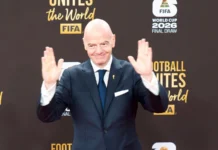
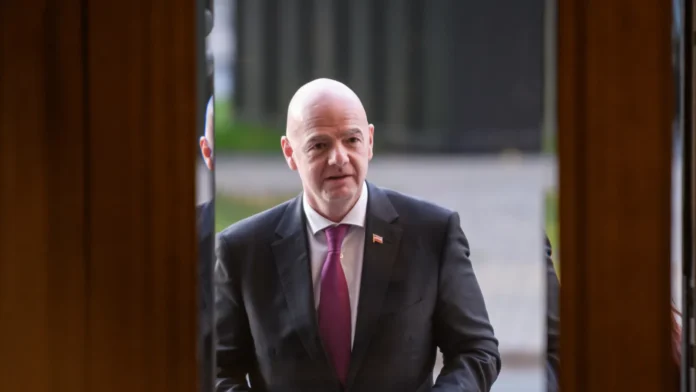
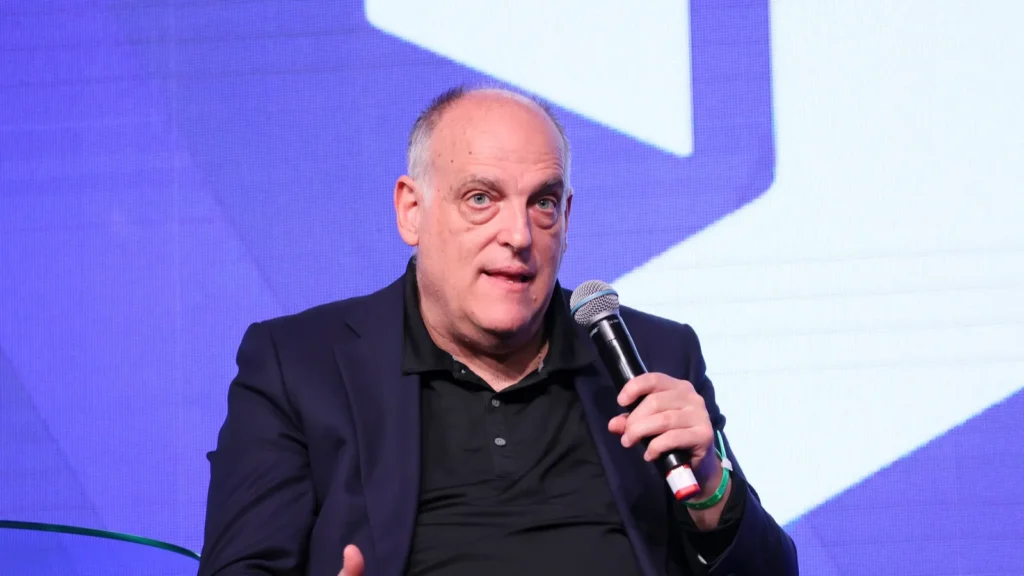
La Liga president Javier Tebas has intensified his criticism of FIFA president Gianni Infantino, saying the global soccer chief should resign after what he described as years of decisions that have damaged the sport. Tebas argues that FIFA’s expanding international calendar, discussions about a 64-team World Cup, and recent governance controversies are hurting the game’s long-term health.
His comments come just days after the conclusion of the expanded 2026 FIFA World Cup, adding fresh momentum to an already heated debate about football’s direction. The timing highlights growing frustration among domestic league executives who feel their interests are continuously sidelined by global expansion plans.
Why did Javier Tebas call for Infantino’s resignation?
Speaking to Italy’s La Gazzetta dello Sport, Tebas said he believes Infantino has reached the end of his tenure and should step aside. The La Liga chief argued that FIFA’s recent decisions have prioritized commercial interests over those of clubs, domestic leagues, and players.
Tebas said football needs fewer international competitions, not more. He warned that expanding tournaments and adding more fixtures put additional strain on players while weakening national league competitions that operate every season.
The 64-team World Cup proposal remains a major concern
One of Tebas’ strongest objections concerns a possible 64-team FIFA World Cup for the 2030 tournament. FIFA has not approved such an expansion, but the proposal has sparked widespread debate across world soccer.
The 2026 World Cup already marked a historic increase from 32 to 48 participating nations. That tournament featured 104 matches across the United States, Canada, and Mexico, making it the largest World Cup in history.
Tebas believes another expansion would further crowd the international calendar and reduce protections for domestic competitions. He warned that continuing to stretch the global schedule risks overwhelming player workload, diluting the quality of play, and ultimately devaluing national leagues.
Fun fact: The 2026 FIFA World Cup became the first men’s World Cup to include 48 teams and a record 104 matches, replacing the previous 64-match format used from 1998 through 2022.
Recent World Cup controversies added fuel to the criticism
Tebas also pointed to several controversies that surrounded the 2026 World Cup. Among them were complaints about expensive ticket prices, extended hydration breaks during hot-weather matches, and concerns over FIFA’s overall tournament management.
Perhaps the most controversial issue involved United States forward Folarin Balogun. After receiving a red card earlier in the tournament, his suspension was temporarily lifted following a review that became the subject of widespread criticism after reports that U.S. President Donald Trump had spoken with Infantino. The incident prompted several football officials to question FIFA’s decision-making process.
Tebas dismissed FIFA’s explanation for longer hydration breaks, arguing they served commercial interests more than player welfare. Those comments echoed broader concerns voiced by several figures within European soccer following the tournament.
Tebas says FIFA’s governance system discourages opposition
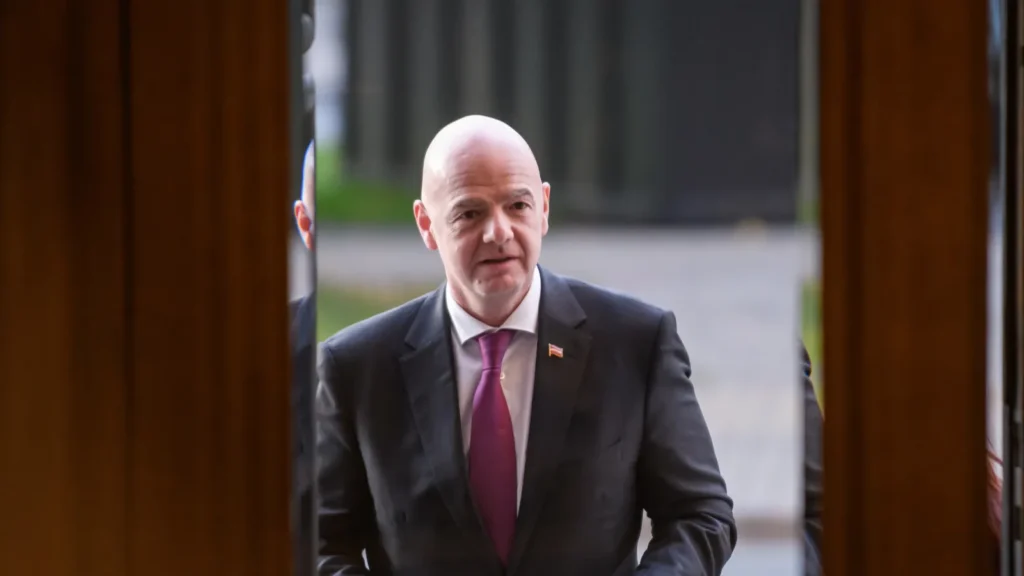
Beyond criticizing individual decisions, Tebas questioned FIFA’s leadership structure. He argued that many officials privately disagree with Infantino but remain unwilling to challenge him publicly because of the political realities surrounding FIFA elections.
According to Tebas, the lack of a serious opposition candidate reflects a system that, he says, discourages meaningful competition for the presidency, leaving member associations powerless to push for reform and further consolidating authority at the top.
Infantino has already confirmed he plans to seek a fourth term as FIFA president, with the vote for the 2027-2031 cycle scheduled for March 18, 2027, in Morocco. Javier Tebas has served as La Liga president since 2013 and has become one of the most outspoken executives in world soccer, frequently commenting on financial regulation, scheduling, and governance issues.
Interesting fact: Javier Tebas has served as La Liga president since 2013 and has become one of the most outspoken executives in world soccer, frequently commenting on financial regulation, scheduling, and governance issues.
Other voices have joined the debate
Tebas is not the only prominent figure questioning FIFA’s recent direction. Former FIFA president Sepp Blatter also publicly called for Infantino to step down, arguing that football needs new leadership following the controversies surrounding the 2026 World Cup.
Several coaches, administrators, and football officials also criticized FIFA’s handling of the Balogun disciplinary case, saying the situation damaged confidence in the organization’s independence. While opinions differ on many issues, the tournament generated one of the most significant governance debates FIFA has faced in recent years.
This growing chorus of dissent highlights a deepening rift between FIFA’s executive leadership and the domestic leagues, clubs, and regional bodies that sustain the sport day to day.
What happens next for FIFA?
Despite growing criticism from some of European soccer’s most recognizable executives, there is currently no confirmed challenger preparing to oppose Infantino for the FIFA presidency. Under FIFA’s voting system, each member association receives one vote, giving the organization broad global representation.
For now, FIFA has not publicly responded to Tebas’ latest remarks. Attention is likely to remain on how the governing body addresses concerns over tournament expansion, calendar congestion, and governance before the next presidential election cycle begins.
Those discussions could shape not only the future of the World Cup but also the relationship between FIFA and the domestic leagues that underpin professional soccer worldwide.
Fun fact: Spain, Portugal, and Morocco are scheduled to serve as the primary hosts of the 2030 FIFA World Cup, while three centenary celebration matches are planned in Uruguay, Argentina, and Paraguay to commemorate the inaugural 1930 tournament.
TL;DR
- Javier Tebas says FIFA president Gianni Infantino should resign.
- Tebas criticized FIFA’s leadership and its growing international calendar.
- He opposes proposals for a 64-team World Cup after the expanded 48-team event in 2026.
- The Balogun suspension controversy and other World Cup issues intensified criticism of FIFA.
- Former FIFA president Sepp Blatter has also called for new leadership.
- FIFA has not publicly responded to Tebas’ latest comments, and Infantino is still expected to remain a leading figure ahead of the 2027 presidential election.
If you liked this story, don’t forget to follow us for more exclusive content.
This article was made with AI assistance and human editing.
If you liked this, you might also like: