
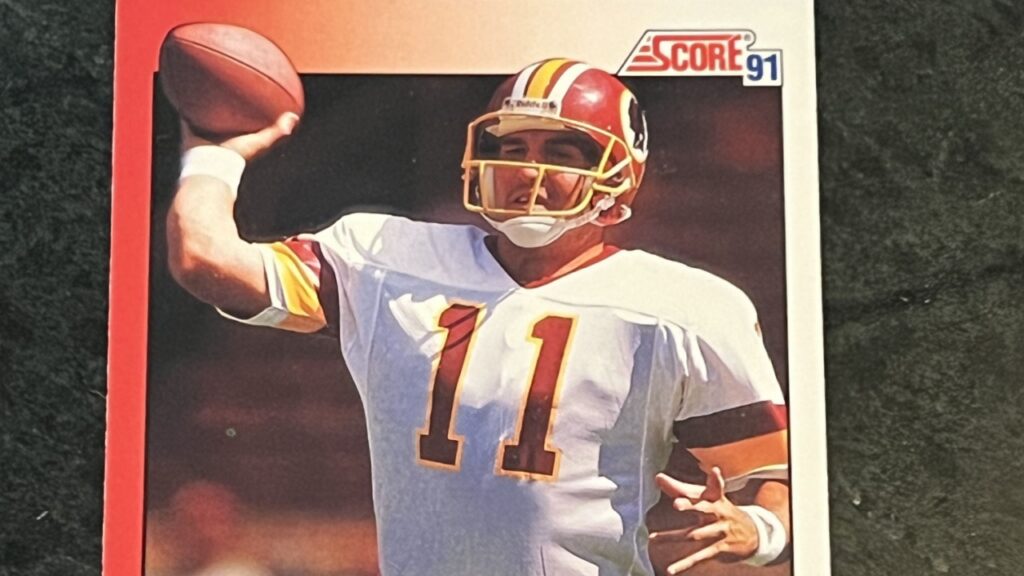
Super Bowl MVP Mark Rypien set for draft-day spotlight
Mark Rypien’s name still carries weight in Washington football history, but his journey goes far beyond one championship moment. From a late-round draft pick to a Super Bowl-winning quarterback, his career unfolded in ways few expected.
What made his rise possible, and how did he become such a key figure in one of Washington’s most memorable eras? Let’s break down the turning points, decisions, and defining moments that shaped his NFL path, leading up to his continued connection with the franchise and its draft-day traditions.
From Canada to American football foundations
Mark Rypien was born in Calgary, Canada, before moving to the United States during his childhood years. This transition exposed him to structured American sports development at an early stage.
He eventually settled in Washington state, where he began shaping his quarterback fundamentals through school-level football programs. His early environment played a major role in adapting to competitive U.S. football systems.

College scouting profile at Washington state
At Washington State University, Rypien developed a reputation for strong downfield passing ability and steady mechanics. His college performances showed gradual improvement in reading defensive coverages.
Scouts evaluated him as a developmental quarterback with potential rather than a finished product. His skill set suggested upside in structured offensive systems that required timing and accuracy.

1986 NFL draft selection strategy
Washington selected Rypien in the sixth round of the 1986 NFL Draft as part of a long-term development approach. The team prioritized depth-building rather than immediate starting pressure.
Late-round quarterback selections were commonly assessed for raw traits and system fit. Washington valued arm strength and adaptability in its evaluation process.
Early NFL learning phase and adjustment period
Rypien’s early NFL career involved serving as a backup while learning professional defensive structures. This period allowed him to study game speed without full-time starting responsibility.
The coaching staff focused on improving his decision-making under pressure and coverage recognition skills. Limited playing time helped him adjust to the pace of the professional level.
Breakout season emergence in Washington offense
Rypien’s breakout came when he secured a full-time starting role and established himself within Washington’s offensive system. His performance marked a clear shift in his career trajectory.
He displayed improved accuracy, stronger decision-making, and consistency throughout the season, elevating Washington’s offensive production.
Interesting fact: In the 1991 NFL season, Rypien threw for 3,564 yards and 28 touchdowns while leading Washington to a 14–2 record.

Offensive system fit and tactical execution
Washington’s offensive structure emphasized vertical passing concepts and timing-based route execution during Rypien’s tenure. This design aligned closely with his throwing strengths.
Rypien fit this approach because of his arm strength and ability to anticipate receiver breaks. His execution helped stabilize the offense and maintain consistency across long drives throughout the season.

Super Bowl XXVI performance execution
Super Bowl XXVI showcased Washington’s disciplined offensive game plan built on control and efficiency rather than risk-heavy play. The team relied on structured passing sequences and balanced offensive rhythm.
Rypien executed the system by managing possessions carefully and avoiding unnecessary turnovers under playoff pressure. His steady performance contributed to Washington maintaining control throughout the championship game environment.
Roster synergy and offensive coordination
Washington’s offensive success during Rypien’s era was strengthened by strong coordination between quarterbacks, receivers, and the offensive line. Each unit played a defined role in maintaining offensive rhythm.
This synergy reduced pressure on individual players and allowed the system to function at a high level. Consistent communication helped the offense adjust smoothly to different defensive formations.
Interesting fact: Over his NFL career, he recorded 18,473 passing yards and 115 touchdowns across 104 games.
NFL journeyman phase after Washington
After leaving Washington, Rypien continued his NFL career with multiple teams in backup and rotational quarterback roles. His experience made him a reliable depth option for different franchises.
During this phase, he contributed by mentoring younger quarterbacks and supporting game preparation. His role shifted away from starting responsibilities toward veteran leadership and situational readiness.

Career recognition and evaluation legacy
Rypien is often analyzed in discussions about quarterbacks who outperformed their draft expectations. His career is frequently referenced in scouting evaluations that study mid-to-late round success stories.
He remains part of broader NFL conversations about player development and projection accuracy. Analysts continue to use his career as a case study in long-term quarterback growth patterns.

Media analysis and draft value discussions
Media coverage of Rypien often focuses on his unexpected rise from a sixth-round pick to a Super Bowl-winning quarterback. His story is used to highlight unpredictability in draft outcomes.
Sports analysts reference his career when evaluating how system fit and development time influence quarterback success. His journey is frequently included in broader discussions about draft efficiency and talent evaluation.
The internet is also talking about how Aaron Rodgers opens up about wanting a quiet life after his NFL career.

Long-term influence on quarterback evaluation
Rypien’s career continues to influence how analysts view late-round quarterback potential in the NFL. His development path is often referenced in scouting discussions about patience and system fit.
Modern evaluations still consider examples like his when projecting quarterback growth trajectories. His legacy remains a useful reference point in discussions about long-term player development strategies.
In other news, here’s why the DOJ is investigating NFL media deals.
If you enjoyed this breakdown of his career and legacy, share your thoughts in the comments and let us know how you remember Rypien’s impact on the game.
This slideshow was made with AI assistance and human editing.
Read More From This Brand: