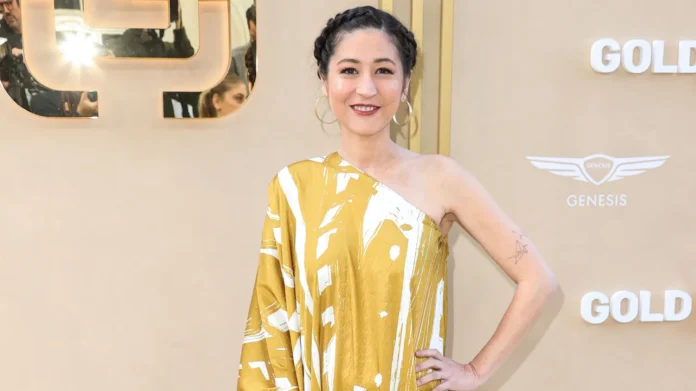
Mina Kimes challenged Nick Saban’s argument about athlete and coach compensation, turning a discussion about college sports economics into a sharp exchange over who creates value for universities.
Saban made his comments while advocating for the Protect College Sports Act, which passed the Senate in a bipartisan 77-22 vote. The legislation now heads to the House for consideration.
Kimes responded publicly after Saban’s appearance on ESPN’s “First Take.” Her short question quickly drew attention online, with some fans praising her for directly challenging the premise behind Saban’s argument.
Saban’s argument on player and coach pay
During his “First Take” appearance, Saban argued that compensation for coaches and players represents two different markets. He questioned whether universities should treat those forms of compensation as directly comparable.
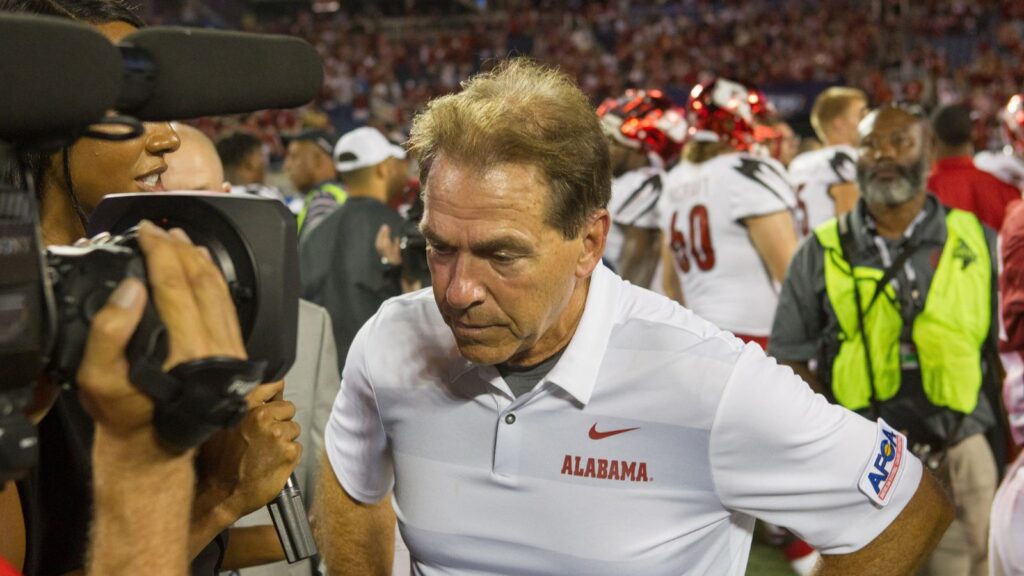
“That’s like asking me, ‘Does a student’s scholarship equal the professor’s pay?’” Saban said, according to reports. He then questioned how much value a coach creates for a university.
Saban has become one of the most visible advocates for the Protect College Sports Act, appearing publicly to promote legislation intended to establish nationwide rules governing college athletics, including athlete compensation and transfers.
Kimes responded with one question
Kimes addressed Saban’s argument on social media rather than during the television appearance. Her response focused specifically on the market-value premise underlying his comparison between coaches and student-athletes.
“If athletes create less value, then surely universities would be comfortable letting the free market decide, no?” Kimes wrote. Her post directly questioned why athlete compensation should be constrained if market value is the central consideration.
The response quickly became part of the broader online conversation surrounding Saban’s advocacy. Multiple sports outlets reported that fans supported Kimes’ challenge, while other commenters continued defending or discussing Saban’s position.
Why the disagreement matters
The disagreement comes as college athletics faces major changes involving name, image and likeness compensation, revenue sharing, transfers and federal regulation. The Protect College Sports Act seeks to establish national standards across those areas.
Under the Senate-passed legislation, Division I athletes would receive a federal NIL right, while schools would operate under a revenue-sharing framework. The bill also addresses scholarships, transfers, agent fees and medical protections.
The legislation also provides legal protections for schools and the NCAA when enforcing certain rules. Supporters describe those provisions as necessary for stability, while opponents have raised concerns about athlete compensation, antitrust protections and athletes’ influence over the rules.
Saban has been outspoken about reform
Saban has repeatedly argued that college sports needs a more consistent framework. His public advocacy has included appearances and messaging supporting legislation intended to address what he and other supporters describe as instability.
The former Alabama coach has particularly emphasized the financial pressures facing athletic departments and the need for clearer rules. He has also discussed concerns about spending and the changing economics surrounding college football.
His position has attracted both support and criticism. Recent reporting shows that some college sports figures and organizations back the legislation, while other analysts and advocacy groups object to important portions of it.
Fans reacted strongly to Kimes
Kimes’ post generated a noticeable response from fans who interpreted her question as a direct challenge to Saban’s reasoning. Several commenters argued that universities should determine compensation through market forces.
One commenter pointed to the economic activity generated by college football, while another argued that players are central to the value surrounding major programs. Those reactions reflected broader disagreement over how college sports revenue should be distributed.
Not every reaction favored Kimes, however. Saban’s supporters continue to argue that coaches and athletes perform fundamentally different roles and that college athletics requires a framework distinct from professional sports.
The bill has already cleared the Senate
The online dispute arrived shortly after the Senate passed the Protect College Sports Act by a 77-22 vote. The bipartisan legislation was introduced by Sens. Maria Cantwell, D-Wash., and Ted Cruz, R-Texas, with Sens. Chris Coons, D-Del., and Eric Schmitt, R-Mo.
The measure would create nationwide rules for NIL rights, revenue sharing and transfers while establishing additional protections for scholarships and athletes’ health. The bill would also increase the amount schools can share with athletes through a new retention pool.
Fun fact: Mina Kimes graduated summa cum laude from Yale University with a degree in English before building her career in sports journalism.
Its Senate passage does not make the legislation law. The House must consider the measure, and the bill would then require presidential approval before taking effect.
Supporters and critics see different priorities
Supporters argue that national standards could provide greater predictability for schools, athletes, and conferences. The Senate Commerce Committee has highlighted provisions addressing NIL rights, scholarships, transfers, and protections for Olympic sports.
Critics have raised different concerns, including limits on athlete compensation and legal protections for the NCAA. The NAACP and Congressional Black Caucus have opposed the legislation in its current form, according to recent reporting.
Those disagreements explain why the debate extends beyond Saban and Kimes. Their exchange reflects a broader debate about who should determine college athletes’ compensation and how much regulation Congress should impose on universities.
Kimes’ response added another voice
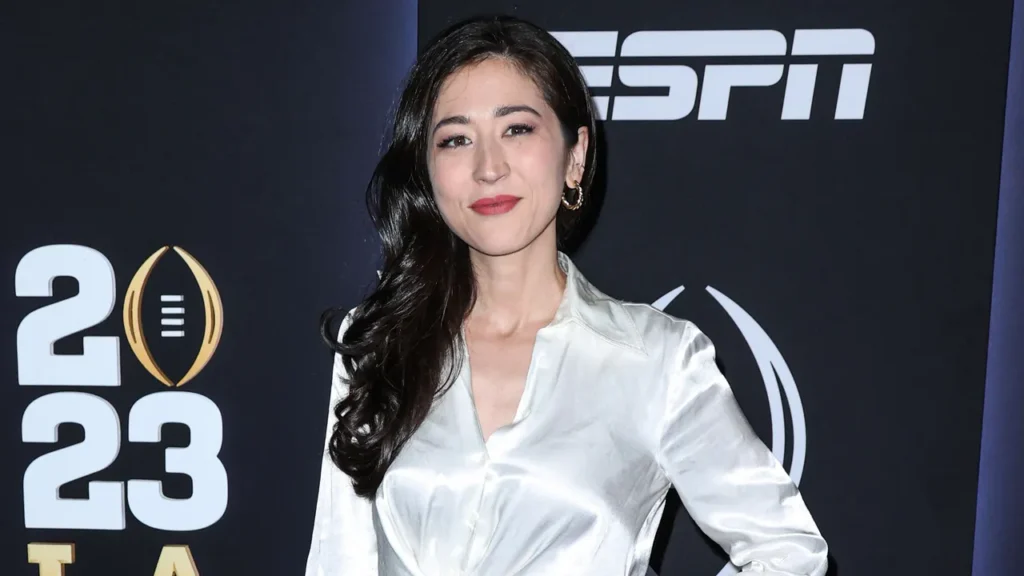
Kimes brings a different background to the conversation. ESPN identifies her as an NFL analyst, senior writer, podcast host and television contributor who joined the network in 2014.
Her response did not attempt to outline the entire legislation. Instead, she challenged one specific premise: whether claims about athletes generating less value justify limiting their compensation while allowing other parts of college athletics to operate differently.
That distinction is important because Kimes’ post was a question rather than a detailed policy proposal. The debate therefore remains centered on the economic principle she raised and how it fits within the proposed legislation.
The debate is far from finished
The Protect College Sports Act now faces another stage of congressional consideration. The House has its own concerns about athlete employment status, antitrust protections and the structure of compensation rules.
For Saban, the legislation remains part of his broader effort to push college sports toward a framework he believes can provide greater stability. His position has placed him at the center of an increasingly public policy debate.
For Kimes, the exchange offered a concise counterpoint that resonated with many online commenters. Whether the legislation ultimately becomes law will depend on negotiations and votes beyond this particular ESPN dispute.
TL;DR
- Mina Kimes challenged Nick Saban’s argument about athlete and coach compensation.
- Saban said coaches and athletes operate in different compensation markets.
- Kimes questioned why universities would not simply let the free market determine athlete value.
- Some fans publicly praised Kimes’ response, while others defended Saban’s position.
- The Protect College Sports Act passed the Senate 77-22.
- The legislation now moves to the House for consideration.
- The bill addresses NIL, revenue sharing, transfers, scholarships and athlete protections.
- The House debate could significantly affect the legislation’s final form.
Read More From This Brand:
- Former NFL player criticizes Mina Kimes over ESPN comments
- ESPN’s FPI ranks these 5 NFL teams lowest for 2026
- Nick Saban and ESPN face backlash over political discussion on College GameDay
This article was made with AI assistance and human editing.