
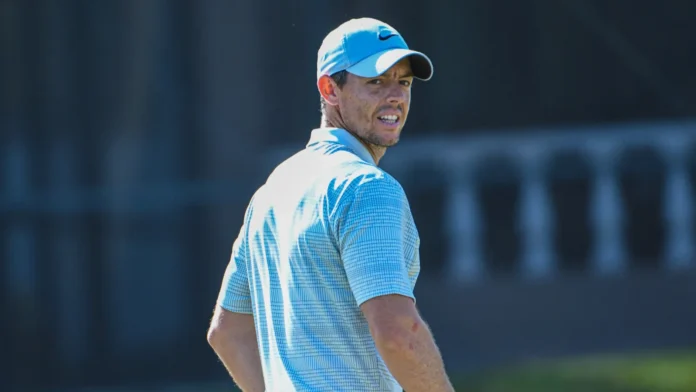
Rory McIlroy added his voice to golf’s scheduling debate before the 2026 Open Championship at Royal Birkdale. He said the men’s major season moves too quickly and suggested spreading the four championships across a longer portion of the calendar.
McIlroy is not alone in questioning the compressed schedule. Other leading players have discussed whether the current 14-week major season provides golf’s biggest championships with sufficient separation and sustained attention.
What Rory McIlroy actually said
McIlroy spoke at Royal Birkdale on July 14, 2026, before The Open Championship in Southport, England. The six-time major winner entered the tournament seeking his seventh major title.
He said the major season moves particularly quickly from the PGA Championship through the U.S. Open and into The Open. McIlroy acknowledged that a tightly packed schedule can help an in-form player, but said a longer major season could be better for the sport as a whole.
Golf’s 4-month sprint through its biggest events
The men’s major season runs from April through July. The Masters is played in April, followed by the PGA Championship in May, the U.S. Open in June, and The Open in July.
The PGA Championship moved from August to May in 2019 after nearly 50 years in its former late-summer position. That change brought all 4 men’s majors into a stretch of approximately 14 weeks.
Why the PGA Championship moved to May
The PGA Championship’s move to May formed part of a broader restructuring of the professional golf calendar. Moving the PGA Tour’s FedExCup Playoffs into August allowed the Tour season to conclude before the busiest portion of the U.S. football calendar.
The May date also expanded the range of courses and regions that could host the championship. However, television audiences vary considerably from year to year, so the move should not be characterized as producing consistently higher ratings than the tournament drew in August.
Little-known fact: The Open Championship first took place in 1860, making it golf’s oldest major, well over a century before the other three began.

The argument for spreading the majors out
McIlroy’s core argument is about breathing room. Right now, one major ends, and fans barely catch their breath before the next begins. He believes spacing out the season would let each major build its own storyline instead of blending straight into the next big event on live television.
More space could also boost anticipation. Longer gaps between majors give fans time to reflect, debate, and build excitement for what comes next. Other sports use spacing well, and golf could borrow that approach to keep interest high throughout the entire calendar year, not just for one short stretch.
The argument for keeping them close together
McIlroy acknowledged that the current schedule can benefit players who enter the major season in strong form. A golfer who develops momentum in the spring can carry that form from one major to the next without a long break.
Supporters of the condensed calendar may also argue that holding all 4 majors between April and July gives the season a clear and easily followed sequence. Whether that arrangement improves golf’s position against other sports, however, depends on audiences, broadcast schedules, and the events competing for attention in a given year.
How the squeeze affects the players
The major calendar gives players only a few weeks between several of the season’s biggest events. In 2026, the PGA Championship was played in May, the U.S. Open followed in June, and The Open began in England in July.
That sequence can require significant preparation and international travel in a relatively short period. McIlroy has acknowledged that the tight schedule can help players who are in strong form, while arguing that a longer major season could better serve golf overall.
Little-known fact: The USGA has already scheduled U.S. Open venues as far out as 2051, which is one reason schedule changes move so slowly.
Why McIlroy won’t fight for the change
McIlroy said he did not expect his opinion to change the major-championship calendar. He previously served on the PGA Tour’s Player Advisory Council and Policy Board before stepping away from those administrative responsibilities.
The 4 men’s majors are organized separately: Augusta National Golf Club operates the Masters, the PGA of America runs the PGA Championship, the USGA conducts the U.S. Open, and The R&A stages The Open. Any broad reorganization would therefore require coordination among independent organizations rather than a decision by the PGA Tour alone.

Could golf actually make this move?
Changing the major calendar would be possible, but difficult. Host-course commitments, broadcast arrangements, sponsorship agreements, and the schedules of professional tours are planned well in advance, so moving a major could affect numerous other events.
McIlroy’s opinion carries weight because of his accomplishments, including completing the men’s career Grand Slam. He became the 6th man to win all 4 modern majors when he captured the Masters in 2025. Whether his proposal produces a calendar change remains uncertain.
TL;DR
- McIlroy wants golf’s major season stretched beyond its current 4-month window.
- The PGA Championship moved from August to May, 7 years ago, compressing the calendar.
- The tighter schedule helps momentum for hot players but leaves little room to rest or recover.
- Golf’s four governing bodies would all need to agree, making quick change unlikely.
If you liked this story, don’t forget to follow us for more exclusive content.
This article was made with AI assistance and human editing.
If you liked this, you might also like: