From injury coverage to weekly game preparation, the NFL practice squad is the most underrated tool in professional football. It builds careers, shapes game plans, and separates good teams from great ones. Yet it barely gets a mention on broadcast television or postgame analysis.
Most people assume roster building ends when the final cuts are made in August. It does not. The practice squad is where depth is quietly manufactured, where raw talent gets polished, and where championship rosters are actually completed. The teams that treat it seriously tend to be the ones celebrating in February.
Let’s take a closer look.
The taxi cab that started it all
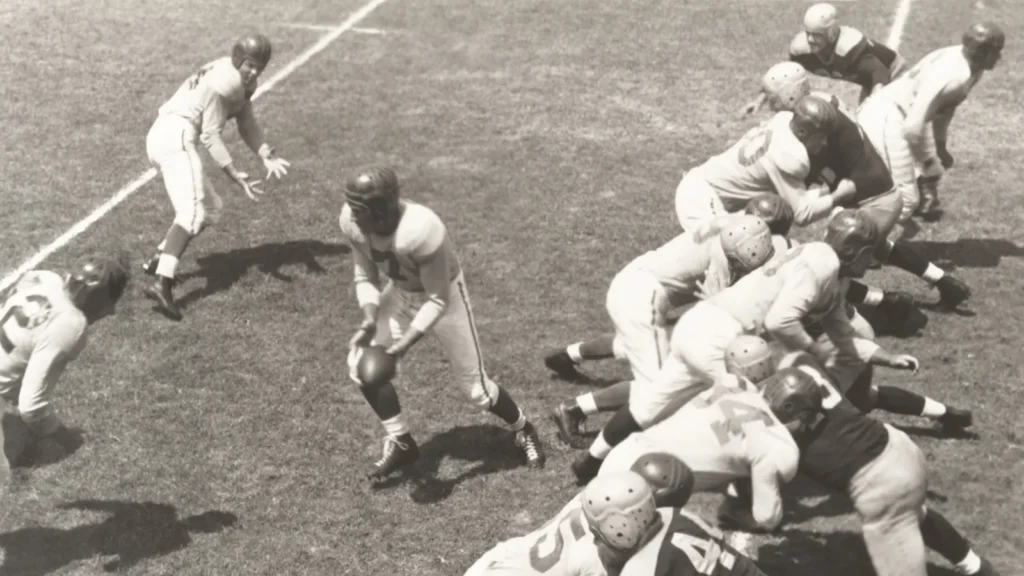
Cleveland Browns head coach Paul Brown had a problem. The All-America Football Conference limited rosters to 33 players, but Brown kept finding talent he did not want to cut. So he made a deal with Browns owner Arthur “Mickey” McBride, who happened to own Yellow Cab of Cleveland. Those extra players were quietly placed on the cab company’s payroll. They never drove a single taxi, but they practiced with the team every single week.
The idea spread fast. Other NFL coaches caught on and began stashing their own reserve players through similar arrangements. The league could not ignore it forever. The NFL officially recognized taxi squads on February 18, 1965, formally adopting a 40-man active roster supplemented by an off-the-books reserve. One coach’s creative workaround had quietly become the foundation of modern roster management.
Fun fact: Bill Belichick, the most decorated coach in NFL history, grew up idolizing Paul Brown and credits the taxi squad as a direct inspiration for how he managed his New England rosters.
From five players to a full development system
When the NFL officially formalized practice squads in 1989 under the name “Developmental Squad,” teams were allowed just six players. That number dropped to five the following season and stayed there for years. Under the 1993 Collective Bargaining Agreement, the limit was capped at five, then grew to eight in 2004 and reached ten by 2014. Progress was real but slow.
Then COVID-19 hit. The NFL expanded practice squads to 16 players in 2020 to manage pandemic-related roster chaos. Teams loved the flexibility so much that the league made it permanent. In 2025, every NFL team can now carry 17 practice squad players, provided one qualifies through the International Player Pathway Program. What started as six emergency spots is now a fully structured development system.
The scout team nobody talks about
Before Sunday’s game, practice squad players take on one of the most underappreciated jobs in professional sports. They operate as the official scout team during the regular season week of practice, mimicking the upcoming opponent’s key players so starters can prepare. One week, a receiver imitates a star wideout. The next week, a linebacker mimics an elite edge rusher. The deception is the point.
This work is more creative than it sounds. Practice squad quarterback Brett Rypien developed a system of code words like “Double-Double” and “In-N-Out” to simulate opposing offenses’ snap counts, trying to bait the defense into false starts. The goal is to make Wednesday and Thursday practice feel as close to Sunday as possible. Every good rep in practice is a rep that might save a game.
Who actually qualifies for a spot
Not every cut player can land on a practice squad. Of the 16 standard spots available, 10 must go to players with no more than two accrued NFL seasons, while up to six spots carry zero experience restrictions. That means teams can mix raw rookies with seasoned veterans in the same developmental group. It takes real roster strategy to fill those spots wisely each week.
One protection rule shapes the competition every single Tuesday. Teams can designate four practice squad players as protected for the week, shielding them from being signed away. A practice squad player also cannot be signed by an upcoming opponent unless the signing happens at least six days before kickoff, or ten days if the team is on a bye. These rules prevent teams from using insider knowledge as a weapon before a critical matchup.

What practice squad players actually earn
Practice squad players earn a weekly salary that, for most, adds up to a genuine six-figure income. Rookies and players with two or fewer accrued seasons earn a minimum of $13,000 per week in 2025, up from $12,500 the previous year. That rate increases annually under the current CBA, which runs through the 2030 season.
In 2025, veteran-eligible practice squad players can negotiate weekly salaries between $17,500 and $22,000. Front Office Sports reported that Dalvin Cook spent the entire 2024 season on the Cowboys’ practice squad, earning the maximum 18-week veteran salary of $383,400 plus a $125,000 retention bonus.
Fun fact: In 2020, at least nine NFL veterans sitting on practice squads had each earned over $15 million across their careers. The practice squad was no longer a place for kids with potential. It had quietly become a waiting room full of millionaires.
The poaching game every GM plays
Practice squads are open territory across the entire league. There is no compensation owed when a team signs a rival’s practice squad player. That player must be placed directly onto the new team’s 53-man active roster and is guaranteed at least three weeks of pay at his new salary. Poaching is free in terms of draft capital but costs real roster space and guaranteed money.
That three-week guarantee changes the calculus significantly. A team might want a specific player for one game, but ends up locked into his contract for three weeks minimum. Teams cannot sign a rival’s practice squad player to their own practice squad either; the acquisition must go straight to the active roster.
Going global through the practice squad
The practice squad has taken on a new international dimension in recent years. Through the NFL’s International Player Pathway Program, teams participating in the initiative can carry a 17th practice squad player from outside the traditional American football pipeline. Players from rugby, Australian rules football, and Gaelic football now have a structured route into professional American football. It is a pipeline that did not exist a decade ago.
Jordan Mailata is the most high-profile success story from the program. The Australian tried out for the International Player Pathway Program in 2018, became the first player drafted from it when the Eagles selected him in the seventh round that year, and later developed into Philadelphia’s starting left tackle.
TL;DR
- The NFL practice squad traces back to the 1940s, when Paul Brown secretly paid reserve players through a Cleveland taxi cab company.
- Practice squads grew from 5 players in 1993 to 17 in 2025, with COVID-19 accelerating the biggest single expansion.
- Players on the practice squad serve as the weekly scout team, mimicking upcoming opponents during practice so starters can prepare.
- Players with two years of service or less earn $13,000 per week in 2025, while veteran-eligible practice squad players can negotiate between $17,500 and $22,000 per week.
This article was made with AI assistance and human editing.
If you liked this, you might also like: