For over 150 years, the sport has operated on two sets of rules. The printed ones govern strikes, outs, and fair balls. The unprinted ones govern something far harder to define. They govern respect, ego, tradition, and the invisible line between competing hard and crossing the line.
These silent rules have sparked brawls, fueled retaliations, and shaped the entire identity of the game. They were never handed down by any authority. They traveled from veteran to rookie, passed along like a secret handshake through every generation of ballplayers.
Read on to find out where they came from and why they still matter today.
Where it all began
Baseball’s unwritten rules are nearly as old as the sport itself. The earliest known newspaper mention of baseball’s unwritten rules appeared in the Brooklyn Citizen on July 15, 1888. At that point, the National League was over a decade old. The sport had grown enough to develop a genuine culture and real stakes. Players needed a shared code that nobody had to write down.
That code spread quickly through dugouts and locker rooms. By 1897, a newspaper in Hillsboro, Ohio, was already describing an unwritten rule about not swinging at a 3-1 pitch. These norms traveled from veteran to rookie, passed down like a secret handshake through every generation of ballplayers.
The code that governed behavior
Baseball’s unwritten rules were always about one thing above everything else, respect. The rules were designed to establish behavioral thresholds for sportsmanship on the field. They were not enforced by umpires or league officials. Players enforced them themselves. That made them both powerful and wildly inconsistent.
The rules covered everything from how a pitcher should react to an error to how a batter should round the bases after a home run. Veteran power hitters were often given more leeway than rookies. The code was real, but it was never applied equally. That contradiction sat at the heart of every controversy it ever produced.
The no-hitter superstition
Few unwritten rules carry more mystique than the silence surrounding a no-hitter in progress. Once a pitcher reaches the sixth or seventh inning without allowing a hit, an unspoken agreement kicks in across the dugout. Nobody mentions it. Players avoid the pitcher. Conversations shift to anything else. Teammates essentially ignore the pitcher to protect what some call his mojo.
The related rule about not bunting to break one up goes even further. Many players consider bunting late in a no-hitter disrespectful. You are expected to earn that first hit cleanly. Anything else is seen as cowardly and disrespectful to the pitcher’s achievement.
Fun fact: In 1947, Yankees pitcher Bill Bevens had just one out remaining before completing the first no-hitter in World Series history. Then broadcaster Red Barber mentioned it on air. The Dodgers immediately got a hit and went on to win the game.
Don’t run up the score
Baseball has always expected winning teams to ease off the gas once the game is decided. Stealing bases during a blowout is one of the clearest violations a player can commit. There is both a practical and a sportsmanship dimension to this rule. Running hard in a lopsided game raises injury risk and rubs the losing team’s face in its own defeat.
In 1994, Michael Jordan found this out the hard way. Playing in the minor leagues, he stole third base with his team up 11-0. His manager, Terry Francona, had to explain the rule to him after the game. That story became one of the most cited examples of the code in action because Jordan had no prior baseball culture to draw from.

The beanball as justice
This form of retaliation is deeply embedded in baseball history. ESPN’s deep dive into the unwritten rules quotes catcher John Baker, who explains that baseball has so many unwritten rules partly because players cannot fight or tackle each other. The beanball became the sport’s version of self-policing.
In baseball, the statute of limitations on a grudge never expires. Bob Gibson reportedly beaned a hitter for an insult that had aged fifteen years, while Ed Farmer and Al Cowens turned a year-old pitch into a mid-game wrestling match. On the diamond, time doesn’t heal wounds; it just lets the resentment simmer.
The bat flip debate
José Bautista’s dramatic bat flip during the 2015 ALDS became the defining image of this debate. Sam Dyson publicly said Bautista should ‘respect the game.’ The next season, Matt Bush hit Bautista with a pitch during a game in a feud widely tied to the bat-flip aftermath. That single flip set off a chain reaction that lasted months and sparked a national conversation about player expression.
The debate cuts along cultural lines, too. Today, nearly 28% of MLB rosters are comprised of international talent, bringing a vibrant shift to the league’s ‘unwritten rules’. From the theatrical ppa-dun (bat flips) of South Korea to the high-energy celebrations in the Dominican winter leagues, a new generation is replacing stoicism with joy.
The most shameful unwritten rule
The organized baseball color line was largely enforced through unwritten agreements rather than a single formal MLB rule. In the amateur game, the NABBP moved in 1867, for the 1868 season/guide era, to reject Black clubs from representation; later, professional baseball hardened that exclusion through a gentleman’s agreement.
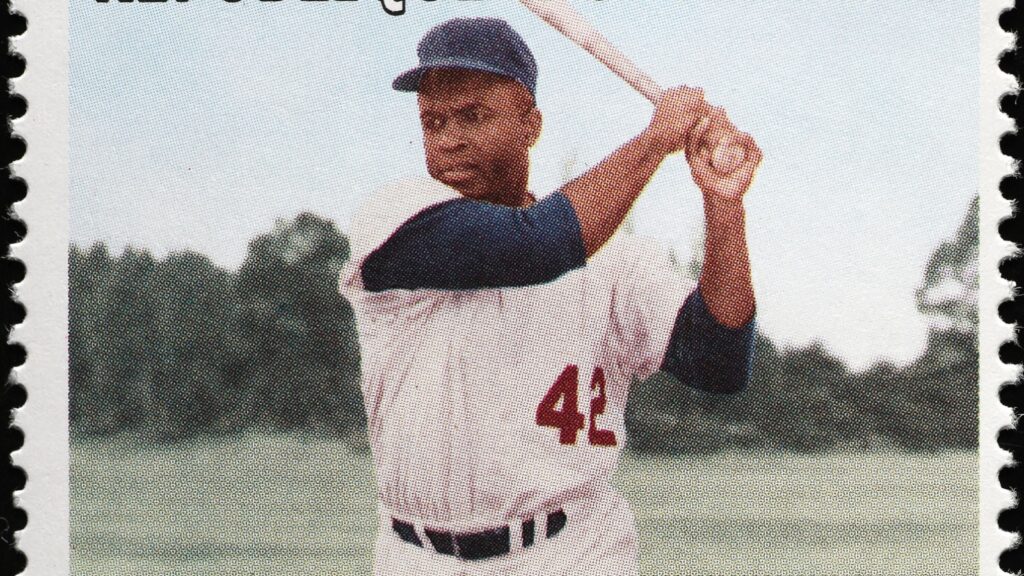
That rule held for nearly 80 years. Jackie Robinson broke the barrier in 1947 when he signed with the Brooklyn Dodgers. His breaking of that barrier came with the condition that he would not fight back against the abuse directed at him. He obeyed one unwritten rule while shattering another. His story remains the most powerful reminder that unwritten rules are only as moral as the people who write them.
Fun fact: Some managers actually tried to sneak Black players past the color line by disguising their identity. In 1901, Baltimore Orioles manager John McGraw attempted to sign Black second baseman Charlie Grant by presenting him as a Cherokee Native American named Charlie Tokohama.
Why the rules still matter today
Baseball sits at a crossroads unlike any other major sport. It carries more tradition and more resistance to change than football or basketball. The unwritten rules sit at the center of that tension. They represent everything that makes the sport feel timeless and everything that makes it feel stuck.
For a new generation of fans and players, the debate is not just about bat flips or stolen bases. It is about who gets to define what respect looks like in a game that now belongs to the entire world. Baseball has always policed itself. The question now is whether the old enforcers or the new generation gets to decide what the rules actually are.
TL;DR
- Baseball’s unwritten rules date back to at least 1888 and were passed down through generations entirely by word of mouth.
- Key rules include no bunting to break up a no-hitter, no stealing bases in a blowout, and no excessive bat flipping.
- The beanball was one of baseball’s main self-policing mechanisms for generations.
- The racial color line barring Black players was itself an unwritten rule that Jackie Robinson broke in 1947.
- A new generation of international players is challenging and rewriting the code from the inside.
If you like this post, don’t forget to follow us for more news and stories like this one.
This article was made with AI assistance and human editing.
If you liked this, you might also like: