
From a Nike conference room in Oregon to a late-night movie session, the Black Mamba story is far stranger than most fans realize. It was born from chaos, reinvention, and a fear of snakes that quietly changed the course of sports branding forever. Nobody planned for any of it.
This is the story behind the name that defined a generation of basketball and went on to inspire millions of people far outside the sport. A nickname born in crisis became a global philosophy. A private coping tool became one of the most recognized personal brands in the history of athletics.
Let’s take a closer look.
How it all started
In late 2002, Nike executives at their Oregon headquarters were studying a space-age braided material called Tech Flex. One executive, Gentry Humphrey, looked at its tubelike sleeving and immediately thought it resembled snakeskin. That night, he searched for the most dangerous black snake alive and landed on the black mamba.
The entire Black Mamba campaign was built around Michael Jordan for the Air Jordan 19. Print ads showed a snake coiled around the shoe. It felt like a perfect match. But when Jordan saw the full pitch, something shifted. Jordan Brand president Larry Miller told his team plainly that MJ did not like snakes.

Jordan’s hidden fear changed everything
Michael Jordan’s lifelong phobia of snakes quietly altered the entire course of sneaker history. Jordan allowed a limited print run of the Black Mamba ad for the Air Jordan 19 launch in March 2004, but he told Nike to reconceptualize before the next colorway. Author Mark Vancil later revealed that Jordan was reportedly terrified of snakes. If one appeared on television, he would change the channel.
It was a carefully guarded secret. The Black Mamba concept quietly died inside Nike after Jordan’s rejection. Nobody recycled it. Nobody repurposed it. It simply sat in Nike’s archives until fate, film, and one of basketball’s darkest chapters brought it back to life with a different player.
The moment that changed everything
In a pivotal scene, an assassin named Elle Driver introduces a black mamba snake as her weapon of choice. The film portrays the snake as precise, deadly, and utterly fearless. Bryant, going through the most turbulent stretch of his career, watched that scene and felt something click. He recalled watching it past 2 a.m. and thinking to himself that the snake described exactly how he wanted to play basketball.
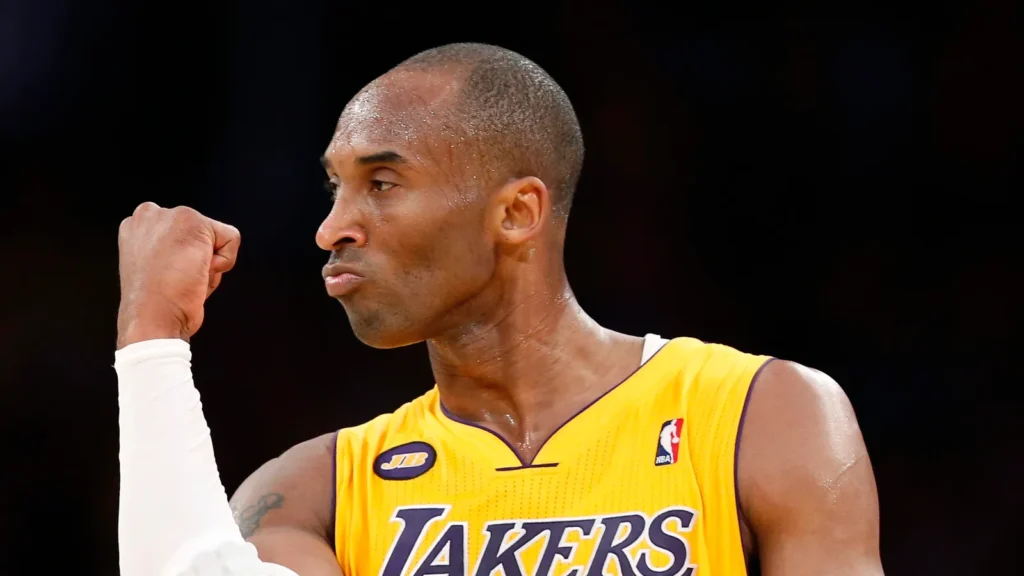
Bryant adopted the Black Mamba name to separate what happened off the court from what happened on it. He told The New Yorker in 2014, “The name Kobe Bryant just evokes such a negative emotion. If I create this alter ego, it separates the personal stuff.” He compared it to Bruce Banner becoming the Hulk when the situation demanded it.
Fun fact: The real black mamba is the fastest snake on Earth, capable of reaching speeds of up to 12 miles per hour. It can also deliver multiple strikes in rapid succession, which is exactly the quality that drew Kobe to the name.
The cover that made it official
In May 2006, SLAM Magazine shot Kobe Bryant holding a live black snake for their cover. The headline read “Kobe COLD BLOODED.” Bryant arrived at the New York studio during an off-night, saw the snakes, and was immediately comfortable. The handler showed him what to do, and Kobe held the snake near his face without hesitation. He was all in.
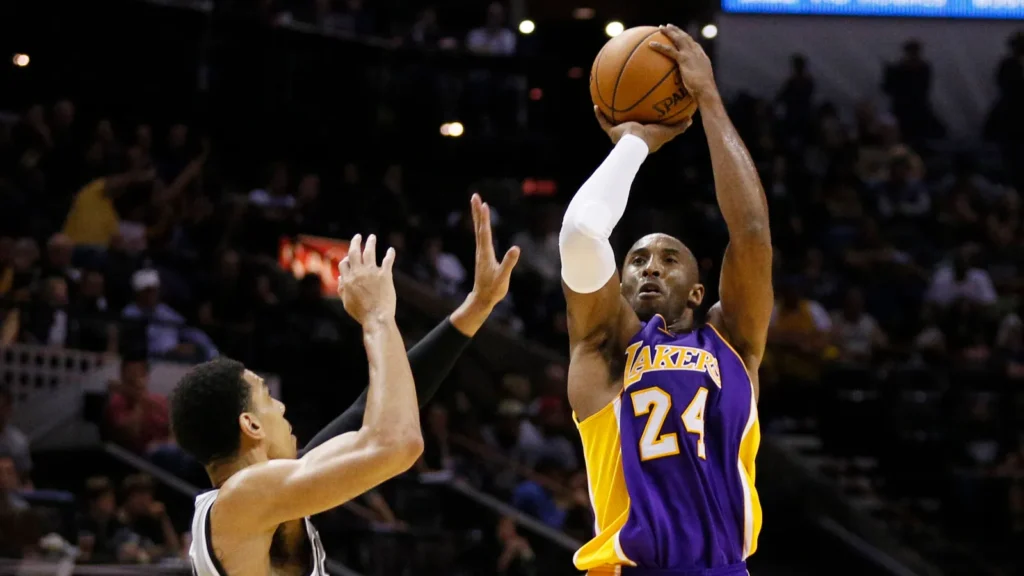
That same year, Kobe dropped 81 points against the Toronto Raptors on January 22, 2006. It remains the second-highest single-game scoring performance in NBA history, behind only Wilt Chamberlain’s 100-point game in 1962. The Black Mamba was no longer just a nickname. It was a force that the entire league felt.
Nike goes all in on the Mamba brand
Nike released the Zoom Kobe IV “Venom” and the Kobe VI with snakeskin-inspired textures. A short film titled The Black Mamba debuted during NBA All-Star Weekend. Ad campaigns were built around the Mamba Mentality concept. August 24 became known as Mamba Day, a nod to Kobe’s two jersey numbers 8 and 24 that he wore across his 20-year career with the Lakers.
When Kobe scored 60 points in his final game on April 13, 2016, and placed the microphone on the court declaring “Mamba out,” Nike honored his retirement with a global Mamba Day celebration. When he passed away in January 2020, Nike released a longer statement that ended with ‘Mamba forever.’ What began as a shelved campaign for Jordan had become one of the most recognizable athlete brands ever built.
Fun fact: The Nike Black Mamba short film was directed by Robert Rodriguez, the same director behind Sin City and Desperado, and starred Bruce Willis, Danny Trejo, and Kanye West as a villain named “The Boss.” The 6-minute film debuted at the 2011 NBA All-Star Weekend and also screened at Mann’s Chinese Theatre.
The Mamba Mentality becomes a life philosophy
Kobe Bryant described Mamba Mentality as focusing entirely on the process rather than the result. He talked about arriving at the gym before anyone else and leaving after everyone had gone. He spoke about watching films of opponents for hours. He described waking up at 3 or 4 in the morning to get extra sessions in before regular practice even started. It was a total way of life.
In 2018, he published The Mamba Mentality: How I Play through MCD. The book paired his words with photography by longtime Lakers photographer Andrew D. Bernstein. Phil Jackson wrote the foreword, and Pau Gasol wrote the introduction. It became one of the most celebrated sports books in recent memory and reached audiences far outside of basketball.
A legacy that belongs to every industry
Kobe himself noted that hearing Fortune 500 executives reference the Mamba Mentality publicly was deeply meaningful to him. The phrase had become shorthand for obsessive preparation, resilience, and ruthless focus in any field. Athletes across the NFL, soccer, tennis, and track adopted it. Entrepreneurs put it on office walls.
Bryant used the assassin-like Mamba mentality to average 28.6 points per game throughout the 2010 NBA Finals, earning Finals MVP honors and delivering the Lakers their second consecutive championship. In 2018, he also became the first former professional athlete to win an Academy Award, taking home the Oscar for Best Animated Short Film for Dear Basketball. The Mamba had won everywhere.
TL;DR
- The Black Mamba name was originally developed by Nike for Michael Jordan in 2002 for the Air Jordan 19 shoe campaign.
- Jordan rejected the full campaign because of a little-known lifelong fear of snakes.
- Kobe Bryant adopted the name after watching Quentin Tarantino’s Kill Bill Vol. 2 during the lowest point of his career in 2003 and 2004.
- He used the Black Mamba as a psychological alter ego to separate his personal crisis from his performance on the court.
This article was made with AI assistance and human editing.
If you liked this, you might also like: