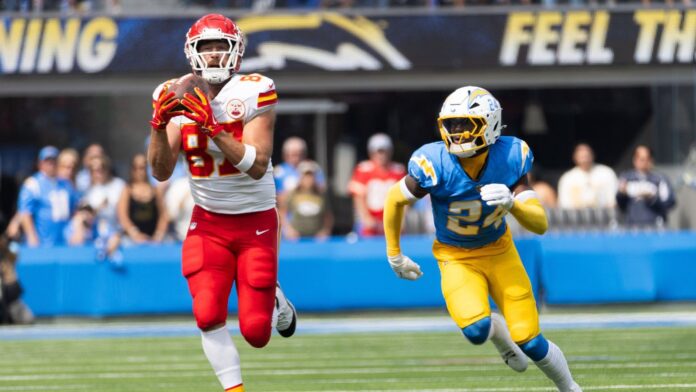
Travis Kelce’s right ankle became a major talking point after the Kansas City Chiefs’ 22-6 victory over the Los Angeles Chargers on Oct. 18. The veteran tight end limped off the field following a tackle by Chargers linebacker Daiyan Henley during the opening drive, raising questions about the contact and his availability.
Kelce returned to the game and finished with 4 receptions for 53 yards, easing some immediate concerns about the injury. However, the incident attracted attention because of how it happened and whether the tackle could draw further scrutiny from the NFL.
The tackle has sparked discussion about the NFL’s player-safety rules and whether Henley could face disciplinary action. The league reviews every play for potential violations, but no specific investigation or disciplinary finding involving Henley has been publicly announced.
How the tackle left Kelce limping
The incident happened during Kansas City’s opening possession against the Chargers. Kelce caught a short pass and was tackled by Henley, after which the Chiefs tight end appeared uncomfortable and struggled to move normally as he left the field.
Kelce received attention on the sideline, where medical staff worked on his right ankle. He missed the final 2 plays of the opening drive before returning to action on Kansas City’s next possession.
The injury initially raised concerns about whether the Chiefs would lose one of Patrick Mahomes’ most experienced targets. Kelce’s return offered some reassurance, although his movement after the tackle made the play worth watching closely.
Why Daiyan Henley’s tackle attracted attention
Henley’s involvement placed the Chargers linebacker under scrutiny as observers examined the tackle and its effect on Kelce. The central issue was whether the contact fell within the NFL’s permitted tackling techniques or involved an action that could violate player-safety rules.
Not every tackle that causes an injury is illegal. Defenders are allowed to bring ball carriers to the ground, but they must avoid prohibited techniques, including certain forms of unnecessary roughness and tackles specifically restricted by league rules.
The NFL can review game footage to determine whether a play warrants additional disciplinary action. However, the fact that a player limps away from a tackle does not establish that the defender committed a foul or deliberately intended to cause an injury.
What the NFL could examine during its review
The NFL prohibits several forms of unnecessary contact, including the hip-drop tackle. This violation involves a defender grabbing or wrapping up a runner, swiveling and dropping his body weight, and landing on or trapping the runner’s legs at or below the knee.
During its routine postgame review, the league can examine Henley’s positioning, movements and point of contact. The relevant question is whether his technique met the definition of a prohibited tackle, rather than simply whether Kelce injured his ankle.
The NFL can impose fines or other discipline when it identifies violations, even if officials did not throw a flag during the game. Any decision involving Henley would depend on the evidence from the play and the league’s established disciplinary procedures.

Andy Reid provides an update on Kelce’s condition
Chiefs coach Andy Reid offered a reassuring assessment after the game, describing Kelce’s ankle issue as a tweak. Reid indicated that the tight end should be fine, although some soreness could remain following the contact.
Kelce’s return was encouraging because it showed he could continue contributing after receiving treatment. He caught 4 of the 5 passes thrown his way, finishing with 53 receiving yards in a game Kansas City controlled defensively.
Even so, his condition remains worth monitoring as the season progresses. An experienced player can finish a game while still experiencing discomfort, and the Chiefs must balance his importance to the offense against the need to keep him healthy for upcoming matchups.
Kelce remains an important part of Kansas City’s offense
Kelce’s value extends beyond his receiving totals. His familiarity with Mahomes, understanding of defensive coverages and ability to find space across the middle make him a dependable option when Kansas City needs to sustain drives or convert important downs.
His experience is particularly valuable when opponents concentrate on limiting the Chiefs’ outside receivers. Kelce can create opportunities through short routes and precise positioning, giving Mahomes another option when the defense closes down deeper passing lanes.
That role makes any injury involving Kelce significant for Kansas City. Although the team showed it could secure a comfortable win against the Chargers, keeping its veteran tight end available remains important as the Chiefs pursue their goals this season.
Kansas City’s victory overshadowed by injury concerns
The Chiefs defeated the Chargers 22-6, extending their unbeaten start to 5-0 while Los Angeles fell to 0-6. Kansas City controlled much of the matchup, using its rushing attack and defensive pressure to prevent the Chargers from building meaningful momentum.
Running back Kenneth Walker III led the Chiefs with 128 rushing yards and 2 touchdowns. Mahomes completed 23 of 30 passes for 272 yards, helping Kansas City maintain control even as the offense worked through personnel challenges.
Despite the result, Kelce’s ankle became one of the game’s most closely watched developments. His ability to return reduced immediate concerns, but the tackle also raised broader questions about how the NFL evaluates potentially dangerous contact during regular-season games.
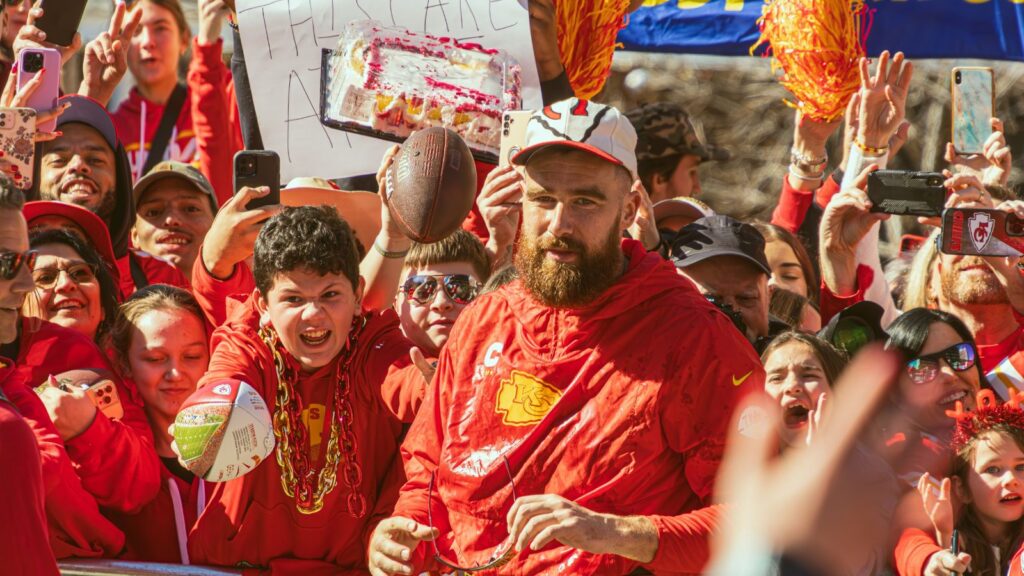
What the incident means for Henley and the Chargers
For Henley, the key question is whether the league identifies a violation in its review. Any disciplinary decision would depend on the specific details of the play and the applicable rules, rather than simply the fact that Kelce was hurt.
For the Chargers, the incident adds another layer to a difficult start. The team needs stronger results on the field, but individual players must also remain disciplined and execute within the league’s safety requirements as they attempt to turn the season around.
The Chiefs, meanwhile, will want Kelce to remain available without aggravating his ankle. His return against Los Angeles was a positive sign, but the final implications of the tackle depend on any further medical updates and the league’s determination about the play.
Fun fact: Travis Kelce became the fastest tight end in NFL history to reach 10,000 career receiving yards, achieving the milestone in 140 games. His combination of receiving production and longevity has made him one of the defining tight ends of his generation.
TL;DR
- Travis Kelce injured his right ankle after a tackle by Chargers linebacker Daiyan Henley during Kansas City’s opening drive.
- Kelce returned to the game and recorded 4 catches for 53 yards.
- Chiefs coach Andy Reid described the injury as a tweak and indicated Kelce should be fine.
- The NFL’s review could determine whether the tackle violated player-safety rules, but a review alone does not establish wrongdoing.
- Kansas City defeated Los Angeles 22-6 to improve to 5-0, while the Chargers fell to 0-6.
This article was made with AI assistance and human editing.
Read More From This Brand: