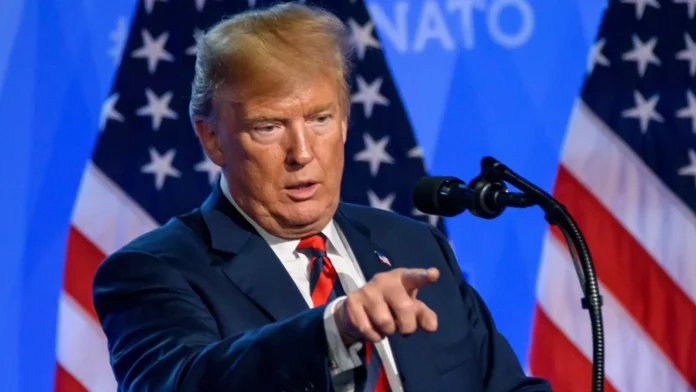
The Lincoln Memorial Reflecting Pool is one of the National Mall’s most recognizable landmarks, positioned between the Lincoln Memorial and the Washington Monument. Millions of people visit the National Mall each year.
In 2026, the pool became the center of controversy after a costly renovation developed serious problems. A New York Times investigation later revealed that David Schutzenhofer, the manager of President Donald Trump’s Bedminster golf club, had played an influential role in setting up the project.
The new blue coating began peeling soon after the renovation was declared complete, algae returned, and federal contracting costs climbed far beyond Trump’s early estimates. As of Aug. 12, the pool and adjacent walkways remain closed while repairs and restoration work continue.
A golf manager takes a major role
David Schutzenhofer has managed Trump National Golf Club Bedminster in New Jersey since 2006. After Trump announced plans to overhaul the Reflecting Pool around Thanksgiving 2025, he tapped Schutzenhofer to help lead the effort.
The New York Times reported that Schutzenhofer has a background in hospitality but no formal training in engineering or architecture. He nevertheless played an influential role in developing the renovation approach, contacting vendors and helping connect companies involved in the project.
The Interior Department said Schutzenhofer was unpaid and volunteered suggestions because he was “an American patriot.” The department maintained that he did not direct federal contracts.
Schutzenhofer worked outside a formal federal role
Trump and Schutzenhofer had worked together for nearly 20 years by the time of the Reflecting Pool project, with Schutzenhofer managing Trump National Golf Club Bedminster since 2006.
Federal records and reporting show that Schutzenhofer contacted potential vendors and helped shape technical decisions while remaining a private employee of the Trump Organization rather than becoming a federal employee.
The Interior Department said he volunteered his time and did not direct government contracts. Reporting noted that if Schutzenhofer had become a temporary federal employee, he would have been required to receive government ethics training and pledge to avoid conflicts of interest.
The pool had long-standing problems
The Lincoln Memorial Reflecting Pool has experienced leaks and recurring algae problems for years. A major National Park Service reconstruction completed in 2012 addressed structural settlement, water circulation, and water use, but algae and maintenance problems later returned.
By 2026, officials were again trying to address leakage and algae. The new project included a waterproof polyurea coating and a separate water-treatment system intended to reduce algae.
The project ultimately became far more complicated than Trump’s initial public description suggested. Reporting later documented rushed decision-making, limited review, and concerns about contractor selection and workmanship.
The project cost climbed dramatically
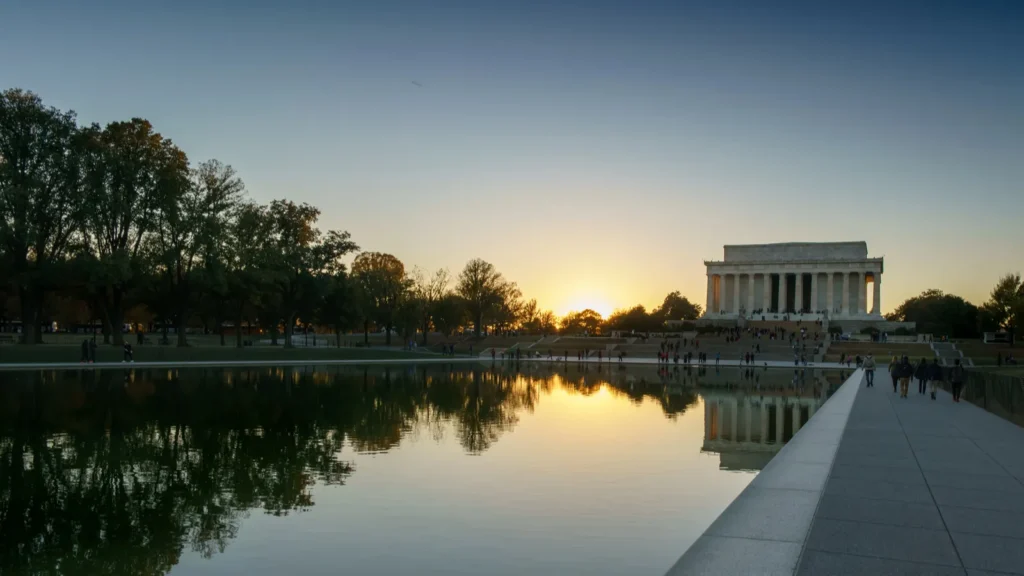
Trump initially said his chosen contractor could repair the Reflecting Pool for about $1.8 million. At an April 23 event, he separately estimated that the work would cost about $1.5 million.
Federal contracting records later showed much higher costs. Atlantic Industrial Coatings’ resurfacing and waterproofing contract grew to about $14.7 million, while a separate Green Water Solutions contract for algae-control equipment brought total awarded contracts for the project to more than $16 million.
The work is still not finished, so describing $14 million as the project’s final price tag is inaccurate. Repairs remain underway as of Aug. 12.
Tariffs complicated polyurea sourcing
Schutzenhofer settled on using a polyurea liner to coat the Reflecting Pool’s concrete surface. Polyurea is a fast-curing, durable membrane that is commonly used for waterproofing applications, including pools.
Rodney Jarboe of Creative Polymers told The New York Times that Trump’s tariffs on imported resins had reduced the availability of materials needed to produce polyurea coatings.
Creative Polymers then partnered with California-based Rhino Linings, which could produce enough polyurea at its Texas facility. Rhino subsequently enlisted Virginia-based Atlantic Industrial Coatings to apply the coating.
Little-known fact: Schutzenhofer reportedly attended the Las Vegas World Concrete trade show in January 2026 while researching coating options.
Problems appeared soon after completion
The Trump administration declared the resurfacing work finished in early June. Trump praised the new coating and said it was an industrial-strength material that could last for decades.
According to later court filings, the blue coating began peeling within about a week. Algae also returned soon after the pool was refilled, forcing National Park Service crews to carry out additional treatment and repair work.
The pool was later drained again. As of Aug. 12, the Reflecting Pool and adjacent walkways remain closed while further repairs and restoration continue, with the current NPS closure scheduled through Sept. 10.
Trump continued blaming vandals
Trump repeatedly blamed vandalism for damage at the Reflecting Pool, including alleged cuts to the liner and claims that someone introduced substances into the water to worsen the algae.
There was evidence of some physical damage at the site, including cuts to the sealant around portions of the pool. However, federal prosecutors later said that newly disclosed records showed the widespread liner problems underlying their criminal cases were caused by flawed, rushed installation work rather than intentional destruction.
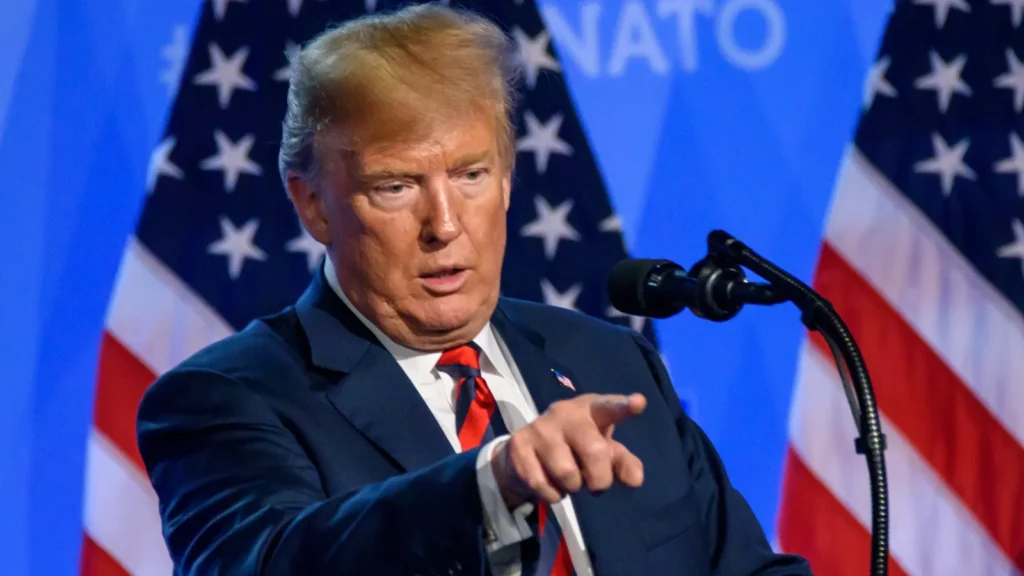
Trump acknowledged on Aug. 9 that contractor errors occurred because the job was rushed, but continued to maintain that additional vandalism took place. On Aug. 11, Reuters reported that the White House had asked the Justice Department to examine whether new charges could be pursued. No final decision had been made.
Prosecutors blamed the flawed installation
U.S. Attorney Jeanine Pirro’s office addressed the Reflecting Pool damage in a July 31 court filing seeking to dismiss the case against former Olympic canoeist David Hearn.
Prosecutors said documents provided by the Interior Department showed that widespread damage to the coating resulted from a botched installation and rushed work ahead of Independence Day events. The filing undermined the government’s earlier theory that vandalism caused the liner failure central to Hearn’s case.
The New York Times reported that Schutzenhofer and Rhino Linings did not respond to its questions about their roles. Atlantic Industrial Coatings said only a “very small part” of the liner required repairs and said it would perform warranty work.
The legal controversy remains active. On Aug. 11, Reuters reported that the White House had asked the Justice Department to explore potential new charges related to alleged vandalism.
Questions about oversight remain
The Reflecting Pool episode has intensified scrutiny of how the administration selected contractors, used expedited procurement procedures, and involved a private Trump Organization employee in decisions surrounding a major federal landmark.
Congressional lawmakers and preservation groups had already raised concerns about costs, no-bid contracts, and the government’s review process before the full extent of the liner problems became known.
As of Aug. 12, the story remains unresolved. The National Park Service has closed the Reflecting Pool and its adjacent walkways through Sept. 10 while repairs and restoration continue, although the agency says the closure may be reduced earlier if conditions permit.
Interesting fact: The Reflecting Pool is approximately 2,000 feet long and 167 feet wide and can reflect the Lincoln Memorial, Washington Monument, and the surrounding landscape, depending on the viewer’s position.
TL;DR
- Trump tapped his Bedminster golf club manager, David Schutzenhofer, to lead the Reflecting Pool renovation.
- Schutzenhofer had no formal training in architecture or engineering.
- The project’s cost jumped from a promised $1.8 million to roughly $13.1 million.
- Tariffs complicated the sourcing of the polyurea coating, leading to partnerships with outside contractors.
If you liked this story, don’t forget to follow us for more exclusive content.
This article was made with AI assistance and human editing.
If you liked this, you might also like: