Gianni Infantino faces African vote split
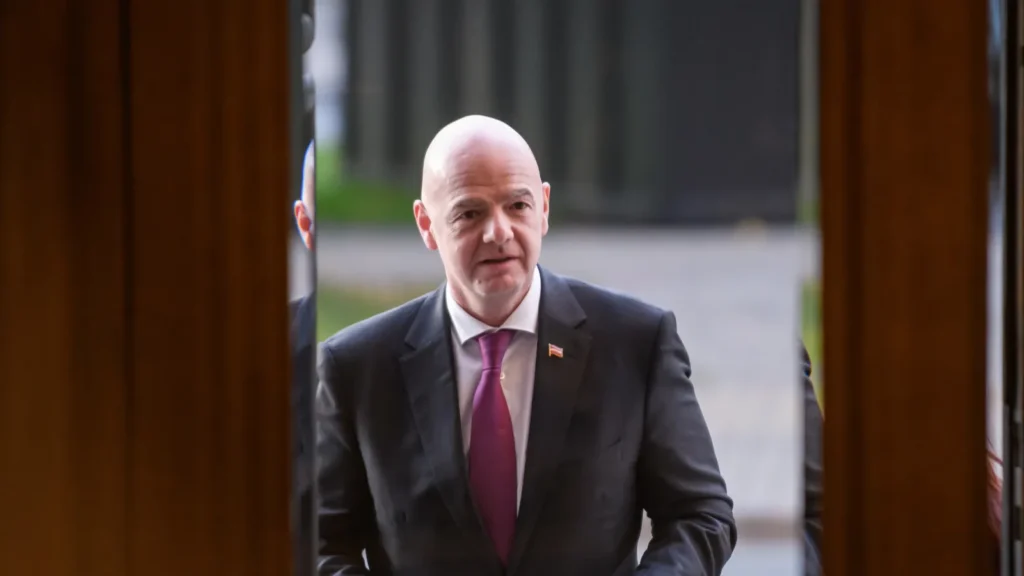
FIFA President Gianni Infantino faces uncertainty over African support before the March 18, 2027, presidential election in Rabat, Morocco. CAF’s executive committee backs him, but individual national associations control their own votes.
Africa has 54 FIFA member associations, representing a substantial share of FIFA’s 211 members. Several African federation leaders have avoided publicly committing their positions since the FIFA Forward Enterprise controversy. as opposition to Infantino has grown elsewhere in world football.

FIFA election gives each member one vote
FIFA’s presidential election gives each member association one vote, regardless of population, ranking, or commercial size. If 2 candidates contest the election, a simple majority is required. If 3 or more candidates stand, a two-thirds majority is required in the first round.
The election is scheduled for March 18, 2027, in Rabat, Morocco. Potential challengers face a November 18 candidacy deadline, giving national associations several months to consider Infantino and any opponent who enters the race.
CAF backs Gianni Infantino unanimously
CAF’s executive committee unanimously reaffirmed support for Gianni Infantino on August 6. The organization also emphasized governance, transparency, auditing standards, and due process while maintaining its backing for the FIFA president.
That endorsement does not automatically deliver all 54 African votes. National associations have previously departed from CAF positions, including presidential elections and the vote that awarded the 2026 World Cup to North America.
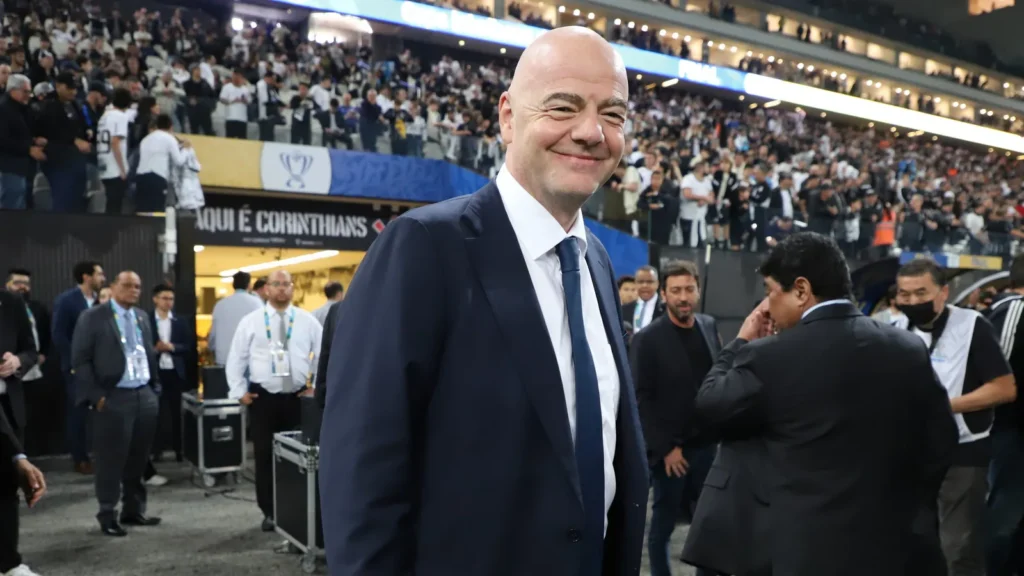
Patrice Motsepe points to election
CAF President Patrice Motsepe said Infantino’s future should be decided through FIFA’s election process. He argued that the organization’s 211 member associations should determine who leads world football after the vote.
Several African associations have publicly supported Infantino, including Morocco, Egypt, and Niger. Morocco and Egypt also joined Qatar, Sudan, Lebanon, and Mauritania in a joint statement expressing support for his leadership.
African support remains unsettled
Several African federation leaders have avoided publicly committing their positions since the FIFA Forward Enterprise controversy, creating uncertainty over whether Infantino can rely on a unified African vote. CAF’s formal endorsement does not require its 54 member associations to vote as one bloc in March 2027.
The FIFA Forward Enterprise proposal would have consolidated FIFA’s commercial rights and tournament operations in a FIFA-owned and controlled subsidiary. Reuters reported that the proposed entity was valued at about $20 billion and that outside investors could have purchased stakes of up to 20%, potentially raising about $4.2 billion.
FIFA withdraws investment proposal
The proposal faced opposition from UEFA, Concacaf, and the Asian Football Confederation. Infantino withdrew it on July 31 after stating that divisions surrounding the project no longer served its original objective.
Carlos Cordeiro resigned as a senior adviser that day after opposing the investment structure. He called the proposal a bad deal for football and questioned the exchange of long-term commercial value for immediate financial returns.
Kevin Lamour leaves FIFA
Kevin Lamour left FIFA on August 17 after publicly criticizing the proposal and its internal process. He had served as FIFA’s chief operating officer since 2024 before the organization ended its working relationship.
Rights organizations criticized Lamour’s departure and raised concerns about internal dissent at FIFA. The governing body confirmed that his employment ended, but did not publicly provide detailed reasons for the decision.
UEFA, Concacaf and AFC unite
UEFA, Concacaf and the Asian Football Confederation issued a joint open letter criticizing FIFA’s leadership and decision-making. Their position showed that opposition to Infantino extended beyond Europe and involved three major regional governing bodies.
The confederations continued criticizing FIFA after the investment proposal was withdrawn. Their concerns centered on governance, meaningful consultation, independent scrutiny, and decision-making, expanding the commercial disagreement into a broader debate about Infantino’s leadership ahead of the 2027 election.
Mosengo-Omba keeps backing Infantino
Véron Mosengo-Omba remains a prominent supporter of Infantino despite opposing the original investment structure. The former FIFA official said he believed most national associations still backed Infantino and suggested that confederations could invest in a revised commercial model.
Mosengo-Omba’s position shows that policy disagreement does not always equal electoral opposition. The Democratic Republic of Congo federation president criticized parts of the commercial approach while continuing to support Infantino’s leadership.
Infantino retains support beyond Africa
Infantino has retained support from several associations outside Africa. Argentina and Mexico publicly backed his leadership in August, while Qatar and Lebanon joined four African federations in a separate statement supporting him.
Ireland, New Zealand, and Israel later withdrew their support, while major confederations challenged FIFA’s governance. Those contrasting positions show that national associations do not automatically follow the stance of their regional confederations.
Fun fact: FIFA has 211 member associations, which is more than the United Nations has member states. Global soccer politics can literally involve more voters than world diplomacy.
Africa holds 54 FIFA votes
FIFA’s 211 member associations make coalition-building essential because no single confederation controls a majority. Africa’s 54 votes, therefore, carry substantial weight if other regions remain divided over Infantino’s presidential candidacy.
The central question is whether African associations follow CAF, because its executive committee already supports Infantino. Individual ballots will determine how much of that formal backing converts into actual votes in Morocco next March.
FIFA dispute becomes leadership test
The withdrawn investment proposal remains central to the leadership dispute because it triggered criticism across multiple confederations and inside FIFA. What began as a commercial proposal developed into a broader debate over trust, governance, and leadership before the 2027 election.
Africa’s role will become clearer as national associations update their positions and potential challengers decide whether to enter. African associations unanimously expressed support for Infantino earlier in 2026, and CAF’s executive committee continues to back him.
FIFA’s dispute over Gianni Infantino’s leadership has widened beyond the withdrawn commercial proposal. Curious why women’s soccer became part of the criticism? Dive into what the “football is not for sale” backlash revealed.
Africa could shape FIFA election
Gianni Infantino intends to seek reelection in 2027 with formal CAF support but without guaranteed backing from every African association. The continent’s independent votes could become especially important if a credible challenger enters the presidential race.
The candidacy deadline is November 18, leaving potential opponents several months to build support. Because no single confederation controls a majority of FIFA’s votes, any successful challenger would need a broad coalition, making decisions by African associations particularly important before the March 18 election.
Gianni Infantino’s leadership at FIFA faces growing pressure as national associations split over his future. Curious which countries are backing him and which are moving away? Dive into how the global divide is developing.
Africa’s 54 FIFA votes could play a major role in Gianni Infantino’s 2027 reelection bid, especially if a challenger emerges. Should national associations follow CAF or vote independently? Share your thoughts in the comments below!
This slideshow was made with AI assistance and human editing.
Read More From This Brand: