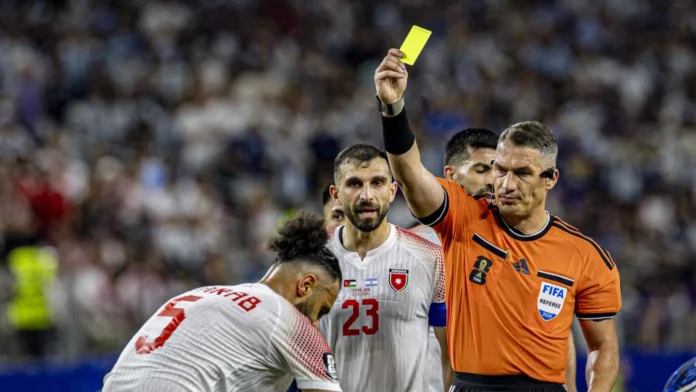
Argentina secured a place in the 2026 World Cup final with a dramatic 2-1 comeback victory over England. The result sparked celebrations among Argentina supporters, but the team’s post-match actions soon became the focus of a disciplinary controversy.
Several players displayed a banner reading “Las Malvinas son Argentinas,” or “The Falklands are Argentine,” referring to the long-running sovereignty dispute between Argentina and the United Kingdom. FIFA’s Disciplinary Committee is assessing the official match reports ahead of Argentina’s final against Spain on July 19.
Argentina completes a dramatic comeback
Argentina reached the World Cup final with a 2-1 semifinal victory over England at Mercedes-Benz Stadium in Atlanta. England took the lead through Anthony Gordon before Enzo Fernández and Lautaro Martínez scored late goals to complete Argentina’s comeback.
Lionel Messi assisted both Argentina goals, sending the defending champions through to the July 19 final against Spain. Enhanced security measures were in place because of the teams’ intense sporting rivalry and the political sensitivities surrounding the Falkland Islands dispute.
Authorities said provocative political banners, including material referring to the islands, would not be permitted inside the stadium. The post-match display nevertheless shifted attention toward Argentina’s players and FIFA’s rules on political messaging.
Why the Falklands banner sparked controversy
After the final whistle, Giovani Lo Celso and Lisandro Martínez displayed a white banner reading “Las Malvinas son Argentinas,” which translates to “The Falklands are Argentine.” Other Argentine players were nearby as the team celebrated its victory.
The message refers to Argentina’s sovereignty claim over the Falkland Islands, a British Overseas Territory in the South Atlantic. Argentina and the United Kingdom fought a 10-week war over the islands in 1982, and their status remains a sensitive diplomatic issue.
FIFA’s 2026 Stadium Code of Conduct prohibits political banners, flags, apparel, and similar material inside tournament venues. The display, therefore, prompted calls for FIFA to investigate whether its rules had been breached.

Argentina faced a similar FIFA sanction in 2014
Argentina previously displayed the same slogan before a June 7, 2014, friendly against Slovenia. Players posed behind a banner reading “Las Malvinas son Argentinas” before Argentina’s 2-0 victory in La Plata.
FIFA reprimanded the Argentine Football Association and imposed a fine of CHF 30,000, worth approximately $33,000 at the time. FIFA found that the display breached its rules on political action and team misconduct.
The sanction was announced on July 25, approximately 7 weeks after the match. That precedent shows that FIFA has previously treated the slogan as prohibited political conduct, although any decision concerning the 2026 incident will depend on the current disciplinary review.
How FIFA’s political message rules work
Football’s equipment rules prohibit players from displaying political, religious or personal slogans, statements or images on their playing equipment. FIFA may impose disciplinary sanctions when political messaging appears during an official tournament.
The 2026 World Cup Stadium Code of Conduct also prohibits political, offensive or discriminatory banners, flags, apparel and other paraphernalia inside tournament venues. Before the semifinal, Argentine security officials said political banners referring to the Falkland Islands would not be permitted.
Messi assisted both goals against England. FIFA’s published statistics already placed him among the leading assist providers in World Cup history, although totals can vary depending on the statistical definition used.
Fun fact: Messi’s 2 assists in the semifinal gave him 12 career World Cup assists, the most by any player ever.
What sanctions could Argentina now face?
FIFA’s disciplinary rules allow measures including warnings, reprimands, fines, match suspensions and restrictions on playing matches at particular venues. The sanction imposed depends on the rule breached, the individuals or association responsible and the circumstances of the incident.
Argentina’s 2014 display of the same slogan resulted in a reprimand and a CHF 30,000 fine against the national association. That case offers a relevant precedent, but FIFA is not required to impose the same penalty in 2026.
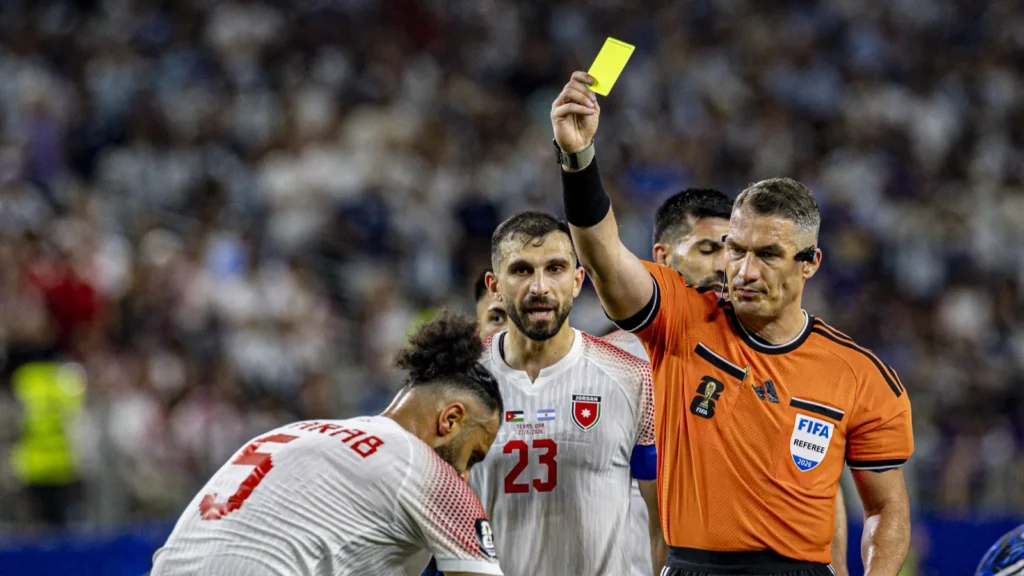
FIFA’s Disciplinary Committee is reviewing the official match reports. Argentina remains eligible to face Spain in the World Cup final while the disciplinary assessment continues.
Officials respond to the banner display
Argentina Vice President Victoria Villarruel publicly supported the country’s sovereignty claim over the islands in comments surrounding the semifinal. Other Argentine officials and many supporters also defended the players’ message as an expression of national identity.
British officials took the opposite position. Business Secretary Peter Kyle called for FIFA to conduct a formal investigation, while Prime Minister Keir Starmer’s office reiterated the United Kingdom’s support for the islanders’ right to self-determination.
Before the match, Argentina coach Lionel Scaloni urged people to keep politics separate from football. The players’ post-match display, therefore, contrasted with the approach he had expressed before kickoff.
Political tensions return after the semifinal
Argentina and the United Kingdom fought a 10-week war over the Falkland Islands in 1982. The conflict killed 649 Argentine military personnel, 255 British combatants, and 3 island civilians, and the sovereignty dispute remains unresolved.
That history has added political sensitivity to several matches between England and Argentina, particularly their 1986 World Cup quarterfinal. Both teams attempted to keep attention on football before the 2026 semifinal, but the post-match banner returned the territorial dispute to the center of public debate.
The controversy became one of the dominant stories following Argentina’s comeback victory as British officials demanded a FIFA investigation and Argentine supporters defended the players’ actions.
Little-known fact: FIFA’s Disciplinary Committee reviews political conduct cases independently after receiving official match reports.
TL;DR
- Argentina beat England 2 to 1 to reach the 2026 World Cup final against Spain.
- Players displayed a Falklands banner on the field after the semifinal win.
- FIFA rules ban political messages on equipment and inside World Cup stadiums.
- Argentina was fined for the same slogan back in 2014.
- A fine or reprimand looks more likely than any punishment affecting the final.
If you liked this story, don’t forget to follow us for more exclusive content.
This article was made with AI assistance and human editing.
If you liked this, you might also like: