

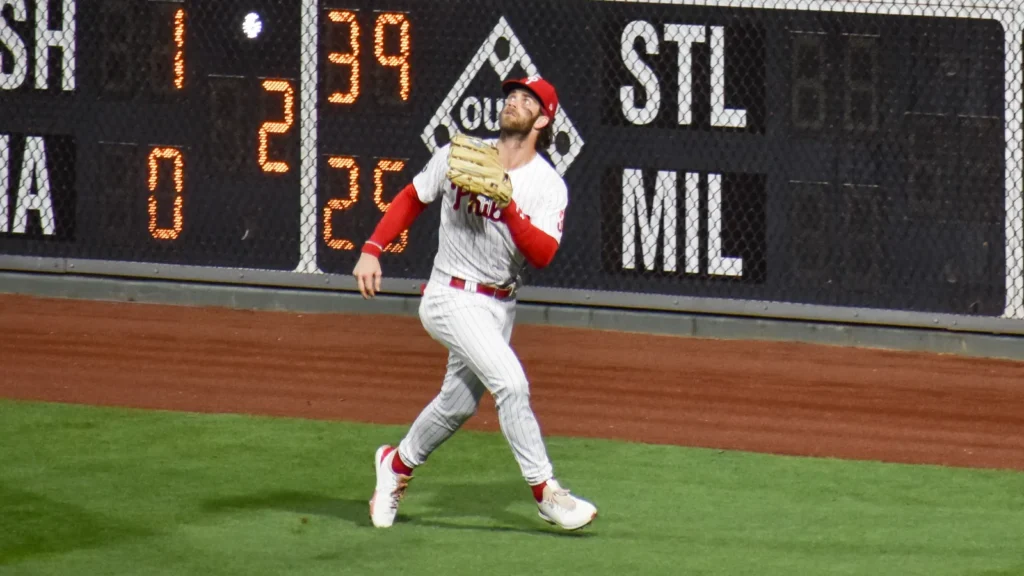
Bryce Harper stepped into the batter’s box for the Home Run Derby and went out in the first round. Moonshots still flew out of Citizens Bank Park, and Philadelphia cheered every swing from its 2 hometown sluggers. But it was Harper’s words that stuck with people long after the derby ended.
The Phillies star used his All-Star Week platform to remind everyone that baseball’s labor peace is running out fast. His comments touched on a salary cap fight, a looming lockout, and a debt owed to players who came before him.
A night built for celebration
Fans in Philadelphia got a show this week. Bryce Harper and Kyle Schwarber took their swings in the Home Run Derby at Citizens Bank Park on Monday, and Schwarber reached the final before the Cardinals’ Jordan Walker rallied past him 12-11. The crowd cheered each time a baseball cleared the fence.
This All-Star Game carried extra weight since Philadelphia was chosen to celebrate the nation’s 250th birthday. The league paused play in the fifth inning for a tribute to the classic film “The Sandlot.” Kids rode bicycles across the outfield grass as fireworks lit the summer sky above the stadium.
Harper’s emotional All-Star moment
Harper learned this month that he made his 9th career National League All-Star team. His journey in Philadelphia began back in 2019 when he signed a landmark contract with the Phillies. That decision eventually placed him at the center of a city hosting one of baseball’s biggest annual showcases.
Reflecting on his long career, Harper admitted the years passed faster than he expected them to. He told reporters to cherish every moment because time moves quite quickly once you are living inside this sport. His words carried gratitude mixed with awareness that his playing days will not last forever.

The comment that cast a shadow
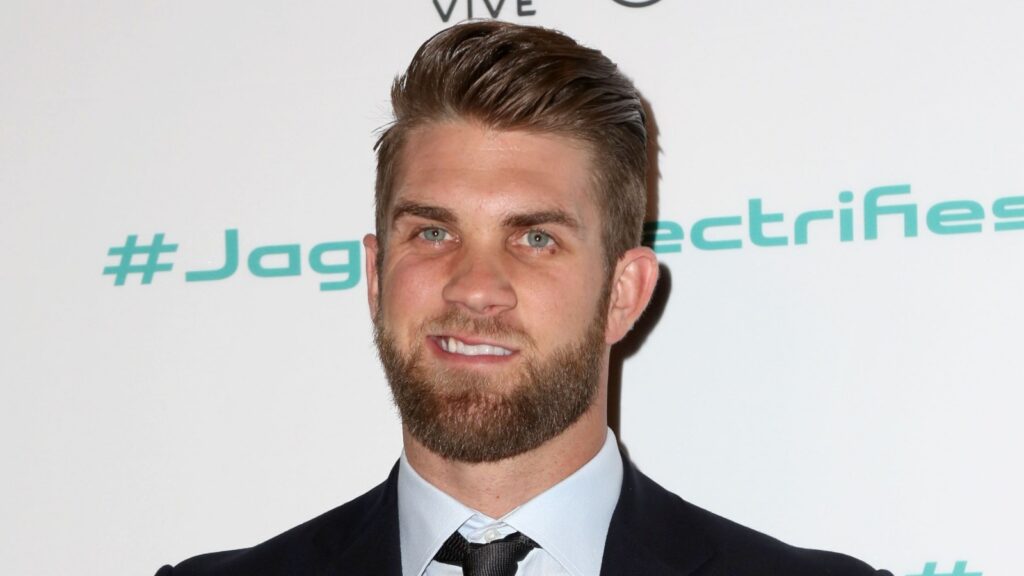
Despite the festive atmosphere throughout the week, Harper shifted the conversation to something far less cheerful for fans. He reminded everyone listening that another painful work stoppage appears almost certain once this season ends. His comments were not meant to spoil the fun, but they still did for many.
Harper explained his continued support for players fighting hard to protect their long-term earning potential. He referenced the history of players sacrificing their careers so that future generations could benefit financially. That history shaped how modern free agency works for every athlete in the sport today.
Understanding the looming lockout
The current collective bargaining agreement between Major League Baseball and its players officially expires December 1, 2026, about a month after the World Series ends. Once that deadline passes, owners are widely expected to lock players out of every ballpark.
A lockout would immediately freeze free agency, along with every trade across the league. Teams could not sign players or make roster moves until a new agreement is reached between both sides. Fans could face a winter without transactions and possibly a shortened 2027 season.
The salary cap standoff explained
Owners have proposed a hard salary cap for the first time since 1994, when the union fought off a cap plan with a strike that wiped out the World Series. Major League Baseball has never operated under a cap and is the last of the 4 major North American leagues to do so.
Players have rejected any cap, arguing it would limit their ability to earn fair market value. Harper pointed to Curt Flood as someone who sacrificed his promising career to fight for player freedom decades ago, and current players say they owe it to those pioneers to keep resisting.
Fun fact: Curt Flood’s refusal to accept a trade in 1969 helped set the legal groundwork for the free agency system players still rely on today.
A draft rule change adds tension
Beyond the salary cap dispute, another major proposal would change the amateur draft. League officials want to bar players from signing until they are at least 20 by September 1 of their signing year and 2 years removed from their high school graduating class. MLB says college baseball offers a better development path.
Such a change could reshape how young talent develops long before reaching the major leagues. College programs would gain influence, while high school standouts would lose an early path to professional paychecks. Harper has vowed to fight the proposal, saying top high school picks should be free to choose.
Little-known fact: Harper left high school after his sophomore year, passed his GED, and enrolled in junior college so he could be draft-eligible in 2010 instead of 2011.
Lessons from the last lockout
Baseball already experienced a painful lockout after the previous agreement expired in early December of 2021. That standoff lasted 99 days, stretching from early December all the way into March. It delayed Opening Day and forced a shortened spring training before players returned to work.
Many league insiders expect this upcoming negotiation to be even more contentious than the last one. Both sides remain far apart on fundamental issues surrounding pay structure and overall roster spending limits. Experts warn this fight could stretch even longer and cut much deeper into the 2027 season.
What this means for fans
For everyday fans, all of this translates into real uncertainty about next summer’s baseball schedule. Ballparks that felt alive with energy this week could sit empty and silent for months. Nobody wants a repeat of missed games, and players say there is still time to reach a deal before it comes to that.
Some fans blame owners for refusing to spend in free agency, citing the market size. Others blame players for wanting a system without any structural limits on spending. Either way, baseball’s biggest stars are already bracing fans for a difficult offseason ahead.
TL;DR
- Bryce Harper and Kyle Schwarber lit up the Home Run Derby at Citizens Bank Park during a festive All-Star week in Philadelphia.
- Harper earned his 9th career All-Star selection and reflected on how quickly his years in the league have passed.
- Amid the celebration, Harper warned fans that another MLB work stoppage is nearly certain once the season ends.
- The current CBA expires December 1, 2026, and a lockout is widely expected to follow immediately.
- A salary cap, unseen since 1994, is the central sticking point between owners and the players’ union.
If you liked this story, don’t forget to follow us for more exclusive content.
This article was made with AI assistance and human editing.
If you liked this, you might also like: