

Caitlin Clark’s World Cup final ended with a gold medal, but one late whistle shifted attention away from Team USA’s comeback. Clark was assessed a technical foul early in the fourth quarter against France after an offensive foul had been called on her. The Indiana Fever guard immediately appeared surprised by the decision and turned toward the officials.
The moment came with the Americans holding a 73-57 lead, making the penalty more notable for the reaction than its effect on the championship. Clark recovered quickly, hitting a three-pointer soon after as the U.S. pulled away and secured another world title.
What happened to Caitlin Clark in the final?
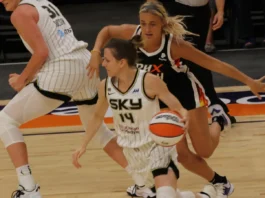
The sequence came just six seconds into the fourth quarter. Clark was called for an offensive foul involving France guard Leïla Lacan, then retained the ball after the whistle before releasing it toward an official as she walked away. A technical foul was then charged to Clark, giving France a free throw.
Clark’s reaction immediately became part of the moment. Broadcast footage showed her turning toward the officials with a look of disbelief, while later reports noted that she appeared to mouth “For what?” after the technical was assessed. The call came while the United States was leading 73-57, so it did not threaten the Americans’ control of the game.
The technical was Clark’s first of the tournament. FIBA’s rules treat a technical foul as a non-contact foul of a behavioral nature, and the penalty includes one free throw for the opposing team. The incident, therefore, amounted to an in-game penalty rather than a separate suspension from the championship.
Why did the technical draw extra attention
Clark’s recent history with technical fouls in the WNBA made the World Cup call more noticeable. In August, she received an eighth technical foul that was later rescinded by the WNBA, allowing her to avoid the automatic one-game suspension that would have followed if the foul had stood.
That episode had already put attention on Clark’s interactions with officials during the 2026 WNBA season. The World Cup technical came under FIBA rules rather than WNBA disciplinary rules, but the visual similarity of Clark questioning a call added context to the final sequence.
Clark spent much of the tournament contributing as a playmaker. She averaged 7.8 points, 2.2 rebounds and 5.3 assists across six games, with her 5.3 assists per game ranking sixth in the tournament.

Clark’s response mattered more on the scoreboard
The technical did not derail Clark or Team USA. France missed the resulting free throw, and the Americans quickly returned to the offensive end, where Clark knocked down a step-back 3-pointer with 9:28 remaining to push the lead to 19 points.
That shot reflected the broader pattern of the final. France opened the game with a 21-2 run and led by as many as 14 points, but the United States steadily erased the deficit before taking control after halftime. Breanna Stewart finished with 22 points and 10 rebounds, while Jackie Young scored 18 and Kahleah Copper added 15.
Clark’s final stat line against France was efficient despite limited playing time. She scored 12 points on 4-of-5 shooting, made 2-of-3 3-pointers, added three assists, and played 13 minutes as the Americans leaned on their veteran core and balanced scoring.
Fun fact: Caitlin Clark’s 11 assists against China in the tournament opener were the most ever by a U.S. player in a Women’s World Cup debut. The mark surpassed Alyssa Thomas’ previous debut record of nine assists.
Clark’s role takes shape
Clark entered the tournament with enormous attention because of her profile in the WNBA and her growing place in USA Basketball. Her role in Berlin, however, was built around complementary playmaking, spacing and selective scoring rather than carrying the offense every possession.
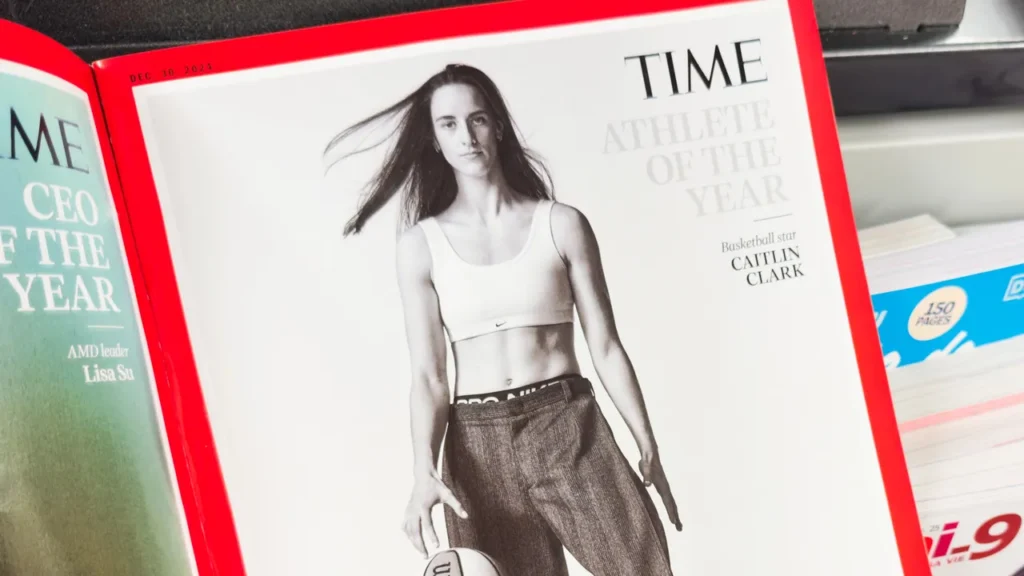
Her tournament numbers underline that role. FIBA credited Clark with 32 assists over six games, along with 47 points, 13 rebounds and four steals. She also shot 50% on two-point attempts, while her three-point shooting settled at 28% across 25 attempts.
The final added another layer to her international résumé. After scoring just one point against Spain in the semifinal, Clark responded with 12 points against France and helped stabilize the offense during the comeback. Her three-pointer before halftime cut France’s lead to two, and her fourth-quarter shot came after the technical had interrupted the start of the period.
A championship closes Clark’s debut
The depth surrounding Clark was evident in the championship game. Five U.S. players reached double figures, and the Americans won the rebounding battle 36-27. France’s shooting success faded after halftime, allowing the U.S. defense to turn a close contest into a decisive finish.
For Clark, the technical became a small incident within a larger international milestone. Her first World Cup ended with a championship, a record-setting opening performance and a clearer understanding of how her playmaking fit within the national team’s structure.
Team USA ultimately won 97-79, capturing its fifth consecutive FIBA Women’s Basketball World Cup title and 12th overall. Stewart earned tournament MVP honors, while Clark finished her first World Cup with a gold medal and a record-setting debut assist performance already attached to her name.
TL;DR
- Caitlin Clark received a technical foul early in the fourth quarter of the 2026 FIBA Women’s Basketball World Cup final against France.
- The call followed an offensive foul, and Clark directed the ball toward an official after the whistle.
- Clark scored 12 points and hit a 3-pointer shortly after the incident.
- Team USA defeated France 97-79 for its fifth straight World Cup championship.
- Clark finished the tournament averaging 7.8 points, 2.2 rebounds, and 5.3 assists.
If you liked this story, don’t forget to follow us for more exclusive content.
This article was made with AI assistance and human editing.
If you liked this, you might also like: