
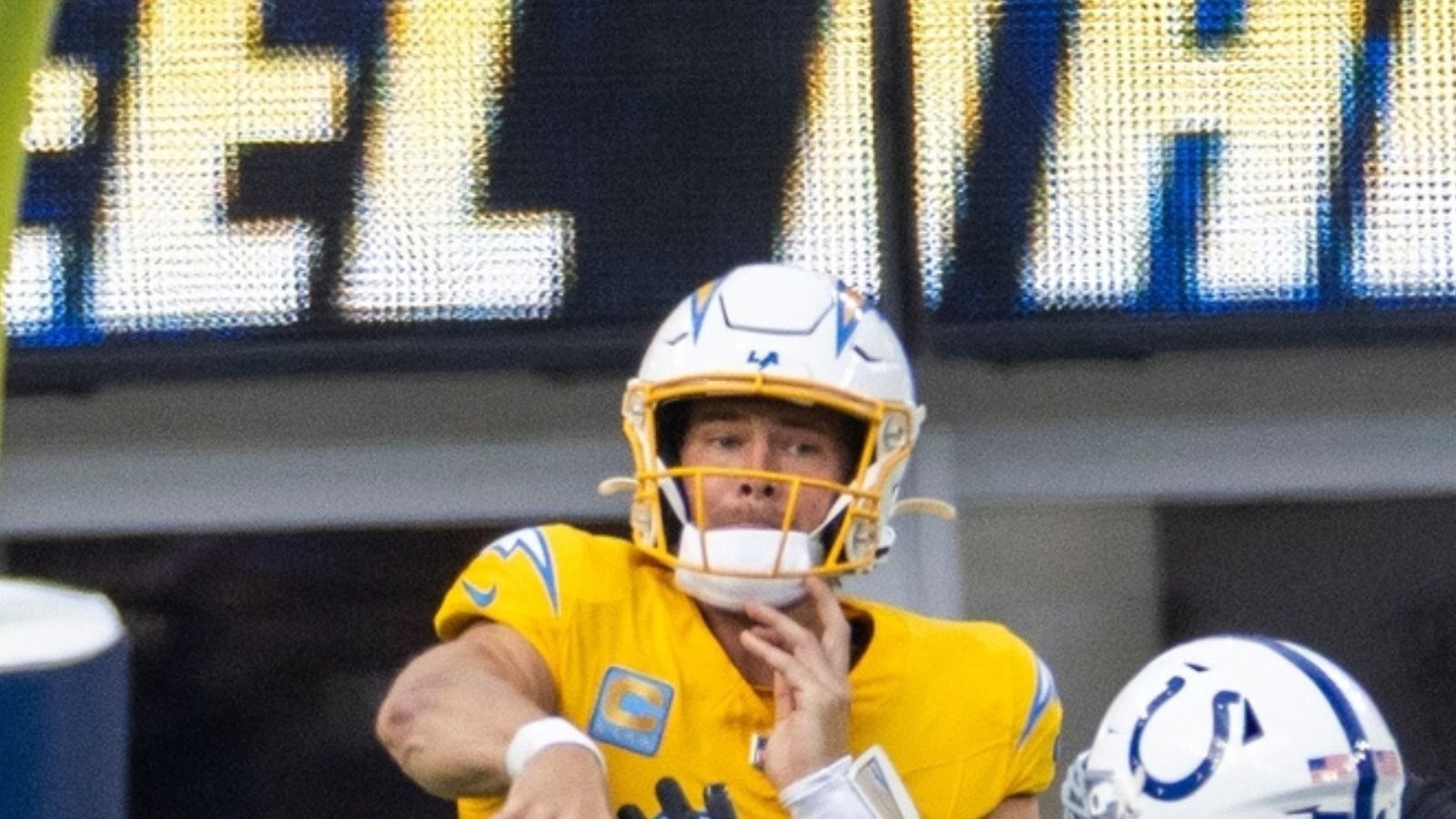
The Kansas City Chiefs defeated the Los Angeles Chargers 22-6 on Oct. 18, but a controversial roughing-the-passer penalty involving quarterback Justin Herbert quickly became a major talking point after the divisional matchup. The decision raised fresh questions about how the NFL protects its passers.
The penalty against Chiefs defensive end Ashton Gillotte occurred on the same play that cornerback Christian Roland-Wallace intercepted Justin Herbert, nullifying the turnover. Kansas City nevertheless secured an interception later in the same drive when linebacker Jack Cochrane picked off Herbert and returned the ball 48 yards.
Although the call attracted criticism from football commentators and fans, there is an important distinction between an on-field penalty and separate postgame discipline. As of Oct. 22, no verified NFL announcement had confirmed a fine or suspension for Gillotte arising from the play.
A controversial call overshadows part of the Chiefs’ victory
Kansas City entered Sunday’s game with an unbeaten record and extended its winning streak with a convincing defensive performance. The 22-6 victory kept the Chiefs perfect through five games, while the Chargers dropped to 0-6.
The disputed play occurred when Herbert attempted a pass, which Roland-Wallace intercepted. Officials flagged Gillotte for roughing the passer, nullifying the turnover and giving Los Angeles another opportunity to continue its possession.
The decision drew criticism because some observers believed Gillotte appeared to be trying to avoid unnecessary contact. The debate focused on whether the defender’s actions justified the penalty under the NFL’s quarterback-protection rules, rather than on whether Herbert deserved protection.
Why the roughing-the-passer penalty attracted criticism
NFL rules provide quarterbacks with special protection during passing plays because defenders can cause serious injuries through late, forceful or otherwise prohibited contact. Officials must evaluate the nature of a hit, its timing and the defender’s actions.
However, applying those protections can be difficult when a defender is already committed to a tackle or attempts to change direction at the last moment. Even slight differences in body positioning can influence how officials interpret a collision during a fast-moving play.
In Sunday’s game, critics argued that Gillotte’s movement did not appear to warrant a roughing-the-passer flag. That assessment remains an interpretation of the play, not an official finding that the referee made an error or that the Chiefs violated league policy.
The overturned interception changed the immediate stakes
An interception can dramatically alter a football game by ending an opponent’s possession and giving the defense’s offense an opportunity to score. Roland-Wallace’s apparent takeaway offered Kansas City precisely that possibility before the penalty nullified it.
Instead of immediately taking possession, the Chiefs had to continue defending the Chargers’ drive. The sequence became a reminder of how one officiating decision can influence field position, momentum and the strategic options available to both teams.
Kansas City nevertheless recovered from the setback. Later in the same Chargers drive, Gillotte pressured Herbert before linebacker Jack Cochrane intercepted the pass and returned it 48 yards. The eventual turnover also limited the longer-term impact of the disputed decision.


Could Gillotte face NFL discipline?
The possibility of postgame discipline requires careful qualification. The NFL can review game footage and impose fines or suspensions when player conduct violates league rules, but a controversial officiating decision does not automatically produce additional punishment.
A penalty called during a game is separate from a disciplinary decision made afterward. Officials administer penalties on the field, while the league can independently review player conduct and impose additional consequences when warranted.
As of Oct. 22, no verified NFL announcement had confirmed a fine or suspension for Gillotte over this play. Claims that Gillotte or the Chiefs had already received additional punishment would therefore be unsupported.
How the NFL handles postgame discipline
The league reviews certain on-field actions after games and can issue fines for conduct that breaches its standards. Those reviews can cover dangerous contact, unnecessary roughness and other prohibited behavior, depending on the circumstances.
A postgame review does not mean every controversial tackle will lead to discipline. The NFL considers the details of the play, the applicable rules and whether the conduct warrants action beyond the penalty imposed during the game.
The distinction matters for Kansas City because criticism from broadcasters, analysts or supporters does not determine the league’s final decision. Unless officials announce a disciplinary outcome, the possibility of further action should remain a possibility rather than a confirmed development.
Justin Herbert’s protection remains a wider NFL concern
Quarterback safety has been a continuing challenge for the NFL. Defenders must pursue the passer aggressively while avoiding prohibited contact, and officials must judge those actions in real time under demanding conditions.
Herbert has also endured a substantial workload of hits throughout his professional career. NFL.com recently reported that he had absorbed more hits, sacks and pressures than any other quarterback since entering the league in 2020, highlighting the protection challenges facing Los Angeles.
That broader context helps explain why questionable contact calls attract attention. Still, Herbert’s history of taking hits does not establish that Gillotte’s play was illegal or that the Chiefs should face additional discipline for the incident.

Kansas City can focus on its unbeaten start
Despite the controversy, the Chiefs left Arrowhead Stadium with another victory and a 5-0 record. Running back Kenneth Walker III led the ground attack with 128 rushing yards and 2 touchdowns, helping Kansas City control the contest.
Quarterback Patrick Mahomes completed 23 of 30 passes for 272 yards, while the defense recorded 4 sacks against Herbert. Kansas City also forced the Chargers to settle for field goals instead of touchdowns, limiting their scoring opportunities.
The Chargers, meanwhile, fell to 0-6 after another difficult offensive performance. Their inability to turn promising possessions into touchdowns remained a larger problem than the disputed penalty, which became a prominent talking point but did not decide the final score.
What happens next for the Chiefs?
The next meaningful development would be an official league announcement or credible reporting confirming that the NFL has reviewed the play and decided whether additional discipline is warranted. Until then, the controversy remains centered on the on-field ruling.
Kansas City could face scrutiny if a separate review identified conduct that violated league standards, but that outcome cannot be assumed simply because the flag was disputed. The penalty itself already carried an immediate consequence by nullifying Roland-Wallace’s interception.
For now, the most supportable conclusion is that the play sparked debate about quarterback protection and the consistency of officiating. The Chiefs’ victory is confirmed; additional punishment connected to the incident is not.
Fun fact: Herbert tutored fellow students in a challenging biology class at the University of Oregon while pursuing his degree.
TL;DR
- The Chiefs defeated the Chargers 22-6 on Oct. 18, extending their unbeaten start to 5-0.
- A roughing-the-passer penalty against Ashton Gillotte erased an apparent interception by Christian Roland-Wallace.
- The call prompted criticism, but criticism alone does not establish that the NFL made an official error.
- As of Oct. 22, no verified NFL announcement had confirmed a fine or suspension for Gillotte over the disputed play.
- Kansas City recorded another interception later in the drive and maintained control of the game.
This article was made with AI assistance and human editing.
Read More From This Brand: