

The Los Angeles Dodgers have plenty of established stars in October, but one of their most intriguing postseason additions is 21-year-old prospect Josue De Paula. After a rapid September rise, De Paula made the Dodgers’ NLDS roster as a left-handed bench bat.
De Paula’s first taste of the majors lasted only 11 games, yet the left-handed hitter made an immediate impression. He reached base in half of his 42 plate appearances and showed the kind of plate discipline that can become especially valuable in a short playoff series.
The Dodgers opened their NLDS on Saturday, Oct. 3, after winning 100 regular-season games and earning a first-round bye. With limited bench spots available, De Paula still faced competition, but his offensive ability gave Los Angeles another intriguing option for October.
De Paula made a fast major league jump
The Dodgers promoted De Paula on Sept. 11 after placing Shohei Ohtani on the injured list. The move was notable because De Paula went directly from Double-A Tulsa to the majors, skipping Triple-A entirely.
It was an unusual promotion for Los Angeles, but the organization believed his bat was ready. Before the call-up, De Paula had posted a .303/.401/.547 slash line with 27 home runs and 104 RBIs in 124 games for Tulsa.
His promotion also reflected how highly the Dodgers viewed his offensive potential. MLB Pipeline ranked De Paula as the No. 6 overall prospect and the Dodgers’ No. 1 prospect, putting him among baseball’s most closely watched young hitters.
De Paula’s short stint created a real case
De Paula did more than survive his first exposure to major league pitching. Across 11 games, he went 10-for-31 for a .323 batting average, while adding 7 RBIs and 7 runs scored during his initial stint with Los Angeles.
His ability to reach base stood out even more than his batting average. De Paula drew 11 walks while striking out only 5 times, finishing with a .500 on-base percentage and .581 slugging percentage across his 42 plate appearances.
That approach gives the Dodgers an appealing pinch-hit option. A playoff at-bat can turn on one mistake, and De Paula’s ability to control the strike zone could help him earn opportunities against experienced postseason pitchers.
The Dodgers still had a roster dilemma
The biggest obstacle was playing time. Once Ohtani returned from the injured list, the Dodgers no longer had the same designated-hitter opportunity available to De Paula. Their regular outfield also had established options competing for postseason at-bats.
Manager Dave Roberts acknowledged that the Dodgers did not have many at-bats available after Ohtani returned. Miguel Rojas, Kiké Hernández and other players also needed opportunities, making De Paula’s path to regular playing time difficult.
That is why the roster decision was more complicated than simply choosing the hottest hitter. Los Angeles had to balance offensive upside with defensive versatility, bench coverage and the specific needs of a best-of-5 series.

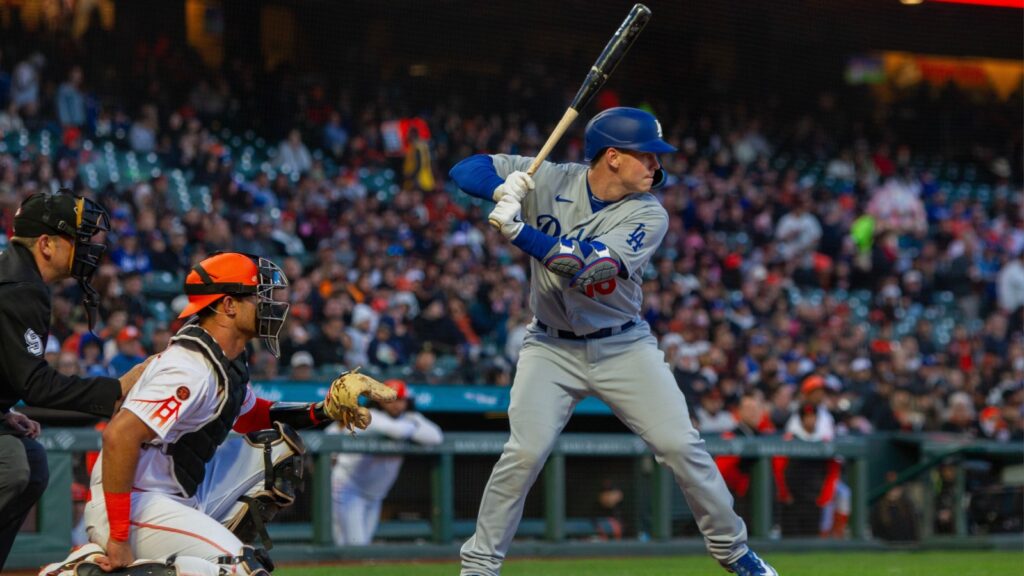
/Shutterstock.com
De Paula’s defensive role remains the question
De Paula’s offensive case is much clearer than his defensive case. During his brief major league stint, the Dodgers primarily used him as a designated hitter, while he logged limited time in left field.
The organization believes he can eventually become a serviceable corner outfielder, but his defensive development is still a work in progress. That limitation matters more in October, when managers often need every bench player to provide reliable defensive coverage.
For the NLDS roster, De Paula does not necessarily need to start. His role can be much narrower: provide a left-handed bat late in games, particularly when the Dodgers need a baserunner or a quality matchup against a pitcher.
The Dodgers kept his postseason path open
When Los Angeles optioned De Paula to Triple-A Oklahoma City after Ohtani returned, the move did not eliminate his postseason chances. Instead, it kept him in position to remain part of the Dodgers’ October plans.
MLB’s postseason roster reporting later confirmed that De Paula made the NLDS roster as the club’s primary left-handed bat off the bench. His short September audition gave the Dodgers enough confidence to carry him for a best-of-5 series.
That timing makes the situation particularly interesting. Rather than viewing the Triple-A assignment as a setback, Los Angeles used it to give De Paula more playing time while preserving the possibility of bringing him back for October.
De Paula’s minor league production supports the gamble
De Paula’s major league performance was not an isolated hot streak. Earlier in 2026, he produced at a high level for Tulsa, finishing his Double-A season with a .303/.401/.547 slash line, 27 home runs, 104 RBIs and 31 stolen bases.
By the time the Dodgers called him up, De Paula had already shown both power and plate discipline in the Texas League. That production helped support his case as one of baseball’s top offensive prospects.
His plate discipline has also been a major part of his scouting profile. MLB’s prospect coverage has highlighted his ability to recognize pitches and limit swings outside the strike zone, traits that could translate well to postseason at-bats.
De Paula brings something different to October
The Dodgers’ lineup already features established stars, but De Paula can offer a different kind of offensive presence. His youth, left-handed swing and willingness to work deep counts give Los Angeles another way to attack opposing bullpens.
Mookie Betts also praised the energy De Paula brought to the club during his September opportunity. Betts noted that the Dodgers have many veteran players and said De Paula’s youthful energy and quality at-bats made an impression on the clubhouse.
That does not guarantee a major postseason role, but it adds context to the decision. The Dodgers are not carrying De Paula solely because of his prospect ranking; his short major league audition gave the organization evidence that his approach can translate against MLB pitching.
The NLDS gives him a big opportunity
MLB’s postseason roster report confirmed that De Paula made the Dodgers’ NLDS roster as a primary left-handed bat off the bench. The decision came after an 11-game major league audition that showed his ability to reach base and handle competitive at-bats.
The Dodgers finalized their NLDS roster before Game 1 against Atlanta, with De Paula included among the bench options. His role may still be small, but his left-handed bat gives Los Angeles another late-game option in a best-of-5 series.
If Los Angeles needs a baserunner or a quality matchup against an opposing reliever, De Paula has a compelling case for a meaningful at-bat. One important plate appearance can change a playoff game and make his rapid promotion one of October’s biggest surprises.
Fun fact: Josue De Paula was the MVP of the 2025 All-Star Futures Game after hitting a 3-run homer that helped the National League beat the American League 4-2.
TL;DR
- Josue De Paula made the Dodgers’ NLDS roster.
- The 21-year-old went directly from Double-A to the majors in September.
- He hit .323 with 7 RBIs and a .500 on-base percentage in 11 games.
- His plate discipline has been one of his biggest strengths.
- Defensive versatility remains the main question surrounding his roster case.
- The Dodgers can use him as a left-handed pinch-hitting option.
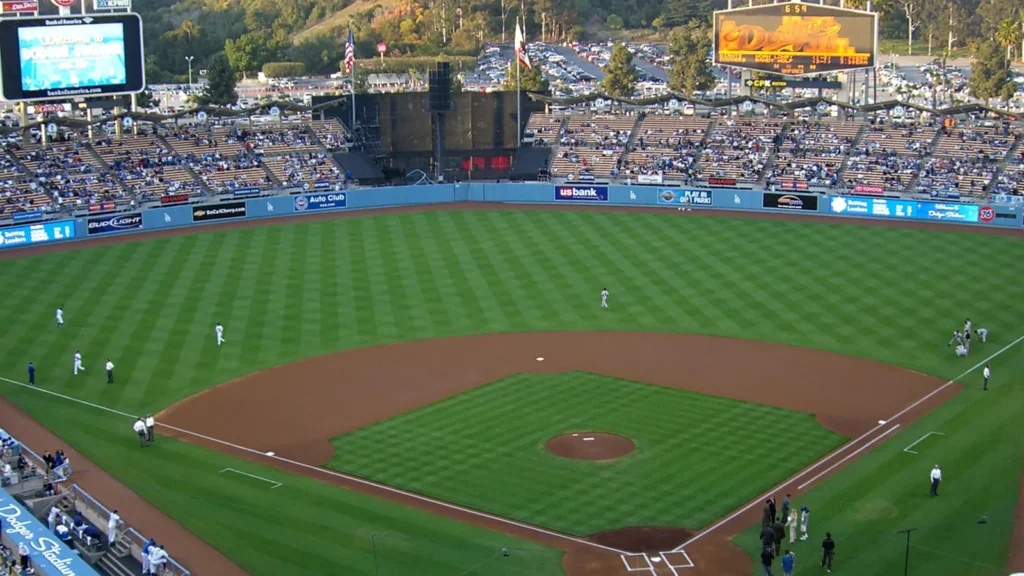
- Los Angeles opened its NLDS at Dodger Stadium on Oct. 3.
- The Dodgers finalized their NLDS roster before Game 1.
Read More From This Brand:
- Dodgers’ $309 million spending faces criticism
- Los Angeles Dodgers target another title run this season
- “What a creepy video,” Mario Lopez faces criticism over deleted Dodgers clip
This article was made with AI assistance and human editing.