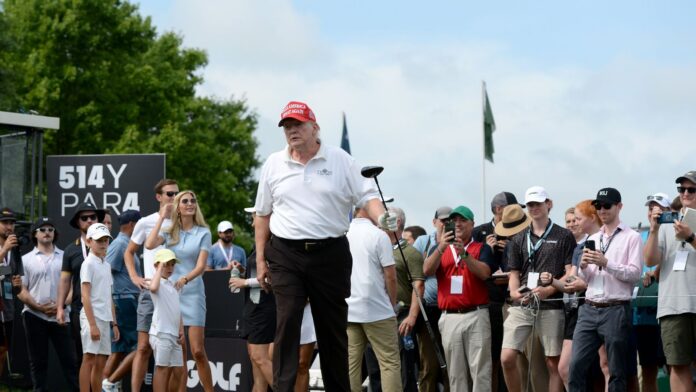
President Trump skipped the usual safety warning before the Freedom 250 IndyCar race in Washington, D.C. He told Fox News he did not want to tell IndyCar drivers to stay safe. Trump said that phrase can plant a negative thought right before a big race.
The comment came just before drivers raced through streets near the Capitol and the National Mall. His comments also touch on a concept that sports psychologists have studied for decades. Scientists have studied for decades why avoiding certain words can help athletes perform much better under pressure.
Trump tries a different approach at Freedom 250
Trump discussed his pre-race message before the Freedom 250 Grand Prix, saying he preferred to wish drivers “good luck” rather than focus on safety concerns. He told Fox Sports that he wanted everyone to be safe and have a good time, and that he had encouraged drivers to “do well” and enjoy the race.
Trump suggested that focusing too much on danger could affect a competitor’s mindset before a major event. The idea connects with broader discussions in sports psychology about attention, confidence, and athletes’ responses to pressure, although the effects on individual performance vary.
Trump and first lady Melania Trump later completed a ceremonial lap around the Washington, D.C., circuit in the presidential limousine known as “The Beast” before Trump waved the green flag to begin the race.
A historic race through the nation’s capital
The Freedom 250 Grand Prix marked the first IndyCar race held on the streets of Washington, D.C. It took place over 2 days in late August as part of a wider celebration. Organizers built the entire event around the 250th anniversary of the United States.
Roger Penske helped bring the race to the city after many years of effort. The Penske Corporation chairman had reportedly pursued the idea for roughly 2 decades. CBS News reported that the final plan came together during one short meeting.
The 7-turn course wound past the Capitol and the National Archives building. Drivers also raced along a stretch of Pennsylvania Avenue near the White House. Crews welded down more than 200 manhole covers so that fast cars would not disturb them.
Why simply saying stay safe can backfire
Psychologists have long studied what happens when people try hard to avoid a thought. Telling someone not to think about danger often makes them think about it more. This effect has been studied in situations involving pressure and performance.
Researchers call this pattern the ironic process of mental control. Research suggests that deliberately suppressing a thought can make it more likely to return. Under pressure, that search becomes even stronger and much harder to shut off.
Athletes often describe this feeling as a nagging thought that will not go away. A golfer told not to miss a short putt may suddenly picture the ball missing. Similar thought-suppression effects may be relevant in high-pressure sports.
The science behind the white bear problem
Psychologist Daniel Wegner introduced this idea through a now-famous experiment in 1987. He asked volunteers to spend several minutes without thinking about a white bear. Most participants found the image popping into their minds repeatedly.
Wegener later expanded this early work into what became the iconic process theory. Researchers suggest that attempts to suppress a thought can keep attention focused on it.
This monitoring process runs quietly in the background during most stressful moments. Under normal conditions, people can usually manage it without much trouble. Once real pressure rises, that background search becomes far harder to control.
How negative cues shape athletic performance
Sports psychology research has examined how avoidance-focused instructions can influence performance in different activities. Studies involving tasks such as tennis serves and precision shooting have found that focusing attention on unwanted outcomes may affect performance, especially under pressure.
Research on skilled shooters has examined how instructions to avoid specific target areas can influence where participants direct their attention. Some studies have found evidence of ironic effects, although results depend on the task, pressure level, and individual circumstances.
Baseball research has also explored how attention, anxiety, and performance interact under competitive pressure. The relationship between avoiding specific outcomes and making mistakes is complex and does not apply to every athlete or situation.
Fun fact: Kyle Kirkwood won the Freedom 250, his 7th career IndyCar win and second win of the 2026 season.
Studies show that avoidance goals increase mistakes
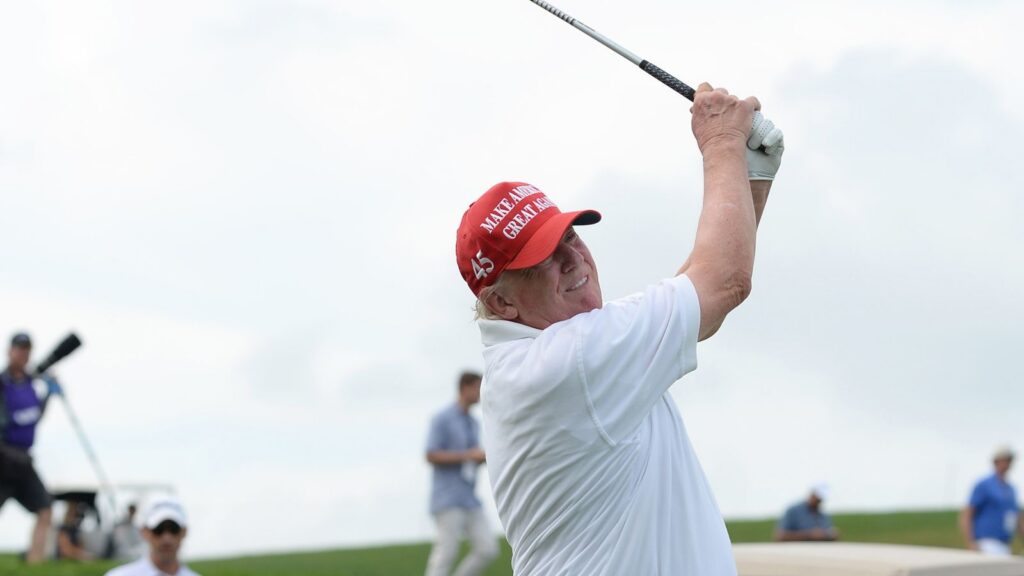
Golf offers one of the clearest examples of this ironic effect in action. Golfers told to avoid leaving a putt short sometimes leave the ball short anyway. The instruction itself seems to plant the very outcome it was meant to prevent.
Researchers now describe 2 competing patterns showing up across many motor skill studies. One is the ironic effect where players do the exact thing they were warned against. The other is overcompensation, where players swing too far in the opposite direction instead.
Either pattern points back to the same basic problem with negative instructions. Telling someone exactly what to avoid draws their focus straight toward that outcome. Positive and specific goals may help athletes maintain focus.
What racing champions say about safety
2-time Indianapolis 500 winner Josef Newgarden has spoken publicly about this balance. He told Consumer Reports that focus and proper positioning matter more than fear. Newgarden said drivers manage risk best by simply staying present.
His advice centers on clear actions rather than vague warnings about general danger. Proper positioning and steady speed give drivers something concrete to actually focus on. That approach mirrors what sports psychologists now recommend for high-pressure moments.
Trump’s comments are consistent with the broader idea of prioritizing performance over danger. Wishing drivers good luck provided a positive frame rather than a warning.
Lessons for coaches, parents, and performers
The research carries real lessons well beyond professional racetracks and crowded stadiums. Coaches can help young athletes more by clearly describing what success actually looks like. A clear target tends to work far better than a long list of things to avoid.
Parents cheering from the sidelines often fall into this exact same trap. Shouting do not strike out can plant that precise fear directly in a child’s mind. Some research suggests positive instructions can be more useful than avoidance-focused instructions.
The same basic idea applies far beyond the world of sports and competition. Public speakers, students, and performers all face very similar mental pressure. Focusing on the goal may help performers manage pressure more effectively.
Little-known fact: DC Mayor Muriel Bowser served as grand marshal for the historic Freedom 250 Grand Prix.
TL;DR
- Trump said he preferred to wish drivers good luck rather than focus on safety before the Freedom 250 Grand Prix in Washington, D.C.
- He explained that he believed safety-focused wording could place a negative thought in a driver’s mind.
- Psychologist Daniel Wegner’s ironic process theory explains how attempts to suppress thoughts can sometimes make them more noticeable.
- Research has explored how attention and avoidance-focused instructions can influence performance under pressure.
- The findings suggest that clear, positive goals may help performers focus during demanding situations.
If you liked this story, don’t forget to follow us for more exclusive content.
This article was made with AI assistance and human editing.
If you liked this, you might also like: