


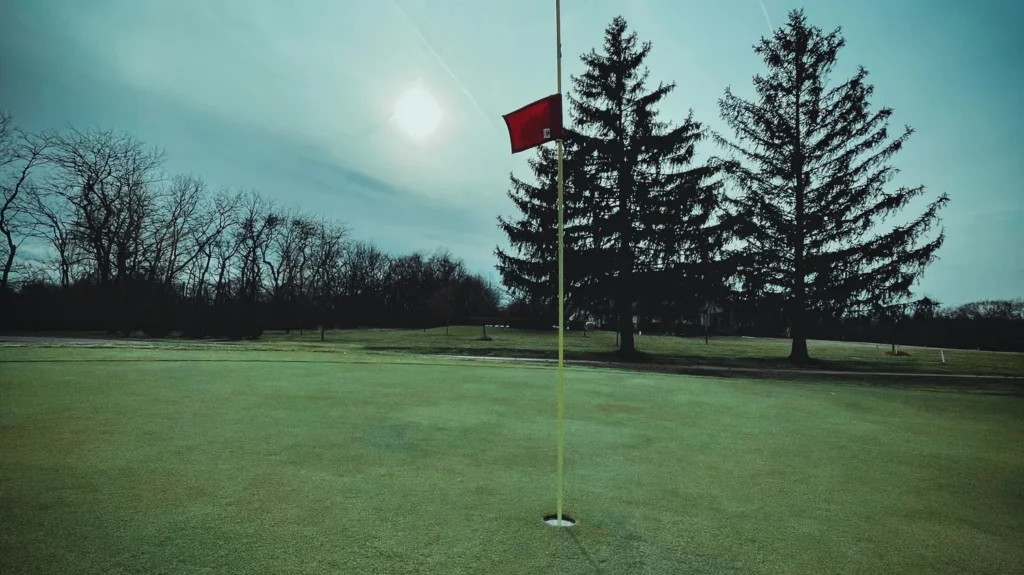
A quiet corner of Washington’s waterfront has suddenly become the center of a much larger fight over golf, history, and public land. Across East Potomac Golf Links, freshly cut stumps and bare patches now stand where mature trees were growing only weeks ago.
The removals come just days before Sept. 1, the date Trump said work would begin on a dramatic makeover of the federally owned golf complex. Yet officials have not publicly released a final design, construction timetable, or full project price, leaving a basic question hanging over the park: Is the overhaul beginning before the public has seen exactly what it will become?
More than 60 trees appear to have come down
An informal count conducted on Thursday found that more than 60 trees appeared to have been removed in recent weeks, according to The Washington Post. The cuts were not limited to one isolated corner of East Potomac; they were visible around parking areas and within playing corridors on the Blue, Red, and White courses.
One removal attracted particular attention: a cherry tree near the Blue Course’s 14th green, an area known for its springtime backdrop near the southern end of Hains Point. Two large sycamores were also reported to have been removed near the fourth hole. The raw reporting supplied for this article similarly highlighted those losses.
Tree removal itself is not unusual during golf-course restoration. Architects may remove trees to open sightlines, improve airflow and sunlight, or address declining vegetation. What makes East Potomac different is the timing: the cutting is happening while the administration’s much larger redevelopment proposal remains under legal and regulatory scrutiny.
The government says this is maintenance, not construction
The Interior Department says the tree work should not be interpreted as the start of Trump’s golf-course redevelopment. A department spokesperson described it as routine arborist work targeting hazardous, invasive, declining, or dying trees that could pose safety problems for park visitors.
There is evidence that at least some trees were in poor condition. The Post reported seeing hollow or visibly decayed stumps, and a large tree taken down on the Blue Course’s 13th hole showed clear signs of deterioration. Other trees around the property had been marked with dots or ribbons, although their meaning was not publicly explained.
Still, critics are questioning whether every removal fits that explanation. Axios reported that the Interior Department awarded a roughly $349,000 tree-care contract running from Aug. 19 into early October, while park advocates have circulated images they say show apparently healthy trees being removed. Those claims have intensified calls for greater transparency.
Sept. 1 is approaching, but major questions remain
Trump announced in June that redevelopment work at East Potomac would begin Sept. 1 after touring the course with Interior Secretary Doug Burgum, White House officials, and prominent golf architect Tom Fazio. Trump has said he wants to transform the aging public facility into a “world-class” course capable of delivering a far more prestigious golf experience.
But with the deadline approaching, the administration has not publicly disclosed a final construction schedule or estimated total cost. Officials have also not clearly said whether all or part of the golf complex will close once work begins, or exactly which amenities would remain accessible during construction.
That uncertainty matters because East Potomac is much more than an 18-hole championship layout. The complex currently includes the Blue Course, a nine-hole White Course, a nine-hole Red Course, practice facilities, and miniature golf, while the surrounding peninsula is also heavily used by runners, cyclists, walkers, anglers, and other visitors.

A federal judge is already watching the project closely
The redevelopment is also facing a federal lawsuit brought by two golfers and the D.C. Preservation League. The challengers argue that the government risks moving too quickly without completing environmental, historic-preservation, and administrative reviews required for major changes to federal parkland.
U.S. District Judge Ana C. Reyes has so far resisted blocking the project outright, saying earlier that the legal threshold for an injunction had not yet been reached. But she has repeatedly pressed government lawyers for assurances that major irreversible work will not happen before challengers have an opportunity to seek court intervention.
During a May hearing, Reyes allowed necessary maintenance to continue but warned against creating a fait accompli before the court could respond. The Post reports she orally requested advance notice before the government removed more than 10 trees or brought particularly large equipment onto the property, although that direction was not incorporated into a formal written order.
The cherry trees carry more than seasonal value
The anxiety surrounding tree removal is amplified by East Potomac’s unusual connection to Washington’s cherry-blossom history. Japan’s famous 1912 gift consisted of 3,020 cherry trees, and the National Park Service says that between 1913 and 1920, the remaining Yoshino trees and 11 other varieties were planted in East Potomac Park, in addition to plantings around the Tidal Basin.
There is an even older mystery at Hains Point. A shipment of Japanese cherry trees arrived in 1910, but was ordered destroyed after inspectors found disease and insects. NPS research later indicated that roughly two dozen may have been saved for observation, possibly explaining the presence of an exceptionally old grove on what became the East Potomac golf course.
Those trees have cultural significance, but that does not mean the recently removed cherry tree has been established as one of the possible 1910 survivors. That distinction is important: current reporting confirms that a cherry tree was cut near the Blue Course’s 14th green, but its exact age and historical lineage have not been publicly established.
Another controversy is literally sitting on the course
The tree dispute is not East Potomac’s first environmental controversy this year. More than 30,000 cubic yards of excavated soil associated with demolition and construction at the White House East Wing were transported to a roughly 2.25-acre stockpile area at the golf course, according to an engineering report prepared for the National Park Service.
Testing detected substances, including lead, chromium, PCBs, pesticides, and petroleum-related compounds, in the samples, prompting questions about what would ultimately happen to the material. The issue became part of the broader debate over how quickly the administration was reshaping federal properties in Washington.
That history adds another layer to the current uncertainty. East Potomac is simultaneously a golf facility, federal parkland, recreational corridor, historic landscape, and temporary site for material connected to another major federal construction project, all while plans for its own transformation are still taking shape.
Little-known fact: East Potomac Park is also home to a miniature golf course built in 1931, which the National Park Service describes as the oldest continuously operated miniature golf course in the United States.


What happens next could redefine East Potomac
Photos of redevelopment concepts examined during court proceedings appeared to show a far-reaching transformation of the peninsula. The Post reported that the concept could replace the existing three-course, 36-hole arrangement with one 18-hole championship course and extend golf into areas currently used for other forms of recreation.
Fazio has said preserving the cherry trees is part of the planning conversation, and Trump has publicly emphasized creating a high-quality public golf destination. At the same time, critics worry that a championship-focused redesign could alter the character of a facility valued in part for allowing beginners and casual golfers to play shorter, less intimidating courses.
For now, the most visible change is simpler: trees that stood at East Potomac earlier this summer are gone. Whether those removals ultimately prove to be ordinary maintenance or the first visible sign of a much larger transformation will depend on what happens after Sept. 1, and on what regulators, planners, and a federal judge allow to happen next.
TL;DR
- More than 60 trees appeared to have been removed recently from East Potomac Golf Links, according to an informal count reported by The Washington Post.
- The Interior Department says crews are conducting routine maintenance, including the removal of hazardous, invasive, and declining trees.
- At least one notable cherry tree near the Blue Course’s 14th green was removed, but there is no confirmed evidence that it was one of East Potomac’s oldest historic cherry trees.
- Trump has said the broader golf-course redevelopment should begin Sept. 1, although a final public design, project cost, and detailed construction schedule remain unclear.
- A federal lawsuit argues that major changes could violate environmental, historic-preservation, and administrative requirements.
- East Potomac contains cherry trees tied to the historic Japanese plantings, including a grove that NPS research suggests may include survivors from the 1910 shipment.
- The course is also storing more than 30,000 cubic yards of excavated material from the White House East Wing project, adding another environmental and legal dimension to the dispute.
If you liked this story, don’t forget to follow us for more exclusive content.
This article was made with AI assistance and human editing.
If you liked this, you might also like: