





ESPN is currently under fire from hockey fans across North America due to significant audio issues during the 2026 Stanley Cup Playoff broadcasts.
Viewers have taken to social media to express their frustration with a mix that many describe as “muted” or “hollow,” specifically citing the lack of ambient crowd noise and on-ice sounds that typically define the postseason atmosphere.
While the network has navigated similar complaints in previous seasons, the consistency of the “pulsing” and “cutting” audio in this year’s opening round has led to a crescendo of criticism from the NHL community.
Let’s take a closer look.
Why are fans complaining about the audio mix?
The primary grievance from viewers involves a broadcast mix that heavily favors commentator volume while severely suppressing the sounds of the arena.
Hockey fans argue that the “white noise” effect created by muted crowd mics strips away the high-stakes energy of playoff games. In a sport where the roar of the home crowd and the sound of a puck hitting the post are integral to the experience, the current ESPN feed feels “sanitized” to many.


Technical experts among the fanbase suggest that the network may be using aggressive auto-leveling software or “profanity dumps” to manage crowd noise. This often results in a “pulsing” sensation where the ambient sound drops out entirely for several seconds before slowly fading back in. This lack of consistency makes it difficult for fans to remain immersed in the action on the ice.
Fun fact: The first-ever NHL game to be broadcast on television took place on February 25, 1940, featuring the New York Rangers and the Montreal Canadiens. It aired on W2XBS in New York to a very limited audience of only a few hundred people.
How does the broadcast quality affect the fan experience?
Poor audio levels do more than just irritate the ears; they fundamentally change how a game is perceived by the audience at home.
Many fans have pointed out that without the organic feedback of a live crowd, big goals and physical hits feel less impactful. The contrast is particularly stark when compared to broadcasts on TNT or Sportsnet, where the crowd is often mixed much higher to emphasize the “playoff feel.”
Some viewers speculated that audio ducking, profanity-delay controls, or automated leveling could be affecting the mix. However, without an ESPN statement or technical confirmation, those explanations should remain clearly labeled as speculation.
While some issues are likely tied to the master audio feed provided to cable providers, others seem localized to streaming platforms. This inconsistency has led to a wave of negative feedback across platforms like Reddit and X.

Fun fact: The Stanley Cup is the oldest existing trophy awarded to a professional sports franchise in North America, dating back to 1893. Unlike other major trophies, a new one isn’t made every year; the winners simply get their names engraved on the existing rings.
Is this part of a larger issue with NHL coverage?
The audio controversy is just one of several recent hurdles for ESPN, including factual errors by on-air talent and falling viewership numbers.
Recently, broadcaster Leah Hextall faced online criticism for an on-air mistake during an interview with Buffalo Sabres forward Tage Thompson. During the segment, it was incorrectly stated that Thompson had only ever played for the Sabres, overlooking his early career with the St. Louis Blues.
While a single verbal slip-up is common in live television, it becomes a lightning rod for criticism when paired with technical broadcast issues. Fans have become increasingly vocal about wanting a “purer” hockey product that focuses on the game rather than the personalities in the booth. The combination of these factors has put the network’s production team in the hot seat during the busiest month of the hockey calendar.
What is the impact on NHL TV ratings?
Broadcast quality remains a critical factor as the NHL looks to stabilize its television ratings in the United States.
Recent reports from 2025 indicated a 27% drop in early playoff viewership, a trend the league is desperate to reverse this year. While the absence of major “Original Six” markets like the New York Rangers or Chicago Blackhawks can hurt numbers, a poor viewing experience can discourage “casual” fans from tuning in.
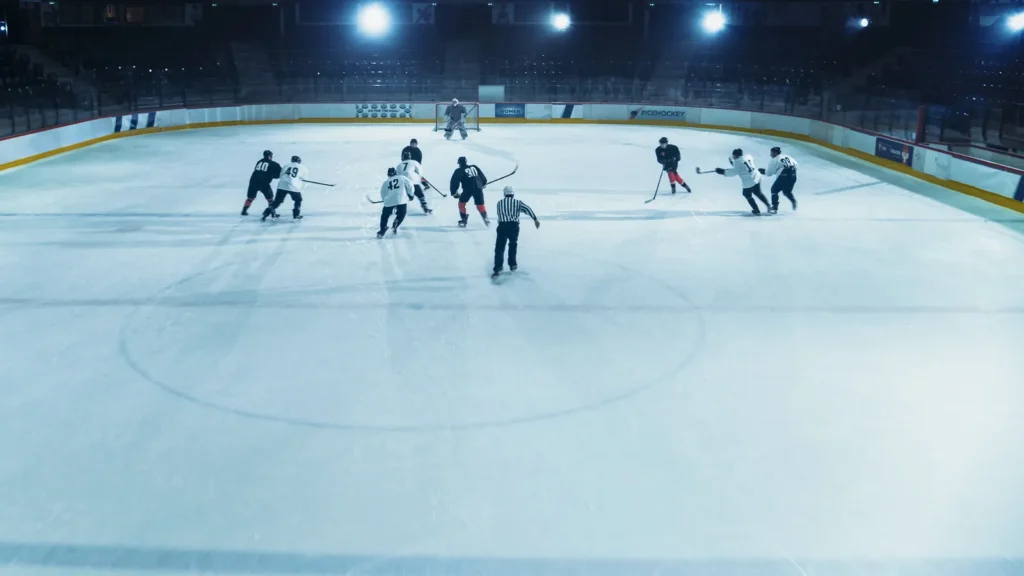
The “You Just Have to Watch” marketing campaign launched by the NHL and its partners was designed to showcase the intensity of the postseason. However, when that intensity is literally muted by technical issues, the marketing message loses its punch. For the NHL to maximize its reach, the presentation must match the high-octane product being played on the ice.
Will ESPN make adjustments for the second round?
Network producers typically review fan feedback and technical logs between playoff rounds to refine their production standards.
While ESPN has not released a formal statement regarding the specific audio complaints, history suggests that “mixing” levels are often adjusted based on internal audits. The goal is always to find a balance where the play-by-play is clear without drowning out the “soundtrack” of the arena.
The pressure to fix these issues is high, especially as the Stanley Cup Playoffs move toward the Conference Finals. With the eyes of the hockey world fixed on every whistle, the margin for error is razor-thin. Fans are hopeful that the “pulsing” crowd noise and muted mics will be a thing of the past by the time the next puck drops in the second round.
TL;DR
- Fans are criticizing ESPN for muted crowd noise and “pulsing” audio levels during the 2026 NHL playoffs.
- The lack of ambient arena sound is reportedly ruining the high-energy atmosphere of postseason hockey.
- Technical issues are being compounded by recent factual mistakes made by on-air broadcast talent.
- Poor production quality is a concern for the league as it looks to boost viewership in the U.S. market.
If you liked this story, don’t forget to follow us for more exclusive content.
This article was made with AI assistance and human editing.
If you liked this, you might also like:


