

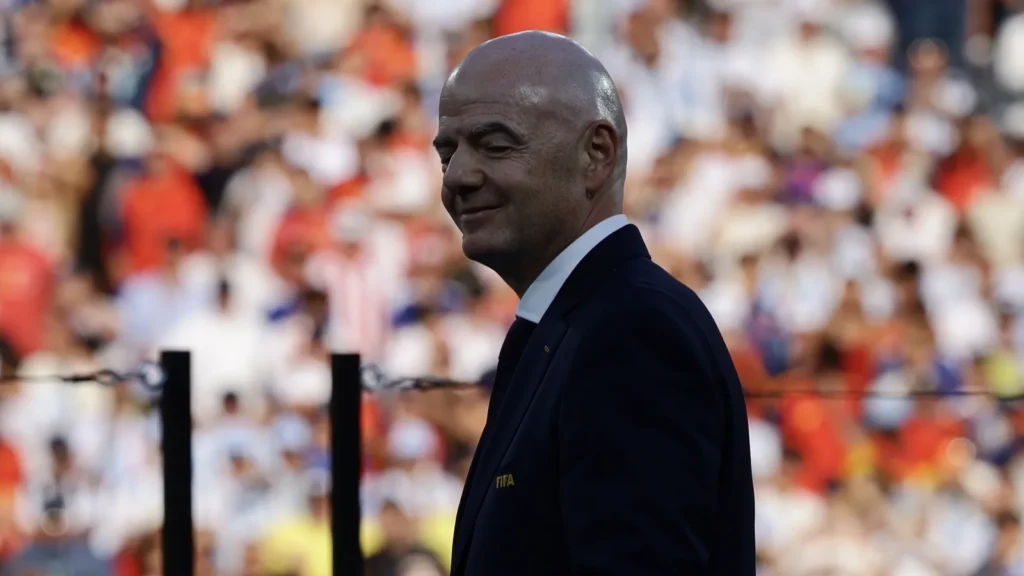
Gianni Infantino is fighting for his political life. FIFA’s president has summoned senior officials to an emergency meeting in Morocco this week after his controversial plan to sell off the World Cup collapsed amid fierce backlash from soccer’s governing bodies.
Allies are turning away, confederations are boycotting meetings, and UEFA has publicly declared it no longer trusts his leadership. This crisis marks one of the most turbulent moments in FIFA’s modern history.
A crisis meeting was called in Morocco
Gianni Infantino has summoned senior FIFA officials to an emergency meeting near Rabat, Morocco. The gathering comes as the FIFA president fights to save his job after a turbulent week, with pressure on him mounting by the day.
The meeting follows a bruising week in which FIFA Secretary General Mattias Grafström criticized the World Cup sell-off proposal. Grafström called recent events sad and reproachable in an internal message sent directly to FIFA staff members.
Arsène Wenger, FIFA’s chief of global football development and former Arsenal manager, also spoke out, saying he had no involvement in the World Cup sell-off plan and only learned about it through media reports. He insisted FIFA must operate with commitment, transparency, and integrity to properly serve the game.
The sell-off plan that sparked fury
Infantino proposed creating a new $20 billion company to sell a 20% stake in World Cup commercial rights to private investors. The plan aimed to raise $4.2 billion for future FIFA operations worldwide.
Each of FIFA’s 211 member federations was reportedly offered a one-time payment of $20 million each to accept the deal by mid-September. Critics called the offer a bribe disguised as an opportunity for smaller, poorer nations.
FIFA said the money raised through the deal would eventually be reinvested back into the sport for everyone’s benefit. Confederations disagreed strongly, calling the scheme secret, rushed, and of dubious benefit to the game.
UEFA turns its back on Infantino
UEFA declared it had lost confidence in FIFA’s leadership even after Infantino scrapped his controversial sell-off plan under pressure. The federation said no option should be off the table moving forward for football’s future.
European soccer’s governing body accused FIFA of running secret schemes cooked up by faceless individuals with dubious benefit to the sport. UEFA demanded full accountability from everyone responsible for the ongoing global football governance disaster.
UEFA also reminded Infantino of promises he made in 2016 regarding transparency and the return of FIFA’s money to the national associations he represents. It said, on both counts, he has failed.

Key allies start distancing themselves
Mattias Grafström, FIFA’s secretary general since 2024, has worked closely with Infantino since 2016 as a trusted right-hand man throughout his presidency and rise to power within world football’s governing body over the past decade.
Yet even Grafström broke ranks this week, echoing his earlier leaked message urging staff to stay focused on serving football rather than the political turmoil swirling around FIFA’s leadership.
Jordan FA president Prince Ali bin Hussein went even further, accusing FIFA of blackmail over unpaid prize money and for supporting Infantino’s re-election campaign. The accusation added fresh fuel to an already raging fire.
Why Infantino chose Rabat over Zurich
Infantino called senior staff to Morocco instead of FIFA’s official headquarters in Zurich, Switzerland, holding the meeting at FIFA’s Africa regional office near Rabat. The unusual venue raised eyebrows among insiders, since Infantino had already been in the country for Morocco’s Feast of the Enthronement celebrations the week before.
Rabat is home to Fouzi Lekjaa, president of the Moroccan football federation and one of the few officials to publicly back Infantino since the crisis began. The African confederation and its 54 member associations remain largely within Infantino’s sphere of influence.
Critics argue that African federations depend heavily on FIFA grants for infrastructure projects, creating pressure to publicly support Infantino. Meanwhile, FIFA remains partly paralyzed since UEFA, AFC, and CONCACAF have all withdrawn from ordinary governance meetings.
Legal threats add to the pressure
UEFA has warned FIFA that it is actively considering legal action, arbitration, or regulatory complaints tied to the failed sell-off scheme. Lawyers demanded that all related evidence be carefully preserved without any destruction or unexplained deletion.
FIFA’s chief operating officer, Kevin Lamour, distanced himself too, calling the failed proposal the project of just one man rather than a shared institutional decision. His statement further isolated Infantino within FIFA’s own senior leadership.
UEFA’s member federations previously agreed to boycott FIFA competitions entirely while the sell-off plan remained active and on the table. That threat alone forced Infantino into a rapid and embarrassing public retreat within days.
Fun fact: FIFA’s reserves already top $5 billion, yet the federation still pursued outside investors for its biggest event.
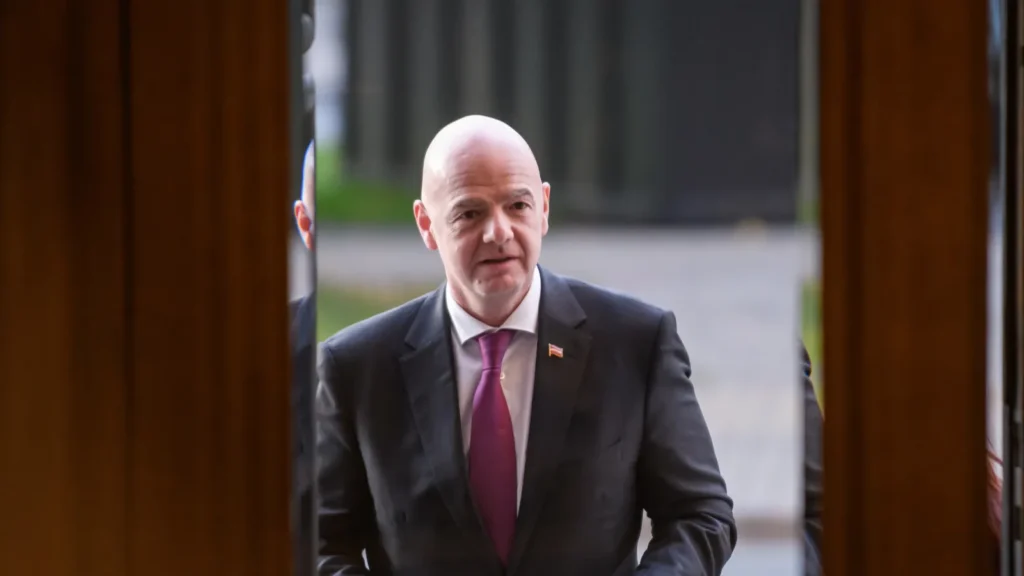
Infantino’s rise to FIFA’s top
Infantino trained as a lawyer before joining UEFA in 2000. He rose steadily through the ranks, eventually becoming UEFA’s general secretary in 2009 before running for FIFA’s presidency in 2016.
Infantino won the presidency after Sepp Blatter’s corruption scandal rocked world football. He promised transparency, reform, and expanded opportunities for smaller nations. He later oversaw the World Cup, which grew from 32 teams to 48.
Infantino speaks multiple languages fluently, including Arabic, Portuguese, and French. He also became an International Olympic Committee member back in 2020, further expanding his influence across global sports governance well beyond football’s traditional boundaries today.
Fun fact: Infantino once received Russia’s Order of Friendship medal directly from Vladimir Putin back in 2029.
What comes next for FIFA
Infantino’s third term runs until 2027, but growing calls for resignation suggest his position remains deeply uncertain. Confederations continue to withhold cooperation, leaving FIFA unable to conduct much of its normal day-to-day governance business right now.
UEFA plans to propose a new resource distribution system through the existing FIFA Forward program instead of Infantino’s rejected private investment scheme. Reforming FIFA’s finances transparently could reshape football governance for years to come.
Whether Infantino survives this storm depends on Wednesday’s crisis meeting and whether allies choose loyalty over growing outrage. Football fans worldwide are now watching closely as this unprecedented power struggle unfolds at football’s very top.
TL;DR
- Infantino summoned FIFA officials to a crisis meeting in Rabat, Morocco.
- His $20 billion World Cup sell-off plan to private investors collapsed under backlash.
- UEFA declared that it has entirely lost confidence in his leadership.
- Key allies, including Wenger and Grafstrom, have publicly distanced themselves.
- UEFA is now considering legal action over the failed proposal.
- FIFA remains partly paralyzed as confederations boycott normal governance meetings.
- Infantino’s third presidential term runs until 2027 despite the turmoil.
If you liked this story, don’t forget to follow us for more exclusive content.
This article was made with AI assistance and human editing.
If you liked this, you might also like: