FIFA President Gianni Infantino faced renewed criticism 1 week after the 2026 World Cup final. On July 26, he published a 15-page Instagram statement, which FIFA also posted on its official website, accusing unnamed media and online critics of spreading hate and false rumors about the tournament.
LaLiga President Javier Tebas called the message “pathetic” and questioned why Infantino had chosen to attack people scrutinizing FIFA. FairSquare had separately filed political-neutrality complaints concerning Infantino’s public support for President Donald Trump.
The reaction added to continuing concerns about World Cup ticket prices, U.S. visa restrictions, Infantino’s relationship with Trump and FIFA’s handling of Folarin Balogun’s suspension.
What Infantino actually said
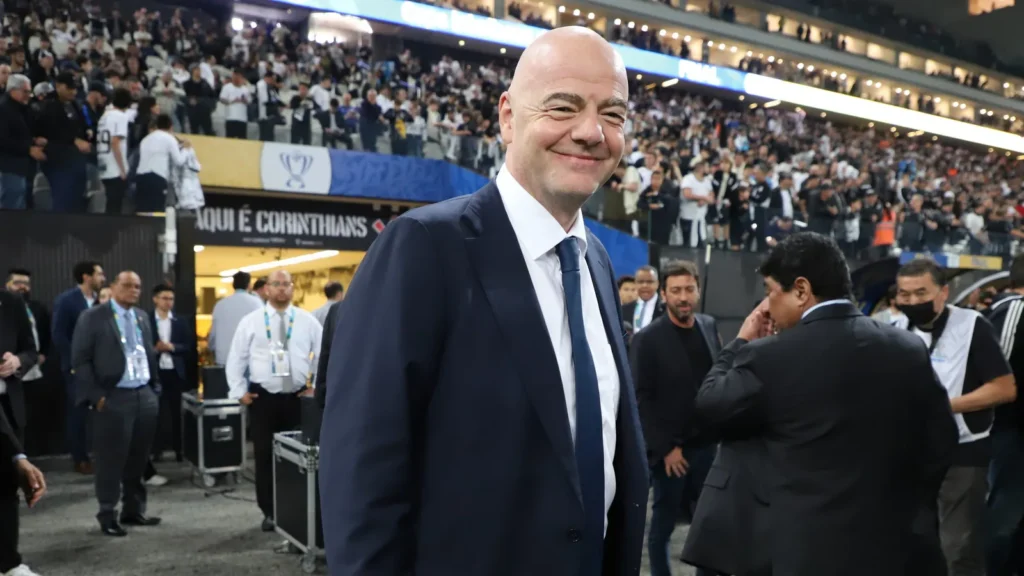
Infantino published a 15-page message on his personal Instagram account, and FIFA posted the complete statement on its official website. He presented the World Cup as a celebration of humanity and praised teams from smaller nations for representing their countries with confidence and pride.
Infantino then addressed unnamed journalists and online critics, saying they had been consumed by criticism and accusing people behind screens and publications of spreading hate and false rumors. He invited those who spent their time “hating” FIFA to reflect, meditate, pray or watch a football match.
He concluded by calling for love, tolerance and unity and signed the message, “Much love to all.” The contrast between his celebratory language and his attack on FIFA’s critics prompted a public backlash.
The Balogun red card controversy
U.S. forward Folarin Balogun received a red card during the Round of 32 victory over Bosnia and Herzegovina, carrying an automatic 1-match suspension. FIFA’s Disciplinary Committee later suspended enforcement of the sanction for a 1-year probationary period, allowing him to face Belgium.
The committee relied on Article 27 of the FIFA Disciplinary Code. President Donald Trump confirmed that he had called Infantino and requested a review of the red-card decision.
FIFA said Article 27 had previously been applied during World Cup qualifying, but it did not publish the disciplinary judge’s complete written reasoning in Balogun’s case. UEFA described the decision as “unprecedented, incomprehensible and unjustifiable.”
Human rights groups demand accountability
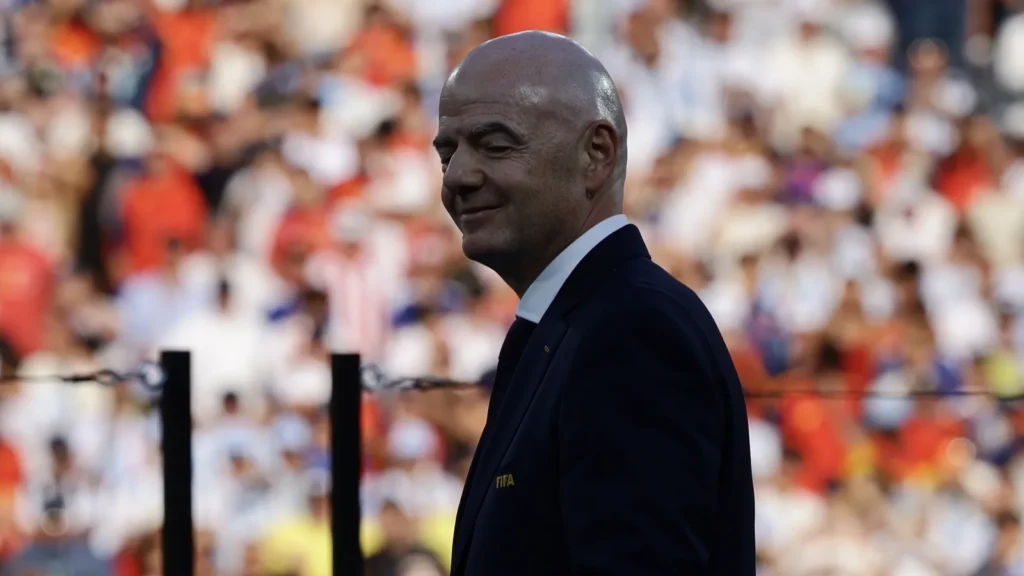
FairSquare had challenged Infantino before his July 26 statement. In December 2025, the organization filed a complaint with the FIFA Ethics Committee alleging that his public support for President Donald Trump violated FIFA’s political neutrality rules.
FairSquare says FIFA acknowledged receiving the complaint but provided no further substantive information. The IOC rejected a separate complaint because it concluded that matters involving FIFA governance and the implementation of football rules fell outside its Ethics Commission’s jurisdiction. The IOC did not rule that FairSquare’s allegations had been disproved.
Football Supporters Europe and Euroconsumers separately filed a complaint with the European Commission over FIFA’s World Cup ticketing practices. That action concerned prices, dynamic pricing, and transparency, and was not a response to Infantino’s July 26 message.
Football officials add their voices
LaLiga president Javier Tebas called for Infantino to resign on July 21, accusing the FIFA president of damaging the football industry through his management of the international calendar and competitions. Tebas argued that many critics privately agree with him but refuse to speak out.
After Infantino published his Instagram message, Tebas separately called the post “pathetic” and said that legitimate scrutiny should not be dismissed as hatred. The demand for his resignation therefore preceded the Instagram controversy, although Tebas later linked the post to his broader criticism of Infantino’s leadership.
Miguel Maduro, a former chairman of FIFA’s Governance Committee, previously argued that Infantino appeared to breach political-neutrality rules when he publicly endorsed Trump’s political actions and encouraged others to support them.
Fun fact: Several members of the Iranian delegation faced visa and entry complications, including midfielder Mehdi Torabi, whose U.S. visa status had to be resolved before later matches.
A pattern of political closeness
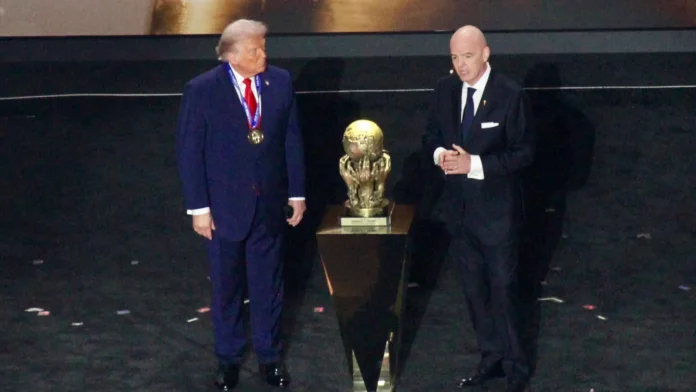
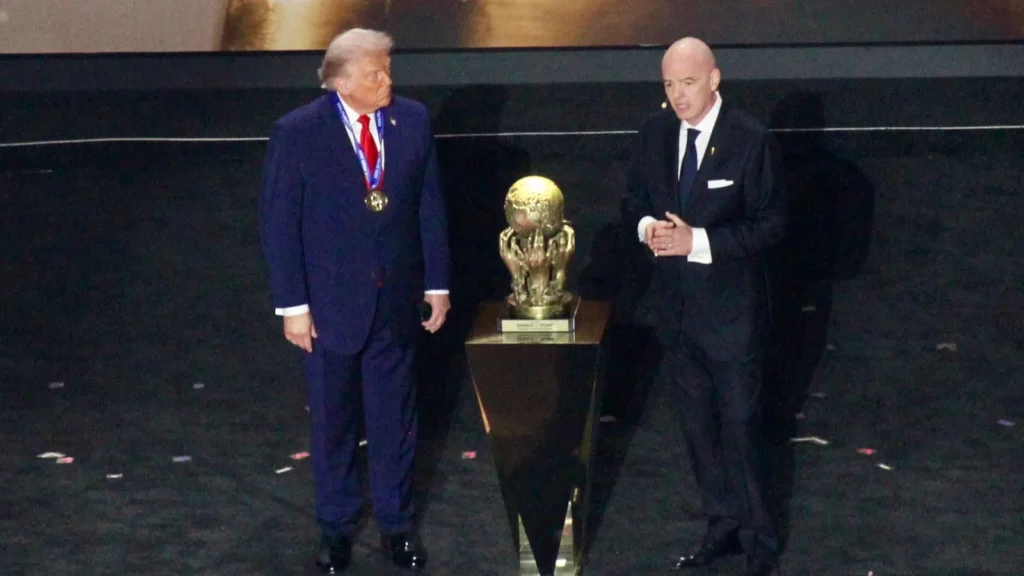
Infantino has repeatedly faced scrutiny over his relationship with Trump. In October 2025, he publicly said Trump deserved the Nobel Peace Prize. FIFA then awarded Trump the inaugural FIFA Peace Prize during the World Cup draw on Dec. 5.
In February 2026, Infantino attended Trump’s Board of Peace event wearing a red cap displaying “USA” and the numbers “45-47,” a reference to Trump’s 2 presidential terms. Critics say these gestures blur the line between courtesy and open political alignment.
FIFA’s Code of Ethics requires officials to remain politically neutral in official dealings with governments and other organizations. FairSquare alleges that Infantino’s comments and appearances crossed that line. Infantino and FIFA have maintained that cooperation with government leaders is necessary when organizing major international competitions.
Tournament controversies beyond the rant
The Balogun decision was one of several controversies surrounding the World Cup. U.S. travel and visa restrictions affected some supporters and officials, while Infantino’s promise of an inclusive tournament faced scrutiny over people who were unable to enter the country.
Ticket prices also drew sustained criticism. Football Supporters Europe called FIFA’s pricing structure extortionate, while Infantino defended it by arguing that demand was high and that tournament revenue funded football development.
Infantino cited Iran’s ability to participate in matches held in the United States as evidence of football’s unifying power. His account acknowledged that some visa applications were denied but emphasized the larger number that were approved.
How FIFA has responded so far
FIFA published Infantino’s full message on its official website, giving the statement an institutional platform rather than treating it solely as a personal Instagram post. This silence left many wondering whether FIFA allows for real internal accountability.
In the Balogun case, FIFA defended the decision under Article 27 of its Disciplinary Code and said its judicial bodies operate autonomously. The organization disclosed the rule used but did not release a detailed public ruling explaining all of the evidence considered.
FIFA’s investigatory chamber acknowledged receiving FairSquare’s December 2025 ethics complaint, but FairSquare says it has received no further substantive information. FIFA’s rules allow preliminary investigations to begin after a complaint, but submitting one does not automatically mean formal proceedings have opened.
Little-known fact: At Trump’s Board of Peace event in February, Infantino wore a red “USA” cap marked “45-47,” referring to Trump’s 45th and 47th presidencies.
TL;DR
- Gianni Infantino posted a lengthy Instagram statement attacking World Cup critics as haters.
- The post followed backlash over the suspension of the ban on forward Folarin Balogun after a red card.
- Trump confirmed he personally called Infantino to request a review of that decision.
- Human rights groups and officials, including Javier Tebas, have called for Infantino’s resignation.
- FIFA has issued no separate response, and ethics complaints against Infantino remain unresolved.
If you liked this story, don’t forget to follow us for more exclusive content.
This article was made with AI assistance and human editing.
If you liked this, you might also like: