


The Atlanta Hawks edged the Detroit Pistons 130-129 in overtime, exposing some defensive and tempo issues for a young Detroit team that had already clinched a playoff berth and was trying to sharpen its form for the postseason.
While the Pistons showed incredible resilience by clawing back from a 21-point deficit, the initial breakdown revealed how easily their defensive identity can be dismantled by high-octane offenses. Detroit entered the game missing key anchors Cade Cunningham and Isaiah Stewart, which forced their rotation into uncomfortable adjustments against Atlanta’s relentless speed.
The Hawks’ duo of Jalen Johnson and C.J. McCollum combined for 54 points, carving through a Detroit perimeter defense that struggled to match the game’s early pace. This late-season clash served as a vital wake-up call for Coach J.B. Bickerstaff’s group as they prepare for the more disciplined environment of the NBA playoffs.
Let’s take a closer look.
How did Atlanta’s speed disrupt the Detroit defense?
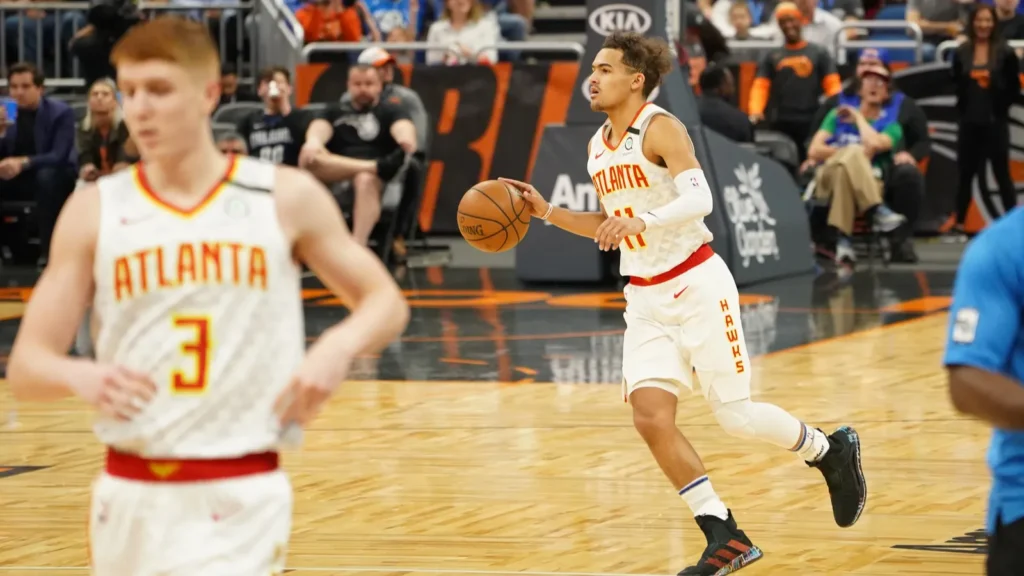
The Atlanta Hawks utilized their superior transition speed to build a massive first-half lead that ultimately dictated the flow of the game. During the first two quarters, the Pistons appeared a step slow, allowing the Hawks to build a 73-55 advantage by halftime. Coach Bickerstaff noted after the game that everything came “too easy” for Atlanta because the Pistons were caught playing at a tempo that favored the Hawks’ shooters rather than their own physical style.
Atlanta’s quick ball movement and pace created clean looks throughout the first half, and the Hawks shot 59.2% from the field before halftime. Detroit also had trouble containing Jalen Johnson, who finished with 27 points, 12 assists, and 8 rebounds.

Can the Pistons survive without Cade Cunningham’s leadership?
The absence of star guard Cade Cunningham left a significant void in Detroit’s late-game execution and overall floor generalship during the loss.
While Daniss Jenkins stepped up admirably with 10 assists, the Pistons lacked the steadying presence that Cunningham provides when an opposing team goes on a double-digit run. In the playoffs, the margin for error shrinks, and Detroit’s reliance on its young core to make split-second decisions was tested heavily by Atlanta’s aggressive traps.
Detroit’s resilience is one of its most valuable qualities, as it managed to outscore Atlanta in both the third and fourth quarters to force overtime. However, playing from behind is a dangerous gambit in a seven-game series where momentum is everything. Jalen Duren led the charge with 26 points, dominating the paint, but the team’s inability to close the deal in the final seconds of overtime highlighted the need for a primary playmaker like Cunningham to be healthy and active.
Why does tempo control matter for Detroit’s postseason success?
Detroit’s success depends more on controlling tempo and winning inside than on trying to turn games into track meets. Against Atlanta, the Pistons fell behind by 21 in the first half before settling into a more controlled rhythm after halftime and forcing overtime.

In recent weeks, the Pistons have actually slowed down even further, leaning into their identity as a physical, defensive-minded unit. By winning the points-in-the-paint battle, a category in which they consistently lead the NBA, they can negate the shooting advantages of teams like the Hawks. If they allow playoff opponents to dictate a high-speed rhythm, their defensive rating will likely suffer as it did on Wednesday night.
Fun Fact: The Atlanta Hawks were originally known as the Tri-Cities Blackhawks when the franchise was founded in 1946, representing Moline and Rock Island, Illinois, and Davenport, Iowa.
Is the Pistons’ bench deep enough for a deep playoff run?
With multiple starters sidelined, the Pistons’ depth was pushed to its limit, showing both flashes of potential and moments of extreme vulnerability. While the bench energy helped fuel the 21-point comeback, the lack of consistent scoring options outside of Jalen Duren and the guard rotation remains a concern. The Hawks’ bench was able to sustain the lead while their stars rested, a luxury Detroit didn’t quite have during the heavy minutes of the fourth quarter and overtime.
Playoff rotations usually tighten to eight or nine players, and Detroit needs to know exactly who they can trust when the pressure is highest. The overtime loss showed that while players like Daniss Jenkins can distribute, the scoring burden becomes very heavy if the primary options aren’t clicking. Resilience is a great trait, but consistent execution across the entire roster is what wins series.

Fun Fact: Little Caesars Arena, the home of the Pistons, features a unique “deconstructed” design where the concourse is covered by a glass roof, creating an indoor streetscape.
How will this loss impact Detroit’s final regular-season push?
Despite the loss, the Pistons demonstrated a mental toughness that suggests they will be a difficult postseason opponent in the Eastern Conference. Narrowly losing by one point in overtime after trailing by 21 also underscored Detroit’s resilience as it continued its push to secure the No. 1 seed in the East.
The final stretch of the season will be a test of health and adjustments. If Cunningham and Stewart return to the lineup soon, Detroit can integrate the lessons learned from the Hawks game, specifically regarding tempo and transition defense, to become a much more dangerous threat. They have shown they can play with anyone; now they just need to show they can finish.
TL;DR
- Atlanta’s Speed: The Hawks built a 21-point lead by forcing a fast-paced game that exploited Detroit’s transition defense.
- Key Absences: Playing without Cade Cunningham and Isaiah Stewart hampered Detroit’s leadership and interior defense.
- Identity Crisis: The Pistons struggled when trying to match Atlanta’s tempo but excelled once they returned to their physical, half-court style.
- Star Power: Jalen Johnson and C.J. McCollum combined for 54 points, highlighting Detroit’s need for better perimeter containment.
- Resilience: Detroit outscored Atlanta in the second half and forced overtime, showing championship-level grit despite the loss.
This article was made with AI assistance and human editing.
If you liked this, you might also like: