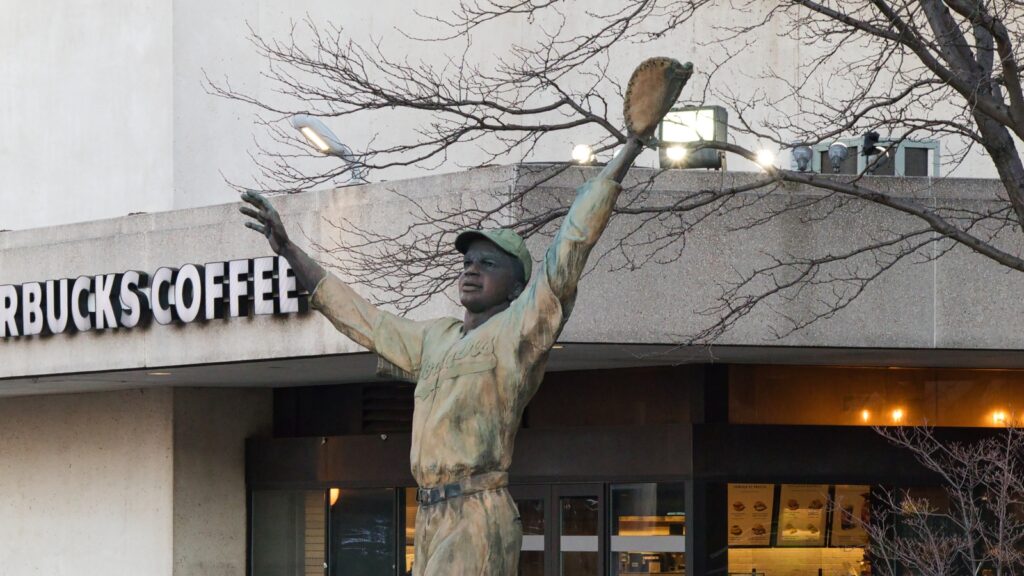
Ebbets Field hosted Jackie Robinson’s debut
Ebbets Field in Brooklyn hosted Jackie Robinson’s regular-season debut for the Dodgers on April 15, 1947. He made his debut at first base against the Boston Braves, breaking the National League’s longstanding racial barrier for Black players.
In front of 26,623 spectators, Robinson went hitless but scored Brooklyn’s winning run in a 5-3 victory over Boston. He received Major League Baseball’s first Rookie of the Year award in 1947 after batting .297.
Polo Grounds stretched 483 feet to center
The Polo Grounds in northern Manhattan featured a center field fence 483 feet from home plate. Its foul lines measured 279 feet on the left and 258 on the right, creating sharply unequal outfield distances.
Willie Mays demonstrated the importance of that deep outfield during Game 1 of the 1954 World Series. His over-the-shoulder catch of Vic Wertz’s long drive preserved a tie before New York won in extra innings.
Shibe Park introduced concrete grandstands
Shibe Park opened in Philadelphia on April 12, 1909, as Major League Baseball’s first steel and concrete stadium. Construction cost more than $300,000, giving the Athletics a larger and sturdier home than their previous ballpark.
The original grandstands had two seating levels around the infield, while center field extended 515 feet. The Phillies became tenants in 1938, and both clubs shared Shibe Park until the Athletics left Philadelphia in 1954.

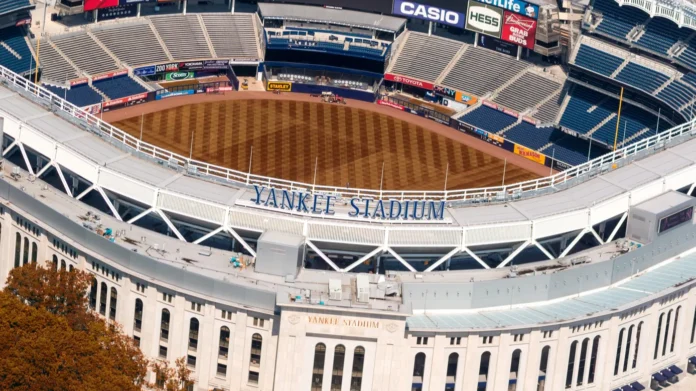
Yankee Stadium set an attendance benchmark
The original Yankee Stadium opened in the Bronx on April 18, 1923, before an estimated 74,200 spectators. That opening crowd was the largest recorded for a Major League Baseball game at that point in history.
Babe Ruth hit the new venue’s first home run against Boston pitcher Howard Ehmke with two runners aboard that afternoon. The Yankees won 4-1 and captured their first World Series championship later that same year.
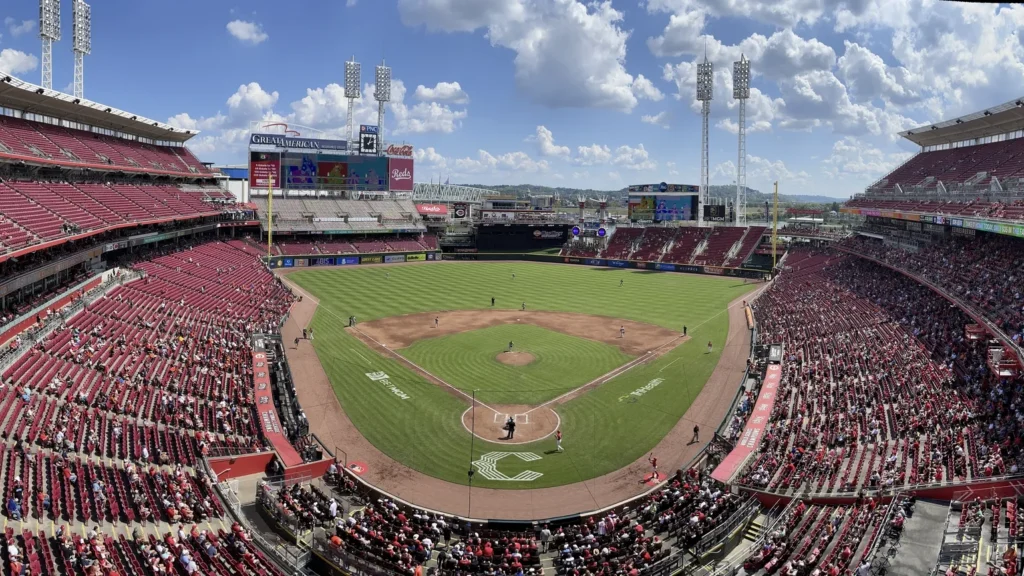
Crosley Field hosted the NL’s first night game
Crosley Field hosted the National League’s first night game on May 24, 1935, in Cincinnati. President Franklin Roosevelt signaled from Washington before local stadium officials switched on 632 electric lamps for the Reds and Phillies.
Cincinnati defeated visiting Philadelphia 2-1 before an announced crowd of 20,422. Night games gave Major League clubs new scheduling options and allowed working fans to attend baseball contests that previously took place during daylight hours.

Fenway Park made its wall part of play
Fenway Park opened in Boston on April 20, 1912, and its left-field wall was rebuilt in 1934. The Green Monster rises 37 feet, 2 inches, with the left-field foul pole 310 feet from home plate.
Fenway’s high wall turns some drives into doubles rather than home runs, forcing outfielders to judge rebounds. In 2014, Omar Infante hit the ladder attached to the barrier and reached second base after the ricochet.

Wrigley Field delayed night games until 1988
Wrigley Field in Chicago remained without permanent electric lighting for games until 1988, long after other Major League parks adopted night schedules. A planned August 8 debut against Philadelphia was cut short by heavy rain.
The Cubs played their first official night game on August 9, 1988, defeating the New York Mets 6-4 before 36,399 spectators. The change introduced regular evening contests to a ballpark long known for afternoon baseball.
Astrodome introduced indoor Major League play
The Houston Astrodome hosted the first Major League exhibition game indoors on April 9, 1965. The Astros defeated the Yankees 2-1 under an enclosed roof, where an air-conditioning system regulated temperatures throughout the stadium.
Natural grass struggled after workers coated roof panels to reduce glare for fielders. Houston installed artificial turf in 1966, introducing a playing surface later adopted at numerous other professional sports stadiums throughout the United States.
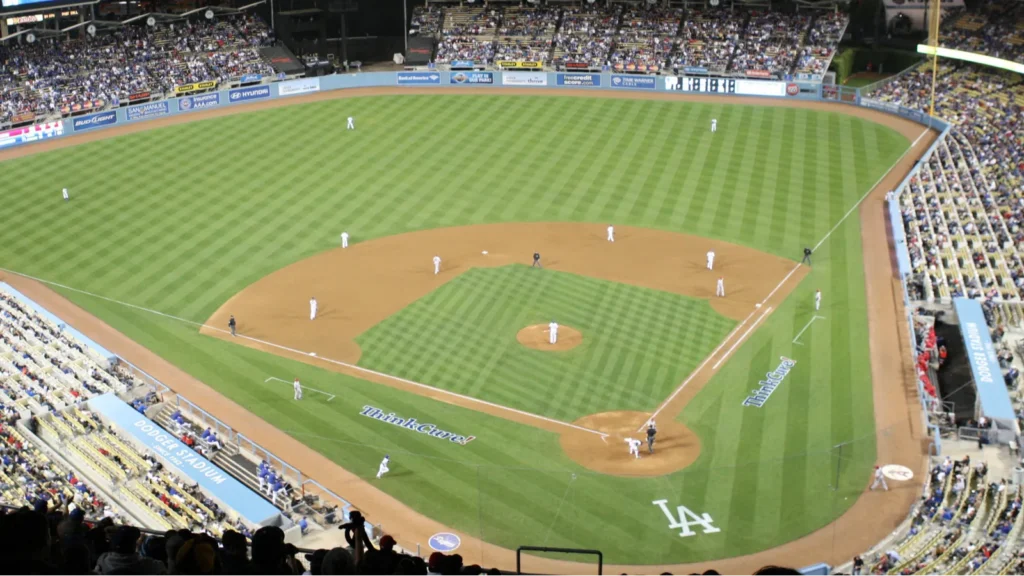
Dodger Stadium expanded California baseball
Dodger Stadium opened in Los Angeles on April 10, 1962, with 56,000 seats. After moving from Brooklyn in 1958, the Dodgers spent four seasons at the Memorial Coliseum while construction on their new home continued.
The privately financed stadium included parking for 16,000 vehicles across 21 terraced lots. By 1978, Los Angeles became the first baseball team to draw more than 3 million paying fans in a single regular season.
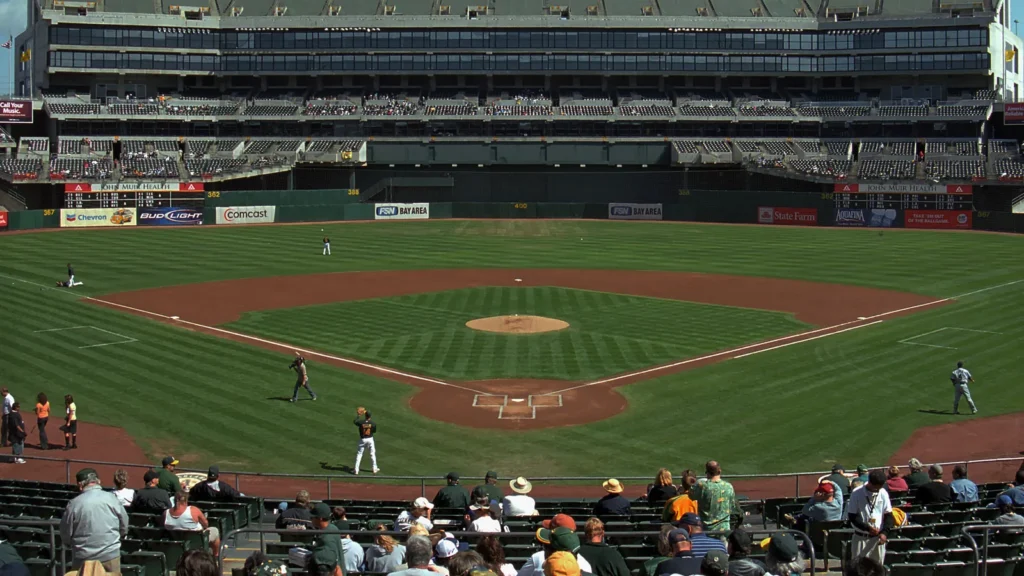
Oakland Coliseum turned foul space into outs
The Oakland Coliseum featured unusually large areas of foul territory throughout the Athletics’ tenure, which began in 1968. Fielders had extra room to catch foul pop-ups that would normally reach spectator seating at other ballparks.
Oakland’s unusual stadium layout affected the balance between pitchers and hitters because more foul balls remained catchable for defenders. The Athletics played their final Coliseum game on September 26, 2024, defeating Texas before a crowd of 46,889.
Fun fact: Crosley Field had a hill in its outfield, and even Babe Ruth stumbled on it while chasing a fly ball in 1935.
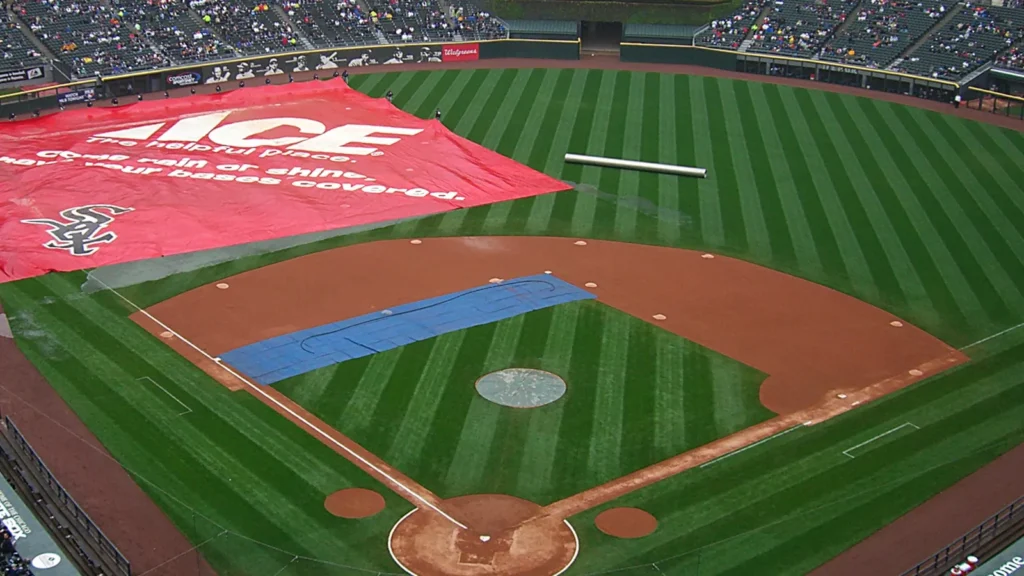
Comiskey Park unveiled an animated scoreboard
Comiskey Park in Chicago introduced an animated scoreboard measuring 130 feet across in 1960 under White Sox owner Bill Veeck. Lights, fireworks, and sound effects accompanied homers from the home team throughout that baseball season.
The White Sox had installed a large central scoreboard in 1950, before Veeck introduced his animated version. In 1982, the club added a color video board, along with upgraded seating and luxury suites, at Comiskey Park.
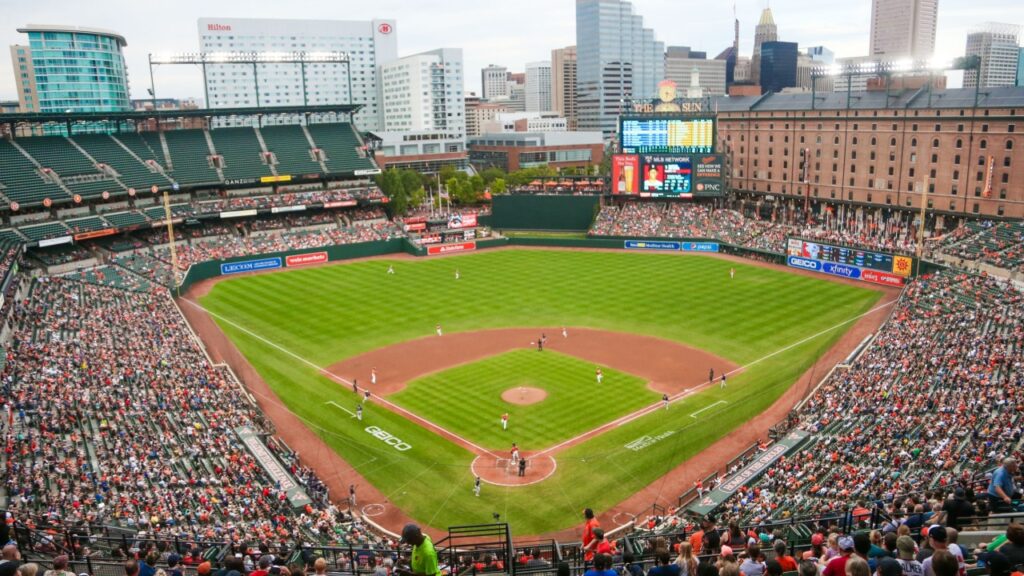
Camden Yards revived urban baseball design
Oriole Park at Camden Yards opened in Baltimore on April 6, 1992. Its brick exterior and neighboring railroad warehouse helped launch a wave of modern stadiums that resembled historic urban ballparks across the country.
The former Baltimore and Ohio Railroad warehouse stretches 1,016 feet along the area beyond right field. Designers preserved the existing structure rather than clearing it, linking the Orioles’ home to surrounding city streets and buildings.
What did Aaron Judge tell his teammates after the Yankees’ playoff exit? Explore Jazz Chisholm Jr.’s account of the captain’s message and what it reveals about the team’s outlook.
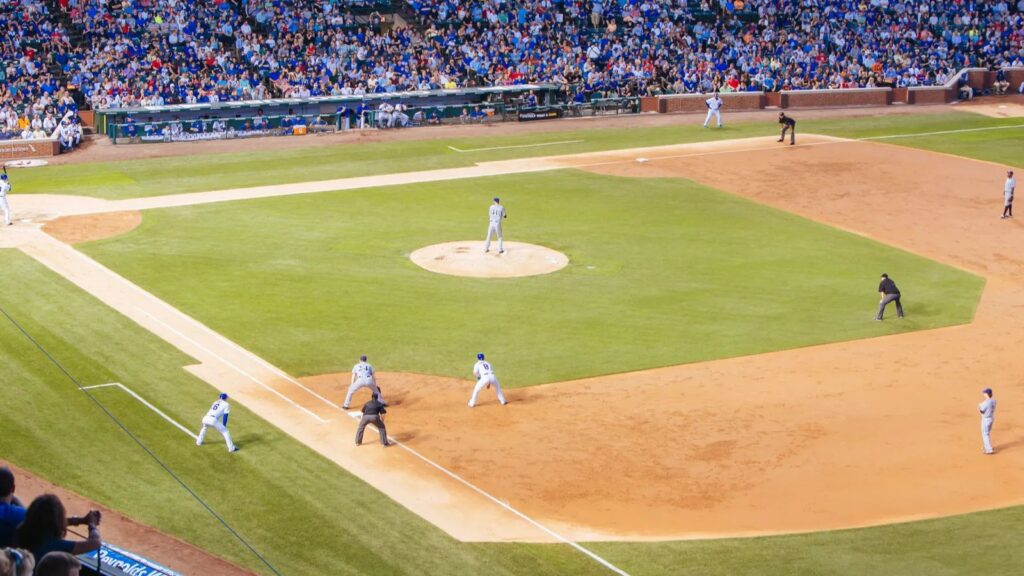
Rickwood Field honors Negro Leagues history
Rickwood Field opened in Birmingham, Alabama, on August 18, 1910, and remains America’s oldest professional baseball park. The local Black Barons used the grounds for decades, including during Willie Mays’ teenage playing career in 1948.
Rickwood Field hosted its first National League regular-season game on June 20, 2024. The St. Louis Cardinals defeated the San Francisco Giants 6-5 as both teams wore uniforms honoring Negro Leagues clubs from their cities.
Historic ballparks shaped baseball, but some MLB teams still face questions about their stadiums. Explore whether these five teams need new homes.
Which historic ballpark would you most want to visit, and what makes it stand out to you? Please share your thoughts in the comments below!
This slideshow was made with AI assistance and human editing.
Read More From This Brand: