

Basketball has always been a game of strategy, athleticism, and teamwork. For decades, scoring was dominated by shots close to the basket, layups, post moves, and mid-range jump shots. But then came a rule change that shifted everything: the 3-point shot.


By adding a line farther from the hoop and giving an extra point for shots made beyond it, basketball’s entire landscape began to transform. The three-pointer changed how players train, how coaches design plays, how teams are built, and even how fans see the game.
In this article, we’ll explore how the 3-point shot came to be, how it reshaped basketball strategy, and what effects it continues to have today.
The Birth and Early Adoption of the 3-Point Shot
Origins and Early Experiments
The idea of a shot worth more than two points didn’t start in the NBA. The first league to experiment with it was the American Basketball League (ABL) in 1961. Its founder, Abe Saperstein, who also created the Harlem Globetrotters, wanted to make the game more exciting and reward long-range shooters.

The league used a line about 25 feet from the basket, with slightly shorter corners at 22 feet. The ABL folded after only a season and a half, but its “home-run shot” idea lived on.
In 1967, the newly formed American Basketball Association (ABA) made the 3-pointer a core part of its identity. The league promoted it as a way to open up the floor and make games more entertaining. The colorful ABA helped popularize the rule, and when the NBA and ABA merged in 1976, the idea of the 3-point shot followed closely behind.
NBA Adoption and Early Years
At first, the NBA was cautious. Many coaches and purists dismissed the 3-pointer as a gimmick, preferring the traditional inside game. But in 1979, the NBA decided to test the idea for one season. That experiment became permanent.
The first official 3-point basket in NBA history was made by Chris Ford of the Boston Celtics on October 12, 1979. Early on, teams rarely used the shot, often saving it for end-of-game situations or desperation heaves. But as a few sharpshooters proved its value, coaches began to see the potential.
College basketball added the 3-point line for the 1986–87 season at 19 feet 9 inches, and high schools followed a year later. Over time, both levels pushed the line farther back to make the game more challenging. Today, the NBA distance stands at 23 feet 9 inches at the top of the arc and 22 feet in the corners.
How the 3-Point Shot Reshaped Strategy and Style
Opening the Floor and Changing Spacing
Before the 3-pointer, defenses packed the paint to block layups and post shots. Big men ruled the game. But once outside shooters became dangerous, defenders had to guard farther from the basket. That new spacing created more driving lanes, more passing opportunities, and more creative offenses.
Strategies like “drive-and-kick” (penetrate and pass to an open shooter) and “pick-and-pop” (a screen followed by a shooter stepping out for a three) became common. The 3-point line turned half-court sets into wide-open systems based on motion, spacing, and quick ball movement.
Statistical Thinking: Value of 3 vs. Value of 2
The biggest strategic shift came from math. A three-pointer is worth 1.5 times more than a two-pointer. So, if a team shoots 33% from three, it earns about 0.99 points per shot (3 × 0.33). If it shoots 50% from two, that’s only 1.0 point per shot (2 × 0.50).
That tiny difference encouraged coaches to chase efficient shots—either close to the basket or behind the arc. Mid-range jumpers, which produce fewer points on average, began to disappear from playbooks.
Analytics departments confirmed the math. Teams began tracking which areas of the floor produced the highest points per shot, leading to rules like “no long twos” and “get up at least 30 threes a game.” This data-driven mindset changed the look and rhythm of basketball forever.
Player Roles, Team Building, and Positionless Basketball
As 3-point shooting became central, teams began valuing players who could stretch the floor. Even traditional big men started adding range to stay relevant. Dirk Nowitzki, Kevin Love, and Karl-Anthony Towns all became examples of “stretch bigs”—players who could rebound inside yet score from deep.
Meanwhile, “3-and-D” players—those who can shoot threes and defend multiple positions—became vital. Roster building changed: teams wanted shooters at every position, not just guards.
This trend led to what coaches call “positionless basketball.” Instead of fixed roles like center or power forward, players are now expected to handle the ball, pass, and shoot from anywhere. The 3-pointer helped erase traditional boundaries between positions.
Modern Effects, Records, and Challenges
The 3-Point Revolution
In the modern NBA, the three-pointer is everywhere. In the early 1980s, teams attempted just two or three per game. By 2024–25, that number skyrocketed to about 37.5 per team per game.

The Houston Rockets, under general manager Daryl Morey, took this to extremes, sometimes attempting over 45 threes a night in their “Moreyball” era. That approach emphasized efficiency above all else: shoot either at the rim or from three, nothing in between.
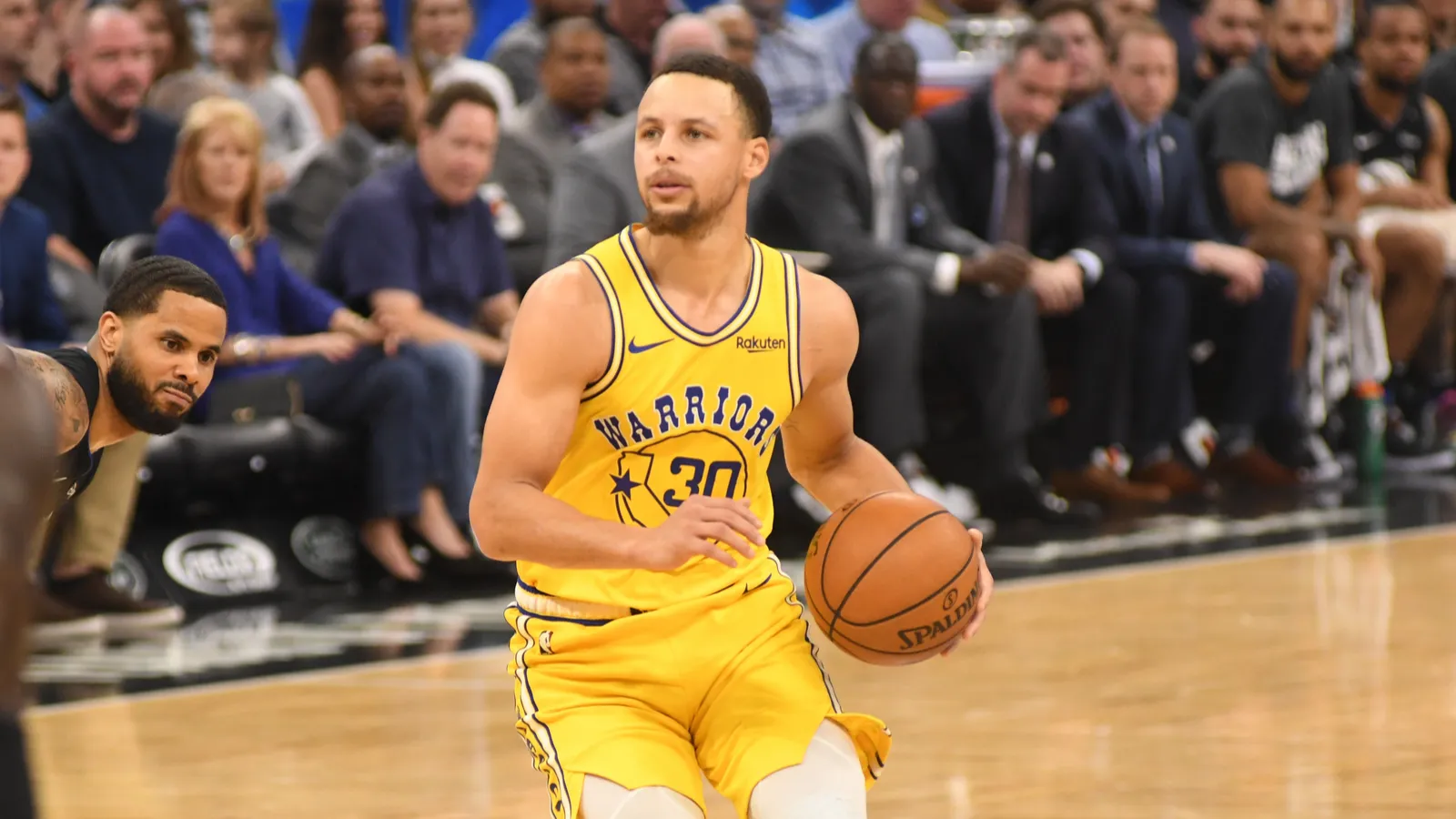
The biggest cultural shift came from the “Stephen Curry effect.” Curry proved that deep threes could be both accurate and game-changing. His off-the-dribble shooting forced defenses to guard well beyond the arc. His success with the Golden State Warriors inspired a league-wide shift toward long-range shooting and creative spacing.
Records and Milestones
With more shots come more records.
- Stephen Curry became the first player in NBA history to make 4,000 career 3-pointers in March 2025.
- Modern offenses now attempt more threes than mid-range jumpers—a complete reversal from 20 years ago.
- The corner three has emerged as one of the most efficient shots in basketball because it’s slightly closer (22 feet) and often comes off an assist, making it less contested.
Teams now design plays specifically to free up corner shooters, using quick passes and baseline movement to generate open looks.
Criticisms, Challenges, and Adaptations
Not everyone loves the 3-point era. Some fans say the game has lost its variety—too many long shots, not enough post play or mid-range artistry. Others argue that heavy reliance on the three can make games streaky. On cold shooting nights, even great teams can crumble.
There’s also debate about balance. Some analysts question whether the 3-point line’s current distance is ideal since success rates just inside and just outside the line are often similar. League officials have even discussed possible tweaks, like moving the line back slightly or modifying court dimensions in future experiments.
Still, most agree that the 3-pointer added excitement, drama, and a modern rhythm to basketball that fans have come to love.
Frequently Asked Questions
Q1: When was the 3-point line first used in basketball?
The first league to use it was the ABL in 1961. The ABA adopted it in 1967, and the NBA added it in 1979.
Q2: Why did the NBA adopt the 3-point line?
To make games faster and more exciting, and to reward skillful outside shooters. It also helped spread the floor and opened up new strategies.
Q3: What is the distance of the 3-point line?
In the NBA, it’s 23 feet 9 inches at the top and 22 feet in the corners. In college basketball, it’s around 22 feet 1¾ inches, and in high school, it’s 19 feet 9 inches.
Q4: Did the 3-pointer replace mid-range shots?
Not completely. Mid-range shots still have value, especially in playoff or late-game situations, but teams use them far less because they’re less efficient than layups or threes.
Q5: Are there downsides to relying heavily on the 3-point shot?
Yes. Teams that live by the three can also die by it. Cold shooting streaks can kill momentum, and over-focusing on threes can weaken inside play or rebounding.
Q6: Has the 3-point revolution affected other levels of basketball?
Absolutely. College and high school programs now teach spacing and shooting from a young age. International basketball has also adopted similar 3-point rules, making long-range shooting a global skill.
Conclusion
- The 3-point shot began as a simple idea to make basketball more exciting, but it became one of the most influential rule changes in sports history.
- It revolutionized strategy, forcing teams to rethink spacing, pace, and efficiency.
- It redefined player development—big men now shoot threes, guards attack from deeper, and everyone practices long-range accuracy.
- Analytics turned the 3-pointer into the foundation of modern offensive philosophy.
- While critics miss the old post-heavy game, the modern style has made basketball faster, more dynamic, and more global.
- Whether you love or hate it, the 3-pointer isn’t going anywhere—it’s now the heartbeat of the modern game.
Read More
- NFL Players Who Overcame Career-Threatening Injuries To Make A Comeback
- How Jackie Robinson Changed American Sports Forever
- Greatest Super Bowl Moments That Shaped Football History
This article was made with AI assistance and human editing.