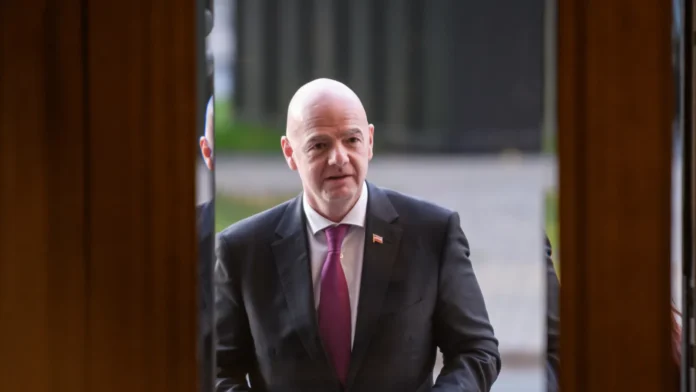
FIFA president Gianni Infantino is facing one of the biggest crises of his decade in office. The Times reported that he offered Morocco the right to host the 2030 World Cup final in exchange for renewed political support, an allegation FIFA strongly denies.
Infantino held a crisis meeting with senior FIFA officials in Morocco on August 5 after his controversial FIFA Forward Enterprise proposal collapsed under intense opposition. Several European associations have withdrawn support for his 2027 re-election bid, and Norway called for his resignation on August 7.
The revolt is not universal. FIFA’s senior management publicly backed Infantino after the Morocco meeting, while CAF, Mexico, Argentina, and several other associations have also reaffirmed support. The fight over his future remains deeply divided.
Who is Gianni Infantino anyway
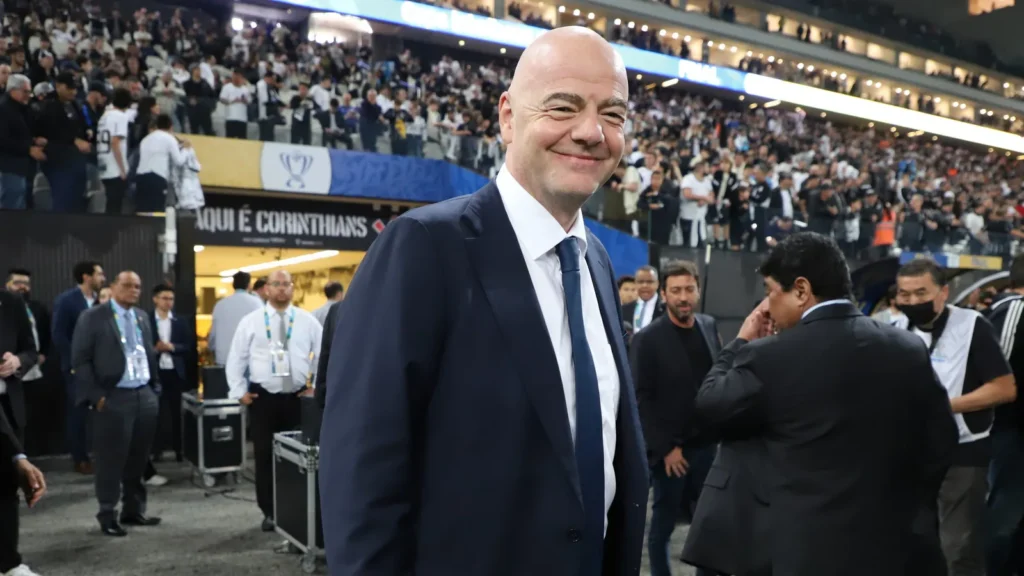
Gianni Infantino has served as FIFA president since February 2016. The Swiss-Italian football administrator has overseen major tournament expansion, including the 48-team men’s World Cup, while FIFA has reported substantial growth in commercial revenue and football-development spending during his presidency.
Infantino has also cultivated highly visible relationships with political leaders and governments around the world. Those connections have attracted increased scrutiny as critics question FIFA’s governance and decision-making under his leadership.
His fourth-term campaign now faces its first serious organized challenge. Several associations have withdrawn their support, while others continue to back him. Infantino intends to seek re-election at the FIFA Congress in Rabat, Morocco, on March 18, 2027.
The collapsed private investment plan
FIFA publicly unveiled the FIFA Forward Enterprise proposal on July 28. The plan called for a new FIFA-owned and controlled commercial subsidiary with an implied equity valuation of $20 billion and an initial capital raise of up to $4.2 billion from minority investors.
The proposal involved selling roughly 20% of the subsidiary while FIFA retained control. FIFA said the capital and projected commercial growth would help expand development funding and finance infrastructure projects for its 211 member associations.
UEFA and other major stakeholders strongly opposed the plan, with UEFA’s 55 associations threatening to boycott FIFA competitions. Infantino abandoned the proposal late on July 31 after the backlash intensified, while senior adviser Carlos Cordeiro resigned and other senior FIFA figures distanced themselves from the project.
Morocco reportedly promised the final
The Times reported that Infantino offered Morocco the right to stage the 2030 World Cup final at the planned Hassan II Stadium in return for renewed support for his presidency. FIFA denies that any such promise was made.
Morocco is one of the 2030 World Cup hosts, alongside Spain and Portugal, and has openly sought the final. However, FIFA has not selected the final venue, with major stadiums in Casablanca, Madrid, and Barcelona among the contenders.
Morocco was already firmly in Infantino’s camp before the latest allegation emerged. The Royal Moroccan Football Federation formally and exclusively endorsed his 2027 re-election candidacy in May, meaning the reported offer should not be described as the first event to secure Moroccan support.
Hassan II Stadium takes shape
The Grand Stade Hassan II is under construction in Benslimane Province near Casablanca. Morocco’s 2030 bid documents list a gross capacity of 115,000 and a net tournament capacity of 108,800, placing it among the largest planned football stadiums in the world.
Morocco hopes the stadium will host the 2030 World Cup final, but FIFA has not selected the final venue. Spain also has major contenders, including Real Madrid’s Santiago Bernabéu and Barcelona’s Camp Nou.
Spanish officials continue to argue that the final should be held in Spain. On August 6, Spain’s sports minister said the country “deserved” the match, while FIFA reiterated that it will make the venue decision in due course.
FIFA denies any quid pro quo
FIFA strongly denied the allegation that Infantino promised Morocco the 2030 World Cup final in return for political support. A spokesperson called that claim “false and misleading” and said FIFA would decide the final venue in due course.
At an August 5 crisis meeting in Rabat, FIFA Secretary-General Mattias Grafström and management board members in attendance reaffirmed their “full support” for Infantino. FIFA also acknowledged mistakes in the handling of the abandoned FFE proposal and apologized to the FIFA Council and member associations.
FIFA has 211 member associations, giving its Congress more members than the United Nations General Assembly, which has 193 member states. Each FIFA member association has representation within the organization’s global governance structure.
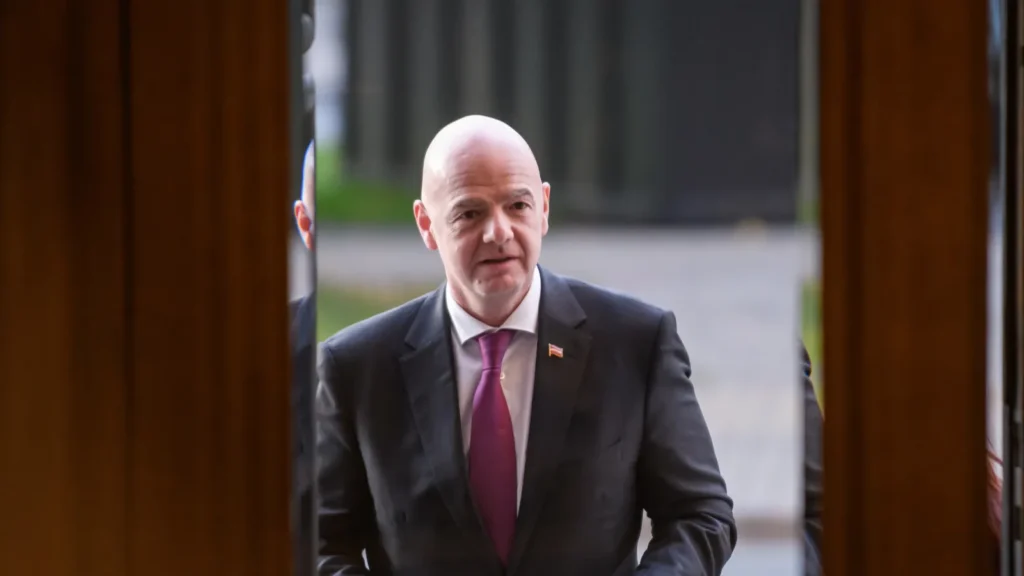
Little-known fact: FIFA has 211 member associations, more than the United Nations itself has member countries. That gives soccer’s governing body truly enormous global political and financial power and reach.
Saudi Arabia’s position is more complicated
Saudi Arabia has been an important supporter of Infantino, and its football federation formally endorsed his candidacy for the 2027–2031 FIFA presidency on April 30. Saudi Arabia was also awarded the 2034 World Cup during Infantino’s presidency.
The picture became more complicated during the FIFA Forward Enterprise controversy. The Asian Football Confederation criticized FIFA for failing to consult stakeholders properly, and The Guardian reported that the AFC position was understood to have the backing of the Saudi Arabian Football Federation.
As of August 8, no credible public statement reviewed for this fact-check indicates that the Saudi federation formally withdrew its April endorsement. Infantino’s re-election fight remains unsettled, but Reuters reported on August 7 that no clear challenger had emerged and that he continued to retain substantial support.
Luís Figo demands his resignation
Former Portugal star Luís Figo publicly called for Infantino to resign on August 5, saying the FIFA president had “debased the office” and should leave immediately.
Figo’s intervention joined a broader wave of criticism. England, Wales, Serbia, Sweden, Croatia, and other European associations have withdrawn support for Infantino’s re-election, while Norway went further on August 7 by formally calling for his resignation.
The opposition is significant but not universal. CAF, Mexico, Argentina, and several other associations continue to back Infantino, and no clear rival had emerged as of August 7. If re-elected in March 2027, Infantino would begin his fourth and final term as FIFA president.
What this means for 2030
The controversy raises bigger questions about how FIFA makes major decisions. Should hosting rights ever depend on political loyalty rather than pure merit? Many devoted fans worry about fairness and transparency going forward.
FIFA’s next presidential election is in March 2027, to be held, fittingly, in Morocco itself. Infantino would seek a 4th and technically final term as president. The outcome could genuinely redefine his entire FIFA legacy.
Fans, sponsors, and players all have a stake in FIFA’s credibility. Real change may come only through structural reform, not through resignations alone. The Infantino era now faces an incredibly important and defining moment.
Little-known fact: The FIFA organization is based in Zurich, Switzerland, and is legally structured as a nonprofit association. Yet it still generates many billions of dollars in tournament revenue every single year.
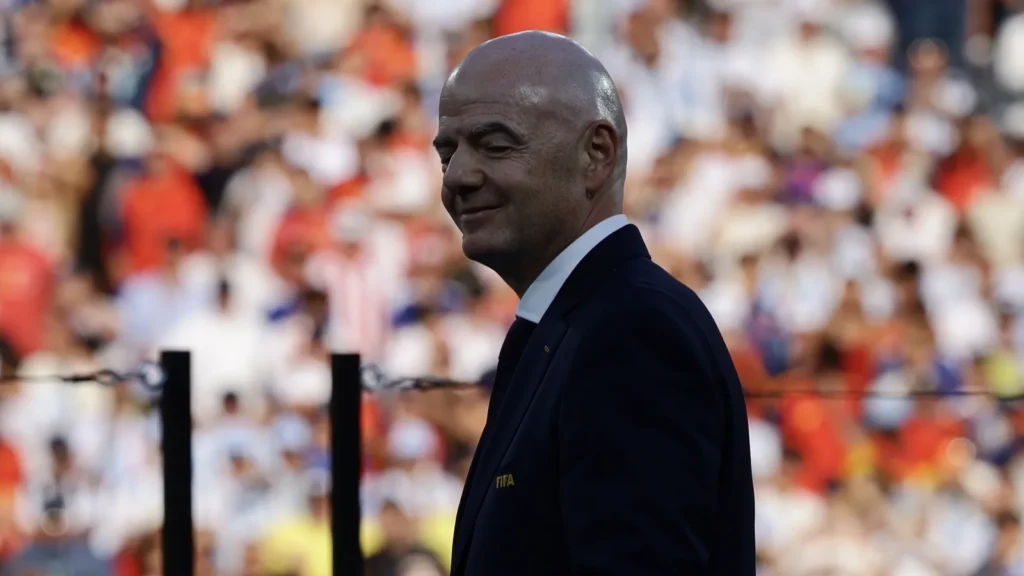
TL;DR
- The Times reported that Infantino offered Morocco the 2030 World Cup final at the planned Hassan II Stadium in exchange for renewed support for his presidency. FIFA strongly denied the allegation, calling it “false and misleading” and saying no final venue has been selected. The controversy follows FIFA’s abandoned proposal to sell roughly 20% of FIFA Forward Enterprise to minority investors, with the subsidiary valued at $20 billion and the planned capital raise capped at $4.2 billion. The Grand Stade Hassan II, under construction near Casablanca, is planned to have a gross capacity of 115,000, but FIFA has not awarded it the final.
If you liked this story, don’t forget to follow us for more exclusive content.
This article was made with AI assistance and human editing.
If you liked this, you might also like: