





Michigan’s 20-19 loss to Iowa came down to the final play, but the Wolverines had several opportunities to control the outcome before the dramatic finish. One of the biggest questions now surrounds Kyle Whittingham’s late-game offensive strategy.
With Michigan holding a 19-14 lead and Iowa still possessing timeouts, the Wolverines needed to keep the clock moving and prevent the Hawkeyes from getting another opportunity. Michigan failed to gain the first down it needed on its late four-minute possession and eventually punted, giving Iowa enough time to drive 91 yards for the winning touchdown.
The decision has drawn criticism because Bryce Underwood had played well and Michigan needed only one first down to put itself in a much stronger position. A first down would have significantly improved Michigan’s chances of closing out the game, although it would not have mathematically guaranteed a victory. Iowa ultimately drove into Michigan territory, snapped the final play with two seconds left and scored as time expired.
Michigan had chances to close the game
Michigan entered the final stretch with control of the scoreboard and an opportunity to make Iowa face a difficult late-game situation. The Wolverines’ offense could not produce the final first down needed to extend the possession and run more time off the clock.
Michigan chose to keep the ball on the ground, using three consecutive rushing plays before eventually punting. The first two runs could be defended as attempts to force Iowa to spend its timeouts, but the third-and-5 situation became the focus of criticism.
Criticism centered on whether Michigan should have trusted Underwood’s passing game instead of staying conservative. After the Wolverines punted, Iowa had enough time to answer and turned the chance into a win.

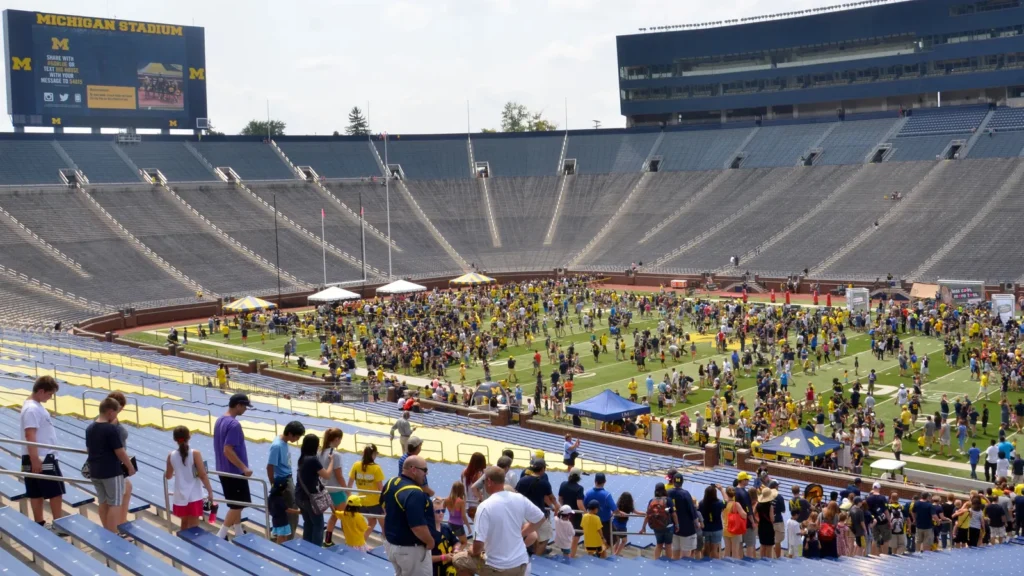
The final offensive sequence drew scrutiny
The key sequence began with Michigan trying to protect its narrow lead rather than extend it. Running the football was a logical way to keep the clock moving, particularly late in a close game, but Michigan’s inability to gain the necessary first down left Iowa with a chance to win.
The criticism is not simply about choosing to run. It is about whether Michigan should have used Underwood’s passing ability or a more aggressive play call to pursue the decisive first down. Underwood had played well, and the Wolverines had outgained Iowa 429-285 despite losing the game.
Michigan eventually punted with roughly two minutes remaining, leaving Iowa with an opportunity that the Hawkeyes ultimately converted. The sequence therefore became one of the clearest points of discussion surrounding Whittingham’s game management.
Whittingham also faced another decision
The late-game strategy was not the only decision that came under examination. Earlier in the game, Michigan faced fourth-and-1 from Iowa’s 18-yard line and elected to go for the first down instead of attempting a field goal.
Bryce Underwood took the snap and tried to extend the ball, but Iowa linebacker Cam Buffington stopped him short. The turnover on downs prevented Michigan from potentially adding points while it held a 10-7 lead.
Whittingham later explained that Michigan’s analytics supported going for it in that situation, even extending the recommendation to fourth-and-3. He acknowledged that the result was unsuccessful but distinguished the outcome from the decision itself.
Michigan’s coach accepted the missed opportunities
After the loss, Whittingham pointed to several areas that Michigan needed to improve rather than focusing on one individual mistake. He mentioned the offense’s inability to finish drives, the lack of defensive takeaways, costly penalties, and special-teams problems. Michigan also gave up a 99-yard kickoff-return touchdown, another major turning point in the game.
He also specifically discussed Michigan’s four-minute offense, acknowledging that the team had opportunities to put the game away and failed to do so. That assessment reflects how the coaching staff viewed the loss as a collection of missed chances rather than one isolated play.
Whittingham said Michigan chose coverage on Iowa’s final snap, rushing three while spying Brown. He later said sending six rushers might have sped up the play, but backed Jay Hill’s call.
Iowa turned one chance into victory
After Michigan’s punt, Iowa’s offense had enough time to move down the field. The Hawkeyes capitalized on their opportunity and reached the Michigan 16-yard line with only two seconds left.
Brown found Vander Zee for a 16-yard touchdown after a 29-yard pass to Addison Ostrenga and an injury stoppage. Iowa’s 91-yard drive, aided by a Michigan penalty, sealed the 20-19 road win.
The result also ended Michigan’s remarkable streak of 47 consecutive wins when leading at halftime, according to the game recap. Iowa’s victory was its first road win over a ranked Big Ten opponent since 2015.
Underwood’s performance added another layer
Underwood remained one of the most notable parts of Michigan’s performance despite the loss. He produced what Whittingham described as his best game of the season to that point, completing 17 of 28 passes for 276 yards and 2 touchdowns. He was also involved in several of the game’s most important moments.
In addition to his 2 touchdown passes, Underwood was stopped on the fourth-down attempt from Iowa’s 18-yard line and later threw an interception at the Iowa 2-yard line, another missed scoring opportunity for Michigan. That made the decision to rely exclusively on the running game during the final three-play sequence more noticeable.
Criticism focused on whether Michigan should have trusted Underwood to chase the decisive first down. Whittingham acknowledged several missed chances, framing the loss as a broader execution issue rather than one deciding play.
Fun fact: Bryce Underwood entered Michigan as the No. 1 overall recruit in the 2025 class, according to the major recruiting rankings.
Michigan now has to respond quickly
The Iowa loss leaves Michigan with plenty to correct, particularly in situations where the offense needs to close out a game. The Wolverines moved the ball effectively but struggled to turn several opportunities into points or a decisive late possession.
For Whittingham, the challenge is turning the lessons from the loss into better execution in the coming weeks. His own comments acknowledged that the four-minute offense, red-zone execution, penalties, and defensive finish all needed attention.
The Iowa defeat will therefore remain a reference point for Michigan’s late-game decisions. Whether the focus falls on the third-and-5 run, the fourth-down attempt earlier in the game, or the final defensive call, the Wolverines now have several areas to address before their next challenge.
Fun fact: The Wolverines have captured 45 Big Ten championships in program history.
TL;DR
- Michigan lost 20-19 to Iowa after the Hawkeyes scored a touchdown on the final play.
- Michigan failed to gain the first down needed to extend its late four-minute possession and punted, allowing Iowa to mount a 91-yard winning drive.
- Kyle Whittingham defended the earlier fourth-and-1 decision by explaining that analytics supported going for the first down.
- Bryce Underwood played a strong game, completing 17 of 28 passes for 276 yards and 2 touchdowns, but Michigan could not convert several important opportunities.
- Whittingham acknowledged problems with the four-minute offense, red-zone execution, penalties, special teams and the final defensive sequence.
- Iowa also scored on a 99-yard kickoff return, while Michigan missed a potential scoring opportunity after an interception at the Iowa 2-yard line.
Read More From This Brand:
- NCAA faces backlash after historic championship game announcement sparks debate
- Colin Kaepernick reveals he is still waiting for an NFL opportunity
- Caitlin Clark responds to Angel Reese question after FIBA gold medal win
This article was made with AI assistance and human editing.


