

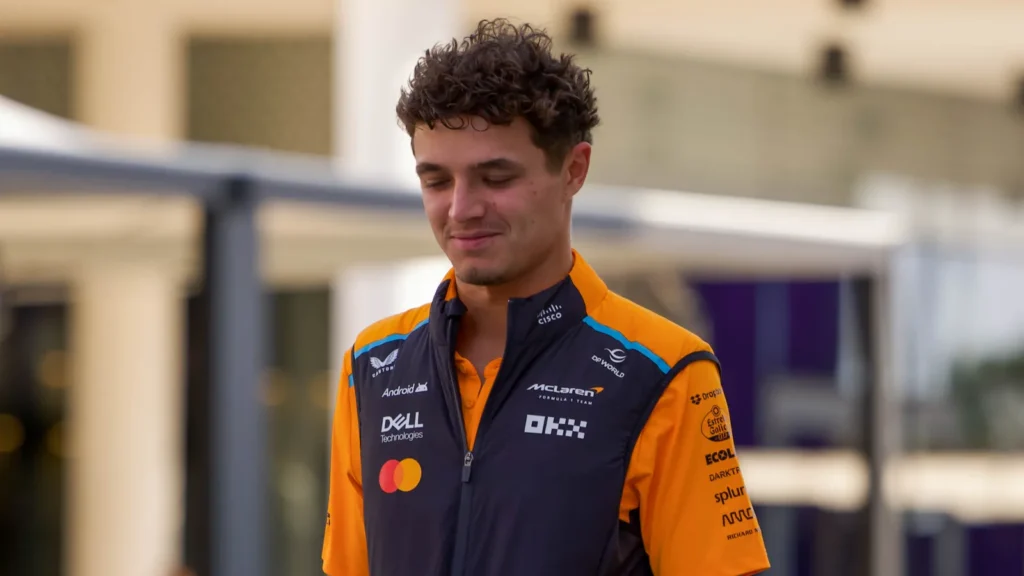
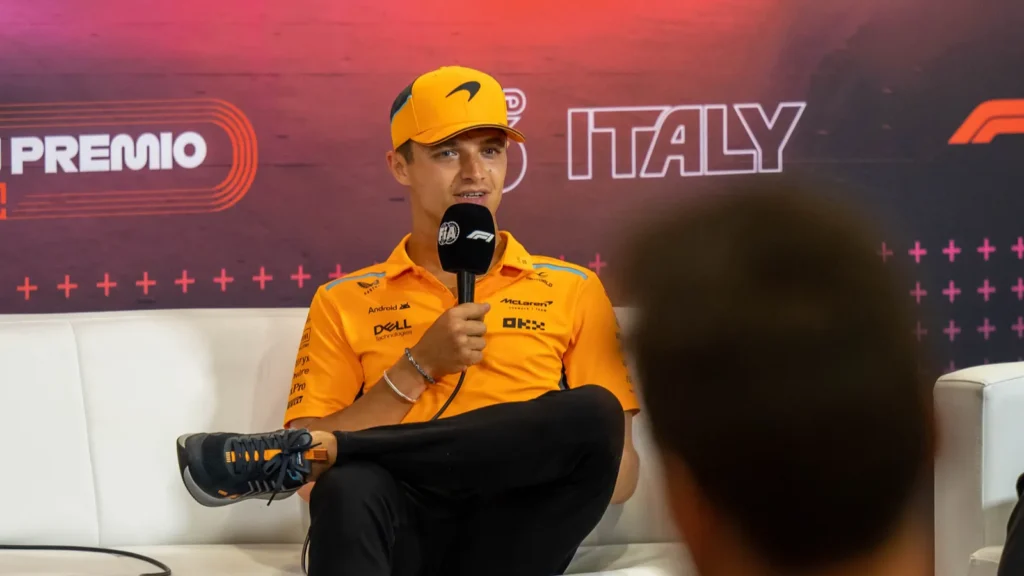
After a grueling afternoon in Madrid, Lando Norris simply wanted a refreshing drink. However, what unfolded next became one of the most thrilling storylines of the entire Formula 1 weekend, surprising everyone involved.
A simple can of soda sparked a lively exchange that caught fans’ attention. What started as a quiet moment backstage quickly became a prominent topic online, with the interaction spreading rapidly among the fan community.
What happened inside the cooldown room
Inside the cooldown room, the top three finishers relax briefly and watch race highlights before heading out to the podium. Norris was seen calmly sipping a can of Coca-Cola while seated beside his fellow drivers.
An off-camera official soon approached and quietly asked him to please put the drink away completely. Kimi Antonelli, sitting nearby, even gestured for Norris to hide the can from the view of nearby cameras.
Norris was having none of it at all that afternoon. He calmly told the official he had just finished a grueling race and felt entitled to drink whatever beverage he personally preferred at that moment.
The Virtual Safety Car that cost him the win
Lando Norris lost the lead during an ill-timed Virtual Safety Car at the Spanish Grand Prix. Lance Stroll stopped at Turn 20, prompting the VSC while Norris had already passed the pit entry.
Kimi Antonelli and Max Verstappen were able to pit under the VSC, while Norris had to complete another lap before stopping. A slow pit stop added to the time he lost, leaving him behind both drivers.
Norris eventually recovered to finish third after starting from pole. He later said the VSC timing left him with little he could have done differently.

Why Coca-Cola became such a big deal
Coca-Cola is a McLaren partner, while PepsiCo entered a worldwide partnership with Formula 1 in 2025. The different commercial relationships became noticeable when Norris brought a Coca-Cola can into the cooldown room after the Spanish Grand Prix.
PepsiCo’s F1 partnership includes brands such as Gatorade, Sting Energy, and Doritos. Reports connected the official’s request to the fact that Coca-Cola is not an official F1 partner, although the published details of PepsiCo’s agreement do not specifically describe the cooldown-room incident.
The moment highlighted how team-level sponsorships can overlap with Formula 1’s wider commercial partnerships.
Norris defends his right to choose
Norris addressed the official directly and firmly, calmly saying he had just completed a demanding 90-minute race. He insisted he was fully allowed to drink whatever beverage he personally wanted at that specific moment.
His tone stayed calm but confident throughout the entire brief exchange between them. There was no shouting at all, simply a quiet insistence that personal choices should not be dictated by unclear sponsorship-related instructions.
The moment captured Norris as both a frustrated racer and a relaxed, honest personality. Many viewers felt his response reflected genuine exhaustion mixed with mild amusement at being questioned over something so trivial and small.
Fans rally behind the world champion
Clips of the exchange spread quickly once broadcasters shared the footage from the cooldown room online later that same quiet night. Fans praised Norris for standing his ground rather than quietly complying with an unexplained sponsorship request.
Many commenters called the intervention absurd, arguing that drivers deserve basic freedom after grueling 90-minute races in extreme heat. Others found humor in watching a world champion politely refuse to hide a soda can.
The reaction turned a small backstage moment into a much wider conversation about how strictly modern sports enforce sponsorship rules today. Some fans argued the sport should really focus on bigger issues facing it instead.
Little-known fact: Norris has revealed that motorcycle racing and motocross were his first real motorsport love, before Formula 1 entered the picture.
Guenther Steiner calls the move unprofessional
Former team principal Guenther Steiner later weighed in publicly, calling Norris’s behavior unprofessional during an appearance on a well-known racing podcast. He argued that experienced drivers already understand exactly which branded items belong inside the cooldown room.
Steiner insisted true professionals should quietly follow known rules, no matter the personal frustration or bad luck. He described the entire situation as minor, yet still felt Norris should have handled it more carefully.
Despite his public criticism, Steiner admitted that no one was actually harmed by the brief exchange. He called it a minor misstep rather than a serious controversy that would cause any lasting damage to Norris’s professional public reputation.
Antonelli cruises to victory and a points lead
While Norris dealt with his soda controversy, Kimi Antonelli quietly claimed victory at the brand-new, historic Madring street circuit. Max Verstappen finished second, rounding out an eventful podium at Formula 1’s newest venue yet.
Racing through demanding conditions, drivers pushed hard across 57 laps under genuinely intense summer heat and humidity. Endurance during such races is significant, with drivers able to burn up to 1500 calories.
That serious physical toll partly explains why post-race hydration matters so much to every competitor on the grid. Choosing a familiar, refreshing drink after such exertion felt entirely reasonable to Norris despite the pushback.
What this means for F1 sponsorship rules
This small dispute reflects a much bigger tension across modern motorsport, where global sponsors compete fiercely for visibility everywhere possible. Team partnerships and series-wide deals do not always align smoothly behind the scenes.
Formula 1 continues to expand its commercial partnerships, while individual teams maintain their own separate sponsorship deals every season. Moments like this one reveal how those overlapping interests occasionally create awkward, unscripted situations for drivers.
Ultimately, the incident faded fast, yet it offered fans a rare glimpse of genuine authenticity from a reigning champion. Norris simply wanted a familiar drink after a hard day, refusing to pretend otherwise on camera.
TL;DR
- Lando Norris finished third at the Spanish Grand Prix in Madrid after losing a likely win to a poorly timed virtual safety car.
- In the cooldown room, an official asked Norris to stop drinking a can of Coca-Cola, a McLaren sponsor but not an F1 partner.
- Norris fired back, saying he had just finished a race and could drink whatever he liked.
- PepsiCo became F1’s official beverage partner in 2025, which likely triggered the awkward intervention.
If you liked this story, don’t forget to follow us for more exclusive content.
This article was made with AI assistance and human editing.
If you liked this, you might also like: