
The Green Bay Packers defeated the Dallas Cowboys 23-13 on Sunday night, Oct. 18, 2026, but a fourth-quarter roughing-the-passer penalty drew attention after it nullified an interception by Packers cornerback Carrington Valentine. Defensive end Lukas Van Ness was penalized for contact with Cowboys quarterback Dak Prescott.
The game featured 22 penalties, with each team penalized 11 times. Green Bay accumulated 96 penalty yards, while Dallas had 108. The disputed call became a talking point in a game marked by frequent penalties, although the Cowboys failed to score on the possession extended by the ruling.
The incident renewed discussion about how officials apply quarterback-protection rules and how penalties can affect possession and momentum. The game’s outcome, however, was not determined by this call alone: Green Bay preserved its lead and won by 10 points.
A disputed call overshadowed parts of the Packers’ win
The incident occurred in the fourth quarter, with Green Bay leading 23-7. Cowboys quarterback Dak Prescott threw a pass intended for Jonathan Mingo, but Packers cornerback Carrington Valentine stepped in front of the receiver and intercepted it.
Officials then called roughing the passer on Packers defensive end Lukas Van Ness, nullifying the interception. The decision extended Dallas’ possession and became one of the game’s most debated officiating moments, even though the Cowboys ultimately failed to score on that drive.
Replays appeared to show Van Ness pushing Prescott with both hands after the quarterback released the ball. Critics questioned whether the contact was forceful enough to warrant a penalty, while the ruling remained part of the officials’ on-field decision.
Fans questioned the consistency of roughing-the-passer calls
The penalty prompted criticism on social media, where viewers questioned whether the officials had applied the rule too strictly. Some reactions focused on the apparent lightness of the contact, while others argued that such decisions can change the direction of close games.
The phrase “unwatchable” captured the frustration of some fans who believe officiating controversies are becoming too distracting. However, social media reactions represent individual opinions, not proof that viewers broadly are abandoning NFL broadcasts or that the league’s officiating has uniformly declined.
The debate also illustrated how fans can interpret the same play differently depending on what the replay shows. A defensive player may appear to make minimal contact on television, while officials must judge the action against the rule’s specific requirements.
The Packers were hurt by the timing of the penalty

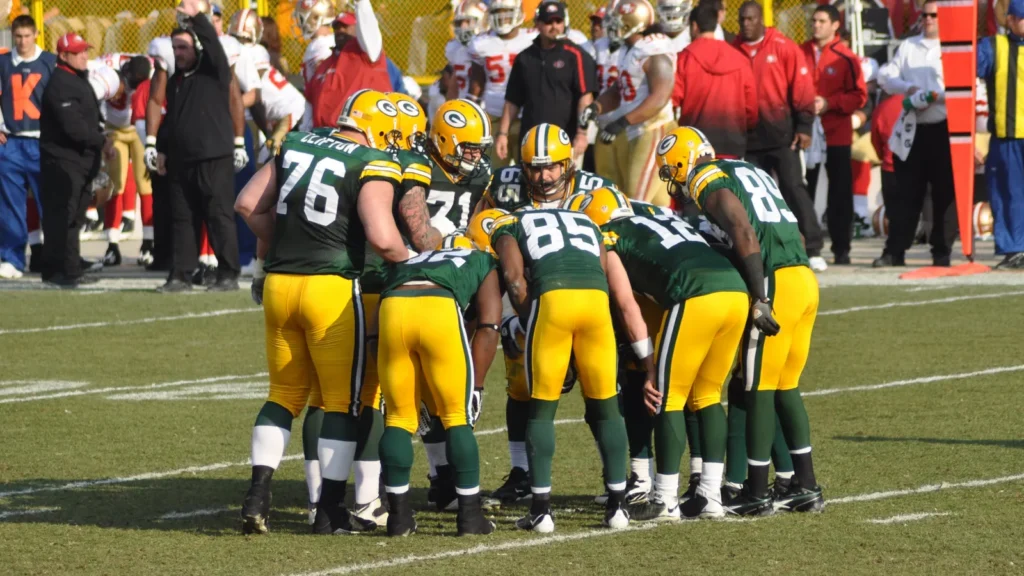
Valentine’s interception could have ended Dallas’ possession and given Green Bay another defensive highlight. Instead, the flag returned the ball to the Cowboys, extending a drive during which several other penalties complicated the Packers’ effort to close out the game.
Green Bay was penalized 11 times for 96 yards. Dallas also committed 11 penalties, accounting for 108 yards, making discipline an issue for both teams rather than a problem exclusive to one side.
Despite the interruption, the Packers’ defense held firm. Dallas eventually turned the possession over on downs, and Green Bay preserved its two-score advantage. The outcome limited the penalty’s immediate effect on the scoreboard but did little to end the debate.
The NFL’s player-safety rules create difficult judgments
Roughing-the-passer rules are designed to protect quarterbacks, who can be vulnerable after releasing the football. Officials must consider the type, location and force of contact, making some decisions dependent on details that are difficult to judge in real time.
That responsibility creates a difficult balance. If officials allow dangerous contact, players face greater risks; if they penalize borderline contact, fans may feel that normal football plays are being punished. Consistency is therefore central to public confidence in officiating.
The controversy does not, by itself, establish that the referee made an incorrect decision. Evaluating the call requires applying the rule to the contact that occurred, rather than relying solely on whether the play looked harmless or whether the result benefited a particular team.
Penalties have become part of a larger conversation
The Packers-Cowboys dispute came amid other recent criticism of NFL officials. Earlier in October, the league suspended line judge Jeff Seeman and referee Adrian Hill for separate incidents involving what the NFL described as unprofessional conduct toward players.
Those suspensions concerned officials’ conduct rather than the specific roughing-the-passer decision in Green Bay. Still, the incidents have added to public discussion about accountability and the standards expected of the people enforcing the rules during high-profile games.
The situations should not be treated as evidence of one common cause. Each call or incident has its own circumstances, and a fair assessment requires looking at the relevant footage, applicable rules and any subsequent explanation from the league.
Replay cannot settle every disagreement
Instant replay allows NFL officials to review and correct certain decisions, but the process operates under rules that specify which plays and rulings can be reviewed. Replay therefore does not provide an unrestricted opportunity to reconsider every penalty called during a game.
The NFL’s 2026 playing rules include provisions for replay review of roughing-the-passer fouls. The availability of review does not mean every disputed call will automatically be overturned; the applicable review procedures and evidence determine whether a decision can be changed.
Clear explanations of the rule involved and the basis for a ruling can help viewers understand controversial decisions, even when the final call remains disputed.
Dallas could not fully capitalize on the reprieve
Although the roughing-the-passer penalty erased Green Bay’s interception, the Cowboys did not turn that opportunity into points. The Packers stopped the drive on fourth down, reinforcing that a disputed ruling did not determine the game’s final outcome.
Green Bay’s broader performance also mattered. The Packers built a 17-0 halftime lead and held Dallas at arm’s length for much of the night, relying on defensive takeaways and key stops to secure their third consecutive victory.
Dallas finished with 13 points and fell to 2-4, while Green Bay improved to 4-2. The result left the Cowboys needing to address their execution and frustration, rather than treating officiating as the sole explanation for the loss.

Officiating remains central to the viewing experience
Officiating remains an important part of the NFL viewing experience, particularly when a penalty affects possession or a potential turnover. The Packers–Cowboys game illustrated how a disputed ruling can draw attention even when it does not determine the final score.
Fun fact: The Vince Lombardi Trophy was designed by Tiffany & Co. designer Oscar Riedener. The Pro Football Hall of Fame recounts that NFL Commissioner Pete Rozelle sought a trophy for the AFL–NFL Championship Game, leading to the creation of the trophy that would later bear Lombardi’s name.
The debate surrounding the Packers–Cowboys game highlights the importance of clear explanations and consistent application of the rules. Although not every close call will satisfy every viewer, transparent communication can help audiences understand how officials reach their decisions.
Fun fact: The iconic Vince Lombardi Trophy was first sketched on a cocktail napkin in 1966 by Tiffany & Co. designer Oscar Riedener during a lunch meeting with NFL Commissioner Pete Rozelle.
TL;DR
- The Green Bay Packers defeated the Dallas Cowboys 23–13 on Sunday night, Oct. 18, 2026.
- A roughing-the-passer penalty against Lukas Van Ness nullified Carrington Valentine’s interception of Dak Prescott.
- The call drew criticism and renewed discussion about quarterback-protection rules.
- Green Bay committed 11 penalties for 96 yards, while Dallas committed 11 for 108 yards.
- The incident highlighted questions about officiating judgment, player safety and the NFL’s replay procedures.
This article was made with AI assistance and human editing.
Read More From This Brand: