Some players wear the C on their jersey; a rare few make it mean something that lasts forever.
Hockey has never been short on talent. But leadership is a different thing entirely. The captains on this list did not just play the game well. They changed what it looked like to lead a team through pressure, doubt, and the weight of a city’s expectations.
From the Original Six dynasties to modern playoff runs, these men set the tone for everyone who came after them. Their eras looked different. Their styles were different. But the result was always the same; they won.
Let’s take a closer look.
Jean Beliveau becomes the gold standard of captaincy (1961)
No captain in NHL history combined grace, production, and championship pedigree quite like Le Gros Bill.
Jean Beliveau was named captain of the Montreal Canadiens in 1961, a role he held for a decade. During that time, he led the team to five Stanley Cup championships. He retired in 1971 with 10 Cups as a player and was inducted into the Hockey Hall of Fame the very next year.
His name appears on the Stanley Cup a record 17 times when counting his years as a team executive. Beliveau was not just a captain in title. He was the definition of what the role could and should be for every player who came after him. He was legendary for his “class and dignity,” and even Wayne Gretzky’s father famously told a young Wayne to emulate Beliveau’s conduct.
Fun fact: Jean Beliveau’s name appears on the Stanley Cup 17 times, more than any other individual in hockey history.

Maurice Richard lights a fire that hockey never forgot (1956)
The Rocket was more than a captain. He was the heartbeat of an entire culture.
Maurice Richard led the Canadiens with a ferocity that made opponents uncomfortable and fans electric. He captained Montreal to four consecutive Stanley Cups from 1957 to 1960, the last four titles in the Canadiens’ record five-Cup run between 1956 and 1960. His playing style was pure emotion, and his connection to French Canadian fans ran far deeper than sport.
When the NHL suspended Richard in 1955, it triggered a full-scale riot in Montreal that showed the world how passionately a fanbase could be tied to its player. Richard never just played hockey. He represented something much larger than the game. He is still spoken of reverentially as a historical and cultural figure who transcended the sport.
Wayne Gretzky turns the Edmonton Oilers into a dynasty (1984)
The Great One did not just break records. He built a championship culture that redefined what offense in hockey could look like.
Wayne Gretzky served as captain of the Edmonton Oilers from 1983 to 1988 and led them to four Stanley Cup victories in that span. He holds or shares at least 61 NHL records across regular season, postseason, and All-Star play. No player in league history has come close to matching his statistical footprint.
His captaincy transformed a young Edmonton team into the most dominant franchise of the decade. Even after Gretzky was traded to Los Angeles in 1988, the Oilers went on to win another Cup. That is the kind of culture a truly great captain leaves behind.
Mark Messier made the most famous guarantee in hockey history (1994)
Down 3 to 2 in the series, the Oilers and Rangers legend promised a win and then went out and delivered it with a hat trick.
Mark Messier is the only player in NHL history to captain two different franchises to a Stanley Cup. He won with the Edmonton Oilers in 1990 and then led the New York Rangers to their first championship in 54 years in 1994. His famous pregame guarantee before Game 6 of the Eastern Conference Finals is still one of the defining moments in playoff hockey.
Messier backed up his words that night with a natural hat trick in the third period, erasing a two-goal deficit to win 4 to 2. It was not just clutch. It was a lesson in what captaincy means when the stakes are at their highest. This performance is the primary reason the NHL named its annual leadership trophy the Mark Messier Leadership Award.
Steve Yzerman carries Detroit from rock bottom to the top (1986)
Stevie Y wore the C for 19 straight seasons and turned a struggling franchise into Hockeytown.
Steve Yzerman was named captain of the Detroit Red Wings in 1986 at just 21 years old. He held that title for 19 consecutive seasons, the longest captaincy tenure in NHL history and one of the longest for any major North American professional sports team.
By the time he retired in 2006, he had led the Red Wings to three Stanley Cup championships in 1997, 1998, and 2002. Yzerman played through injuries that would have ended most careers, including a serious knee condition during the 2002 playoff run. He never once considered stepping away from the role he was born to hold.
Mario Lemieux leads Pittsburgh from last place to back-to-back titles (1991)
The most physically gifted captain in NHL history overcame cancer and injuries to turn the Penguins into champions.
Mario Lemieux served as the Pittsburgh Penguins captain across multiple stints and led them to consecutive Stanley Cup championships in 1991 and 1992. At the time, both titles were the first in franchise history. He accomplished this while dealing with back problems that forced him to miss significant stretches of his career.
In 1993, Lemieux was diagnosed with Hodgkin lymphoma. He began radiation treatment in January and returned to the ice just weeks later, ultimately winning the scoring title that same season. That kind of determination is the reason he remains one of the most respected captains the sport has ever produced.
Fun fact: Mario Lemieux scored five goals five different ways in a single game on New Year’s Eve 1988, a feat no NHL player has ever repeated.
Sidney Crosby becomes the youngest captain to ever lift the Cup (2007)
Sid the Kid was named captain at 19 and proved within two years that the title fit him perfectly.
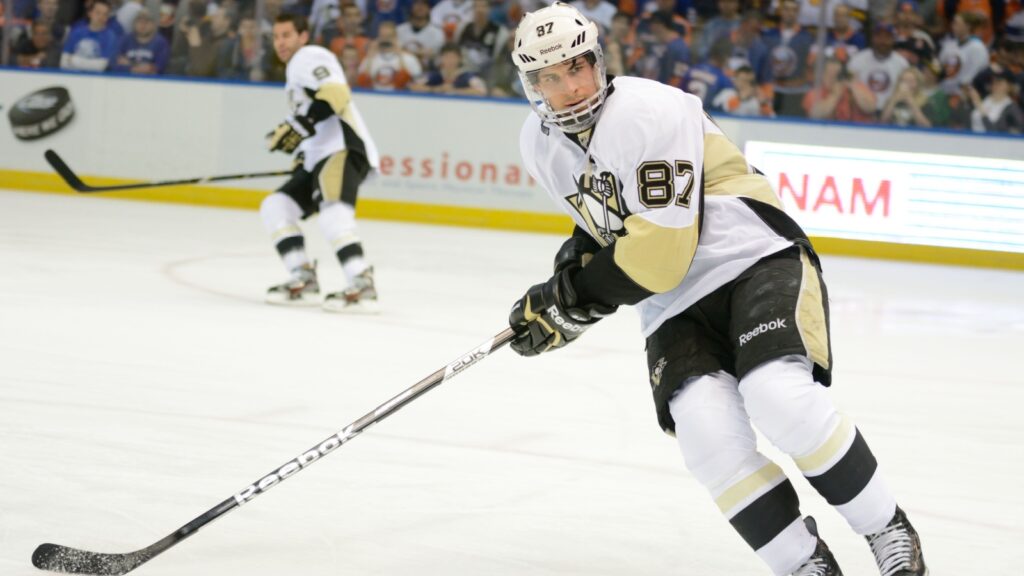
Sidney Crosby was named captain of the Pittsburgh Penguins on May 31, 2007, making him the youngest captain in NHL history at 19 years old. Two years later, at age 21, he became the youngest captain to win the Stanley Cup when Pittsburgh defeated the Detroit Red Wings in seven games in 2009. He has since added two more Cups in 2016 and 2017.
Crosby also holds the record for scoring at least one point per game across 20 NHL seasons, surpassing Wayne Gretzky’s mark of 19 seasons in 2024 to 2025. After all these years, he is still one of the best players on the ice every single night. That consistency is what separates good captains from legendary ones.
Fun facts
- Gretzky’s 1,963 assists alone would make him the NHL all-time points leader even if he never scored a single goal.
- Jean Beliveau’s name appears on the Stanley Cup 17 times, more than any other individual in hockey history.
- Mario Lemieux scored five goals five different ways in a single game on New Year’s Eve 1988, a feat no NHL player has ever repeated.
TL;DR
- Jean Beliveau won five Cups as captain and set the lasting standard for NHL leadership from 1961 to 1971.
- Maurice Richard’s passion connected captaincy to culture in a way the league had never seen before.
- Wayne Gretzky captained the Oilers to four Stanley Cups while rewriting the NHL record books entirely.
- Mark Messier is the only player to captain two different franchises to a Stanley Cup championship.
This article was made with AI assistance and human editing.
If you liked this, you might also like: