Nike used to be sneaker royalty. Bold ads, viral campaigns, and celebrity endorsements built an empire that Wall Street trusted without question. Somewhere along the way, that unshakeable momentum quietly turned into pressure and doubt.
Headlines love a simple villain, and lately Nike has been painted as the brand that picked politics over its own customers. That story sells well online, but the full picture behind the swoosh looks far messier.
This is the story of how a sneaker giant slipped from the top tier of American business. It involves boardroom decisions, a few political firestorms, and one very unforgiving stock market that rarely forgives hesitation.
The sneaker giant loses its seat
S&P Dow Jones Indices confirmed that Nike will officially exit the S&P 100 on September 21, 2026. The move ends an 18-year unbroken run inside one of America’s most closely watched stock market indexes.
Dell Technologies, Palo Alto Networks, Arista Networks, and SanDisk will join the S&P 100, while Nike, Honeywell Aerospace, Simon Property Group, and Colgate-Palmolive will leave the index.
Nike still remains a full official member of the broader S&P 500 index going forward. Losing S&P 100 status still stings symbolically, since that index tracks the hundred largest and steadiest American companies.
A legacy 18 years in the making
Nike originally joined the S&P 100 in December 2008, during a very different economic climate. For 18 straight years, it held its seat proudly among giants like Microsoft, Costco, and Walmart without interruption.
That long streak made Nike a powerful symbol of American retail dominance for nearly two full decades. Watching it exit now feels less like a small blip and much more like a genuine cultural ending.
Analysts studying the situation closely say no single scandal or controversy caused this steady fall alone. Instead, several long years of strategic missteps, rising global competition, and shifting consumer habits slowly chipped away at Nike.
When Kaepernick sparked a political firestorm
In 2018, Nike unveiled a bold ad campaign featuring Colin Kaepernick, the quarterback famous for kneeling during the national anthem. Conservative critics erupted online almost immediately, filming themselves burning shoes and loudly vowing permanent boycotts.
Despite all the loud public outrage, Nike’s online sales jumped 31% right after the controversial ad debuted that same week. Those angry boycotts fizzled fast.
The backlash proved far louder on social media platforms than it ever did at the actual cash register. Nike had correctly bet that younger, far more diverse shoppers cared very little about ongoing political controversy.
The Betsy Ross shoe ignites another dispute
In July 2019, Nike withdrew a shoe featuring the 13-star flag commonly associated with Betsy Ross after Colin Kaepernick reportedly raised concerns about the symbol. The company had already shipped the Air Max 1 USA design to retailers before recalling it.
Republican officials, including Senator Ted Cruz and Senate Majority Leader Mitch McConnell, criticized Nike’s decision. McConnell urged the company to reverse course and said he would purchase a pair if Nike released the shoe.
The dispute added to criticism of Nike’s engagement with political and social issues. However, publicly available evidence does not establish the long-term sales effect of this particular controversy or prove that it caused Nike’s later financial decline.
Politics roared while financial pressure grew
Political disputes generated headlines, but Nike’s financial difficulties also involved weakening demand, stronger competitors, reduced product innovation, distribution decisions, and declining sales in China.
Nike previously emphasized direct-to-consumer and digital sales while reducing its reliance on some wholesale retailers. The strategy weakened important retail relationships and created opportunities for competitors to gain more shelf space.
In fiscal 2025, Nike Direct revenue fell 12% on a currency-neutral basis, while Nike Brand Digital sales declined 20%. Wholesale revenue also fell that year rather than rising. In fiscal 2026, the trend changed: direct-to-consumer sales fell 8% to $17.7 billion, while wholesale revenue increased 4% to $27.5 billion.
Michael Jordan’s old warning resurfaces
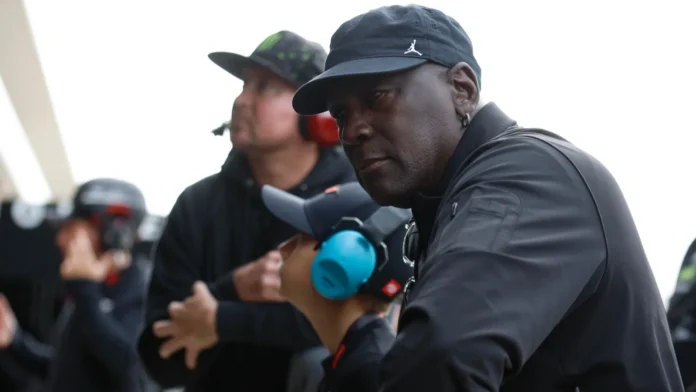
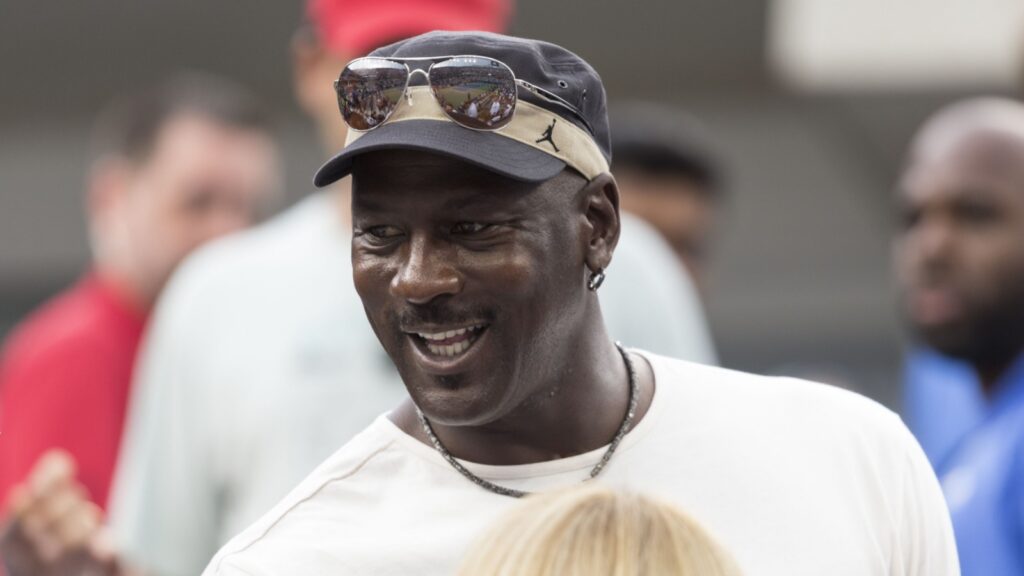
Back in 1990, Michael Jordan explained his refusal to publicly endorse a Democratic Senate candidate with a memorable joke that stuck around for decades. Republicans buy sneakers too, he reportedly said, only half seriously, then.
Jordan later addressed that quote directly in the documentary The Last Dance, saying he made the remark in jest on a team bus with teammates Horace Grant and Scottie Pippen sitting right nearby that day.
That old line is resurfacing now that Nike has quietly lost its S&P 100 seat entirely. Commentators online are asking whether the brand forgot the very lesson its biggest star once joked about years ago.
Little-known fact: Jordan‘s original 1984 Nike deal paid him $500,000 a year for five years. By 2025, Sportico estimated that he earned about $275 million, largely from Nike and Jordan Brand royalties.
Direct-to-consumer strategy backfires
CEO Elliott Hill has spent recent months personally rebuilding those damaged wholesale partnerships across the entire industry. Analysts say Nike essentially admitted its bold digital pivot had backfired badly after years of aggressive internal promotion.
Nike’s stock hit its all-time high in November 2021, trading above $160 per share. Since that peak, shares have fallen roughly 77 percent, a staggering and sobering decline overall.
Competition from newer brands like Hoka, On, Anta, and Li Ning chipped away steadily at Nike’s market dominance. These challengers offered fresher designs, while Nike leaned too heavily on legacy franchises for way too long.
China and tech reshape the rankings
China, once a wildly reliable growth engine for the entire company, gradually turned into a genuine weak spot. Sales there declined even as local shoppers showed a growing appetite for sportswear made by domestic brands.
The S&P 100 increasingly favors technology firms tied closely to artificial intelligence infrastructure and heavy data processing needs. Companies making chips, servers, and cybersecurity tools now consistently outrank traditional consumer brands like Nike these days.
Fashion and retail names losing ground is honestly not unique to Nike at all. Traditional blue-chip sectors are shrinking steadily as technology increasingly defines what actually counts as a true market leader.
TL;DR
- Nike will leave the S&P 100 before trading opens on September 21, 2026, ending a run of nearly 18 years.
- Dell Technologies, Palo Alto Networks, Arista Networks and Sandisk will join the index as Nike, Honeywell Aerospace, Simon Property Group and Colgate-Palmolive depart.
- Michael Jordan’s 1990 “Republicans buy sneakers, too” joke has returned to discussions about brands and political controversies.
- Nike will remain in the broader S&P 500.
- Nike’s political controversies generated backlash, but its current financial problems are also tied to distribution decisions, weaker innovation, rising competition, and declining sales in China.
- A third-party estimate found that Nike’s online sales increased 31% over a short period surrounding the 2018 Kaepernick campaign, but that figure does not establish the long-term effect of every political controversy.
If you liked this story, don’t forget to follow us for more exclusive content.
This article was made with AI assistance and human editing.
If you liked this, you might also like: