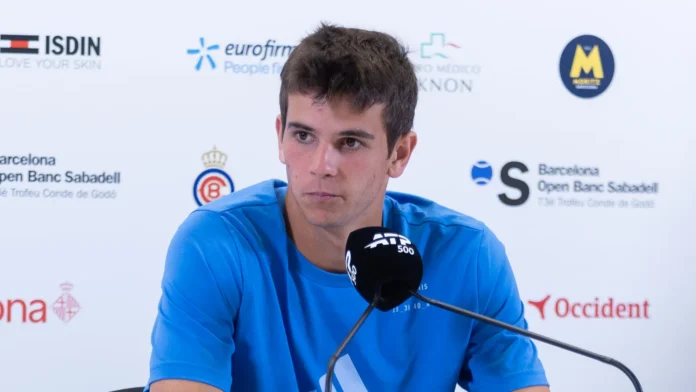
One word shouted at the wrong moment can follow an athlete for weeks. Tennis stars play under constant cameras, so every outburst travels fast. That reality has just caught up with a young Spanish player.
Tennis has long carried an image of politeness and quiet respect. Players shake hands at the net and applaud good shots from rivals. That polished image makes any rude moment stand out far more sharply.
Young fans often copy what they see from their favorite stars. Rising players carry extra weight because they shape the sport’s next chapter. Their choices on court can matter just as much as their results.
A towel request turns into trouble
The moment came at the Shanghai Masters on Wednesday, October 14. Jódar trailed Botic van de Zandschulp after losing the first set in a tiebreak. Early in the second set, he snapped at a ball boy while asking for a towel.
Jódar made the request in Spanish and used profanity. Chair umpire Jimmy Pinoargote immediately issued a code violation for unsportsmanlike conduct. Video of the exchange quickly circulated online and brought criticism of Jódar’s behavior.
The incident received widespread attention as Jódar continued his run in Shanghai. Two days later, he apologized, admitted he had failed to control his emotions and said he agreed with the umpire’s decision to warn him.
The tense exchange with the umpire
Chair umpire Jimmy Pinoargote understood Jódar’s Spanish outburst and issued a code violation for unsportsmanlike conduct. During their exchange, Pinoargote acknowledged Jódar’s frustration but told him he could not speak to a ball kid that way.
Jódar initially disputed the warning and asked what he had said. Pinoargote responded that he would not repeat the language and told Jódar that he knew what he had said.
Jódar argued that tension was high and complained that the ball boy had not responded to his request after about 1 hour and 10 minutes of play. He questioned the warning before eventually continuing the match.
How the match still ended well
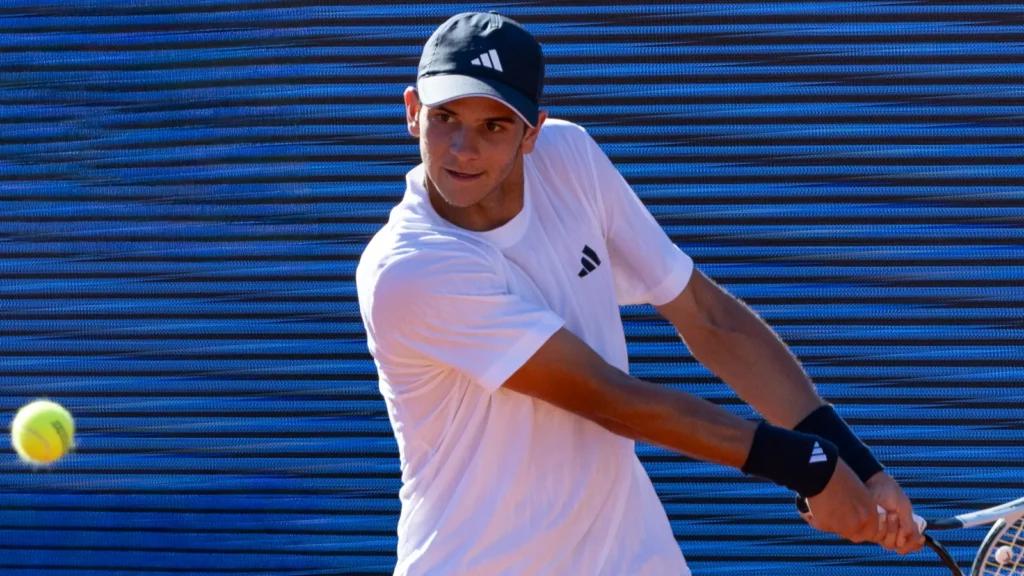
Jódar rallied to beat Botic van de Zandschulp 6-7(4), 6-4, 6-2 in the Shanghai Masters round of 16 on October 14. The match lasted 2 hours and 30 minutes and earned the Spaniard his fourth Masters 1000 quarterfinal appearance of 2026.
His Shanghai run continued with a three-set victory over Casper Ruud and a straight-set win against Daniil Medvedev. Those results carried him into his first Masters 1000 final, where he faced fellow Spaniard Alejandro Davidovich Fokina on October 18.
Jódar won the opening set of the final but eventually lost 6-1, 6-7(5), 4-6. Despite falling short of the title, his performance strengthened his reputation as one of the ATP Tour’s most promising young players and helped his push toward the ATP Finals.
What the rulebook says about violations
Tennis uses an escalating penalty system for code violations. A first offense brings a warning and a second offense costs a point. Jódar received only the mildest step, which carries no cost on the scoreboard.
This system exists to keep matches fair and respectful. Ball kids are not part of the contest, so players must treat them with care. Officials expect that same standard in every single round of play.
Jódar’s case stayed far from default territory. Defaults can result from serious abuse of officials, ball persons, spectators, or opponents; physical aggression; repeated violations; or other egregious misconduct. A verbal warning sits at the opposite end of the scale, yet the penalty still sent a message.
A growing pattern around ball kids
In May, Jódar faced controversy at the French Open after a video showed a ball girl stumbling near him during his match against Alex Michelsen. Jódar denied touching or pushing her. The Associated Press described the footage as inconclusive, leaving the question of physical contact unresolved.
Jódar explained that the girl had been moving backward and appeared to lose her footing near a court cover. He said he was gesturing toward his father at the time. The Spaniard also emphasized his appreciation for ball kids and the difficult conditions they sometimes face.
Another unusual moment occurred at the DC Open in August during Jódar’s match against Lorenzo Musetti. A stray ball unexpectedly interrupted play as Jódar prepared to return serve. He reacted with visible frustration before continuing the match, which he eventually won.
A rapid rise under bright lights
Jódar turned pro ahead of 2026 after one college year at Virginia. He began life as a pro ranked No. 168 in the ATP rankings. He had also won three ATP Challenger titles during 2025.
Jódar ended 2024 ranked just 896th in the world. He then won the ITA National Rookie of the Year award as a Virginia freshman, which shows just how fast things moved for him.
He won his first ATP title in Morocco this past April. On August 10, he reached a career-high ranking of world No. 11. That is a remarkably fast climb for any rookie on tour.
Little-known fact: Jódar says his parents chose “Rafa” because his dad and grandfather are also called Rafa. Nadal is still his idol, so the shared name is a happy bonus.
Why ball kids deserve respect
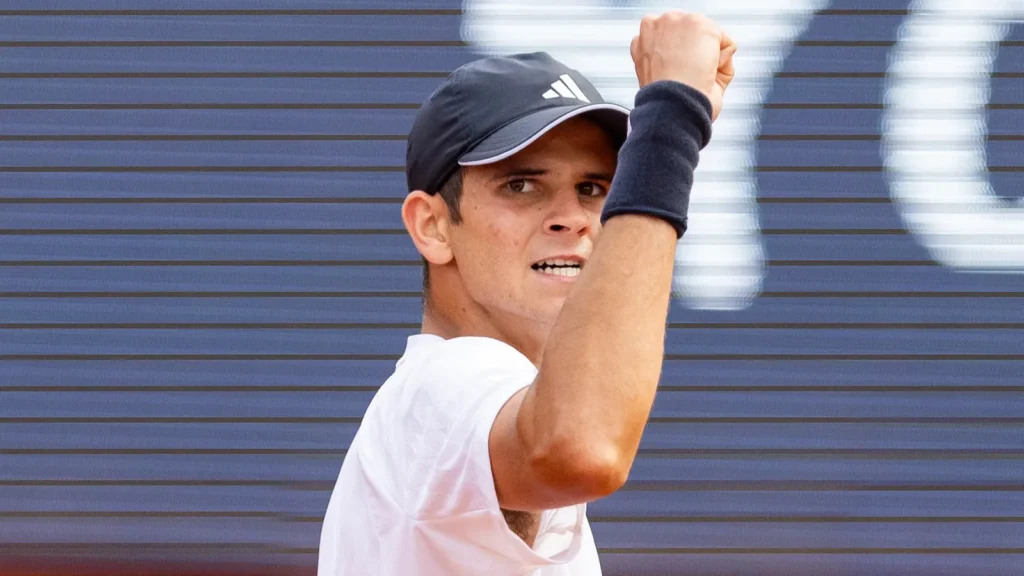
Ball kids work long hours in tough conditions. They sprint after balls and hand over towels between points. Players depend on them every match, so a harsh word can land hard on a big stage.
No reports describe any real physical contact in that Shanghai incident. Still, shouting a curse at a ball boy crosses a clear line. Officials step in to protect people who cannot answer back on court.
Some fans want much stricter punishment for any abuse of ball kids. Others believe a simple warning fits a single outburst. Both views share a core idea: ball kids deserve basic respect.
What players and fans can learn
Pressure can make almost anyone say things they later regret. Top players face heavy scrutiny, and cameras catch nearly every reaction. A short pause before speaking can easily prevent a penalty and a viral clip.
Umpires also play a big role in cooling off tense moments. Pinoargote spoke to Jódar in Spanish and explained why he acted. Clear communication helps players accept tough calls even when emotions run very high.
Jódar remains one of tennis’s brightest young stars at age 20. This episode need not define his career, but it should teach a lesson. Respect on court costs nothing and means everything to ball kids.
TL;DR
- Rafael Jódar received a code violation for cursing at a ball boy at the Shanghai Masters.
- Umpire Jimmy Pinoargote heard the Spanish curse and issued a warning for unsportsmanlike conduct.
- Jódar still won the match in three sets and reached the quarterfinals.
- The penalty was the mildest step and carried no point loss.
- Ball kids deserve respect from every player at every level.
Read More From This Brand:
- Alexander Zverev achieves his biggest career milestone after Alcaraz’s unexpected collapse
- Chris Evert calls out Coco Gauff’s critics after disturbing backlash rocks tennis star
- Carlos Alcaraz ends 32-year Japan Open wait with another Tokyo triumph
This article was made with AI assistance and human editing.