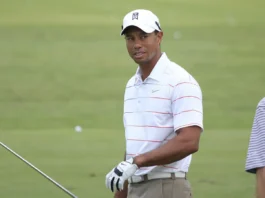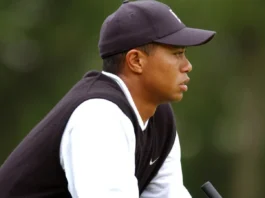


Rory McIlroy has explained why he and Tiger Woods became two of the strongest opponents of LIV Golf when the breakaway league emerged in 2022. Their resistance involved more than protecting the PGA Tour’s established structure. McIlroy says both men had personal and professional interests that could suffer as golf fractured into competing circuits.
Their joint venture, TGL, was among the projects caught in that conflict. Now, as LIV faces bankruptcy proceedings and uncertainty over its future, McIlroy’s latest comments offer fresh insight into the rivalry. His position has also softened as several LIV players reconsider their careers.
Why McIlroy and Woods felt personally threatened
Speaking at the Bloomberg New Economy Forum in New Delhi on October 13, McIlroy acknowledged that he and Woods had particular reasons to oppose LIV’s emergence. He said they were among the most vocal critics when the controversy began in 2022.
McIlroy explained that their positions within the PGA Tour gave them more to lose than many other players. Both had built substantial influence in professional golf, and the arrival of a rival circuit threatened to change the environment surrounding their projects.
“Tiger and I, at the very start, back in 2022 when this whole thing kicked off, we were certainly the two that were maybe the most vocal against it,” McIlroy said, according to Reuters. He added that they were also among those with the most to lose in terms of their stature within the tour.
Their opposition reflected concerns about the sport’s unity as well as their own interests. McIlroy said both believed LIV would fracture golf, creating competing loyalties among players and weakening the traditional tour structure.
TGL became part of the LIV Golf conflict
One important factor was TGL, the technology-driven team golf league developed by Tiger Woods and Rory McIlroy’s TMRW Sports in partnership with the PGA Tour. The competition was designed to combine team golf with technology and reach new audiences in a primetime format.
TGL’s rules require players to be PGA Tour members in good standing, unless an exception is approved. That meant golfers who left the PGA Tour for LIV generally were not eligible to participate.
McIlroy said LIV’s emergence coincided with the development of TGL and reduced the pool of players available to the new league. Jon Rahm, for example, originally committed to TGL before withdrawing in November 2023 and later joining LIV Golf.
The overlap gave McIlroy and Woods an additional reason to care about golf’s split. Their concerns involved the broader professional game as well as a new venture whose player pool depended heavily on PGA Tour membership.
LIV’s financial power changed professional golf
LIV Golf was founded in 2021 and staged its first competitive season in 2022, attracting established stars with lucrative contracts, guaranteed money and a team-based format. Backed for years by Saudi Arabia’s Public Investment Fund, the league challenged the PGA Tour and helped trigger major changes across men’s professional golf.

McIlroy has since argued that LIV contained part of a worthwhile idea but was executed poorly. At the October forum, he said the league wasted significant capital and could have used the money more strategically, including by partnering with golf’s governing bodies.
LIV’s spending also contributed to changes on the PGA Tour, including high-purse Signature Events. In June, McIlroy said the PGA Tour’s structure before LIV arrived had actually been “pretty good,” while describing the financial escalation caused by LIV as a “false economy.”
McIlroy is now open to former LIV players returning
McIlroy’s stance toward players who joined LIV has also changed. At the Bloomberg forum, he said he would vote to allow former LIV golfers back onto the PGA Tour and DP World Tour, arguing that their presence could benefit both organizations commercially.
He acknowledged that players who remained loyal to their tours might resent former rivals returning without consequences. However, he also said that bringing back leading golfers could increase revenue and strengthen the tours’ overall product.
That position represents a shift from the sharper criticism McIlroy directed at LIV and its recruits during the dispute’s early years. His latest comments distinguish between opposing LIV’s original strategy and accepting that its players could contribute to established competitions.
The process remains complicated because both tours operate under membership rules. The DP World Tour has stated that players cannot compete on its circuit and LIV 2.0 in 2027, leaving golfers considering the proposed league with a difficult choice.
Fun fact: Rory McIlroy won the under-10 World Championship in Doral, Florida, when he was just nine years old.
What the dispute means for golf’s next chapter
McIlroy’s explanation offers a clearer picture of why the LIV controversy became so divisive. For him and Woods, the threat extended beyond tournament schedules and player contracts to their standing in the sport and the future of projects they helped build.
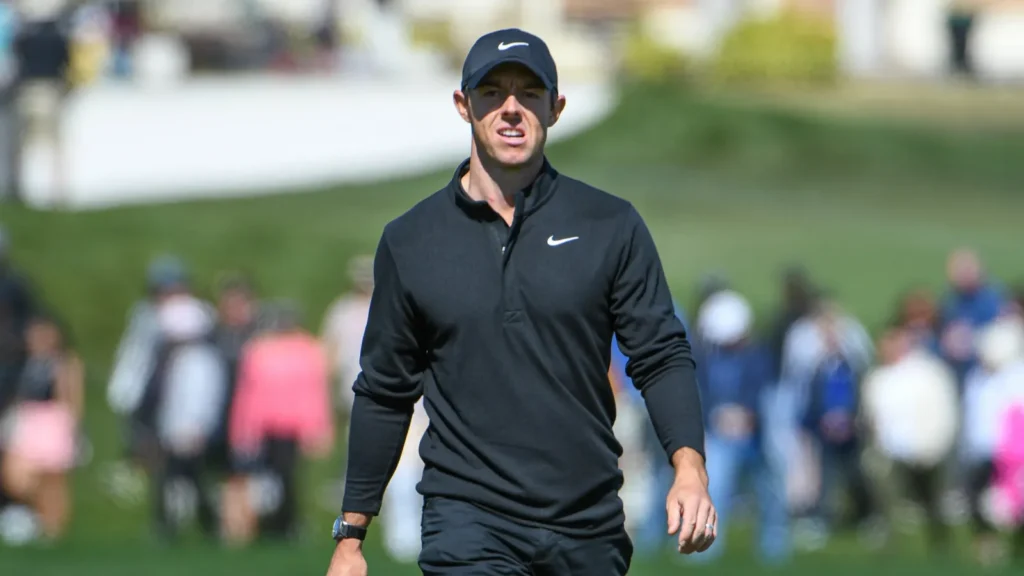
The uncertainty surrounding LIV has since changed the debate. Instead of focusing solely on resisting a rival league, golf’s leaders are confronting questions about player reintegration, commercial strength and the future organization of professional competition.
McIlroy’s willingness to welcome former LIV players back suggests that preserving the sport’s long-term strength now matters more to him than maintaining an absolute divide. His comments also show that opposition to LIV did not arise from a single motive, but from overlapping concerns about competition, business and golf’s identity.
With LIV’s next steps still unresolved, the division that defined professional golf since 2022 may be entering a different phase. McIlroy’s account of his and Woods’ concerns helps explain how deeply the split affected the sport’s leading figures and their ambitions beyond the golf course.
TL;DR
- Rory McIlroy says he and Tiger Woods had significant personal and professional interests at risk when LIV Golf launched in 2022.
- Their TGL venture was affected because its eligibility rules required players to hold PGA Tour membership.
- McIlroy criticized LIV’s use of its financial resources and questioned its original strategy.
- LIV is undergoing Chapter 11 bankruptcy proceedings, with a decision on its future expected by the end of October 2026.
- McIlroy now supports the consideration of former LIV players for a return to the established tours, despite concerns among loyal members.
Read More From This Brand:
- Stewart Cink opens up on Rory McIlroy’s reputation among players
- Rory McIlroy takes firm UAE stance as Dubai safety concerns keep growing
- NFL takes a surprising flag football turn with Tiger Woods and Rory McIlroy’s company
This article was made with AI assistance and human editing.