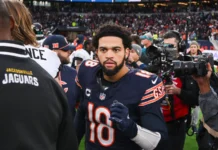
A show that can spin a national headline into a punch line in hours somehow stayed quiet on the sports-media mini-storm some NFL fans swear is everywhere. Over the past month, online viewers have repeatedly asked why NBC’s“Saturday Night Live” has not joked about what they call the “Vrabel and Russini” situation.
The absence has become its own storyline, with fans debating whether it is a business choice, a writing choice, or simply a sign that the internet is not the real world.
The chatter surged after recent episodes came and went without a “Weekend Update” quip or a sketch built around the names. “Not one joke from SNL about the Vrabel Russini scandal that’s been going on for 4+ weeks?” one fan complained in a widely shared post. Others pushed back, arguing the topic is too inside-baseball for a mainstream comedy show.
Why did fans expect jokes?
“SNL” has a long track record of mining sports for comedy when the subject is widely recognizable. Big games, star athletes, and league controversies routinely become sketch material because the audience can grasp the premise fast. For some NFL fans, that history made the silence around Vrabel and Russini feel conspicuous.
Online, the expectation is amplified by how quickly sports debates spread across clips, podcasts, and team-centric feeds. When a topic dominates NFL corners of social media for weeks, it can start to feel like it must be on everyone’s radar. That gap between what feels huge in a fan timeline and what registers nationally is driving much of the frustration.
How big is it really
Several fans arguing against a sketch make a blunt point about name recognition. Mike Vrabel is well-known to many football viewers, but not necessarily to casual NBC comedy watchers who dip in for musical guests and viral sketches. Dianna Russini is prominent in NFL reporting circles, yet even frequent sports fans can struggle to place specific media personalities outside highlight shows.
That matters because “SNL” sketches typically need an instantly readable target to work in three to five minutes. One commenter put it plainly, saying people they know who watch “SNL” would have no idea who Vrabel or Russini even are. In that view, the writers may have judged the premise as too niche compared with broader stories that require less explanation.
NBC and NFL ties
The theory that keeps popping up is also the most predictable one in modern media. NBC is a major NFL partner, paying roughly $2 billion per year under the league’s long-term rights agreements for “Sunday Night Football,” with streaming components tied to Peacock. Fans connecting those dots argue that “SNL,” as an NBC show, would be reluctant to poke at an NFL-adjacent controversy that could irritate the league or partners.
But media rights do not automatically translate into day-to-day editorial control of a comedy writer’s room. “SNL” has mocked NBC properties before and has never been shy about satirizing powerful institutions when a joke is strong and widely legible. The more realistic question is not whether NBC “banned” a topic, but whether the show saw a clear comedic angle that would land with a broad Saturday-night audience.
Fun fact: SNL Season 51 premiered on October 4, 2025, and Peacock lists all 51 seasons as available to stream.
How sketches get picked
Even when writers love an idea, “SNL” is built on triage. Each episode has limited minutes, and many sketches are cut after dress rehearsal if they do not work or if the pacing feels off. A topic can be “hot online” and still lose out to material tied to the week’s biggest political headline, a celebrity moment, or a character the host excels at playing.
Sports-media disputes are also harder to translate into visuals. A successful “SNL” sketch usually needs an image, a recognizable voice, or a simple dynamic that the audience understands immediately. If a premise requires explaining the backstory of a rumor or who a particular reporter is, the joke has to work twice as hard.
Little-known fact: Saturday Night Live premiered on NBC on October 11, 1975, and is one of America’s longest-running late-night sketch comedy and variety programs.
What fans watch for next
If the conversation grows beyond NFL social media and becomes a broader cultural moment, “SNL” could still touch it later. The show often uses “Weekend Update” for quick hits that do not require a full sketch, especially when a story is easy to summarize in one sentence. It is also common for “SNL” to wait until there is a definitive turning point, not just ongoing back-and-forth.
Fan reactions show how fragmented audiences have become. Some viewers see a topic as massive because it dominates their feeds, group chats, and podcasts. Others never see it at all, and “SNL” usually writes for them first.
TL;DR
- Some NFL fans are criticizing “SNL” for not joking about the online “Vrabel and Russini” chatter after weeks of discussion in sports circles.
- A major counterargument is simple: many regular “SNL” viewers may not know who the people involved are.
- Fans are floating a business theory because NBC holds long-term, high-value NFL broadcast rights, including “Sunday Night Football.”
- Sketch selection is often about clarity and speed, and niche sports-media storylines can be tough to explain on live TV.
- Legal and standards concerns can make rumor-driven topics less attractive for a national comedy show.
- If the story becomes more mainstream or reaches a clear conclusion, “Weekend Update” is the most likely place it could show up.
If you liked this story, don’t forget to follow us for more exclusive content.
This article was made with AI assistance and human editing.
If you liked this, you might also like: