
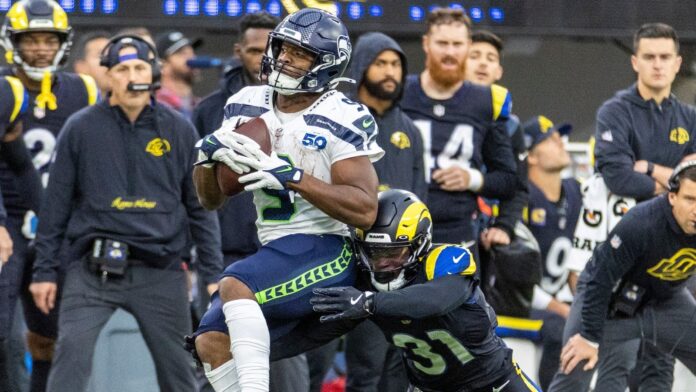
The Seattle Seahawks came within inches of extending their final drive against the San Francisco 49ers on Oct. 11, but officials ruled Cooper Kupp short of the first-down marker. The decision stood after replay review, sealing San Francisco’s 32-29 victory at Lumen Field.
The final ruling quickly became a talking point among frustrated Seattle supporters. Kupp stretched toward the marker while going out of bounds, creating a close play that viewers debated after the game. NFL replay officials said the available camera angles did not justify overturning the call.
Still, the result was not decided by a single moment. Seattle committed 4 turnovers, allowing San Francisco to score 21 points from those mistakes. The late controversy overshadowed a comeback effort that had brought the Seahawks within reach of a dramatic finish.
Cooper Kupp’s final effort ended Seattle’s comeback
Seattle trailed 32-29 when it began its last drive. With less than a minute remaining, the Seahawks faced fourth-and-10 near midfield, needing a conversion to preserve their chance to tie or win the game.
Quarterback Sam Darnold connected with Kupp, who battled along the sideline and extended the ball toward the first-down marker. Officials ruled the receiver short, giving San Francisco possession on downs and allowing the 49ers to run out the clock.
The play was especially painful for Seattle because the team had rallied from an 8-point halftime deficit. Kupp’s effort appeared close enough to invite debate, but the on-field ruling remained in place after the automatic review.
Replay officials explained why the call stood
Mark Butterworth, the NFL’s vice president of instant replay, explained the decision in a postgame pool report. He said officials deliberately paused to examine the entire play because it was a game-deciding moment.
Butterworth said the available angles, including boundary-line cameras, provided no clear and obvious video evidence to overturn the original ruling. Under the league’s replay standard, officials could uphold the call or reverse it, and they chose to uphold it.
He also clarified how the league evaluates a runner moving from the field toward the sideline. Officials look at where the ball crosses from the playing field into out-of-bounds territory, rather than where the player’s body lands.
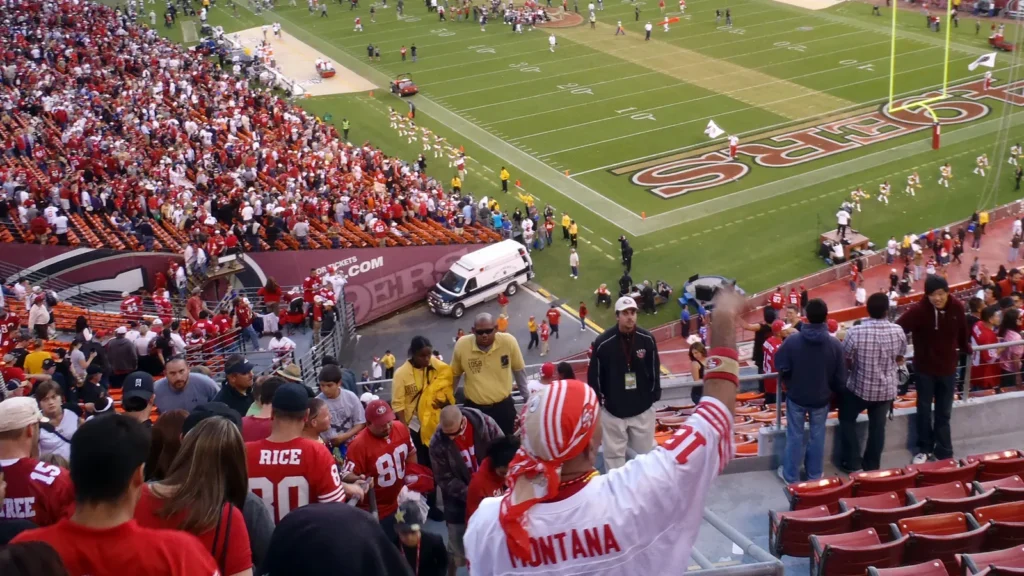
Fans questioned the decision after the game
The close spot prompted criticism from Seahawks supporters who believed Kupp had reached the line to gain. Others focused on the difficulty of determining the ball’s precise position from the broadcast angles, illustrating why the ruling remained divisive.
FOX Sports described the fourth-down stop as the decisive play in San Francisco’s victory. The report detailed how Kupp fought toward the marker before officials ruled him short and replay review left the decision unchanged.
The controversy highlights a familiar tension in football: fans can see the same replay and reach different conclusions about a close spot. However, disagreement among viewers does not establish that officials made an incorrect ruling, particularly when the league says the evidence was inconclusive.
Kupp and Mike Macdonald accepted the outcome
Kupp did not publicly challenge the decision after the game. He acknowledged that the play was close and said he needed to find a way to convert the fourth down, directing attention toward his own execution.
Seahawks coach Mike Macdonald also accepted the ruling. “They said he was short, so we’ve got to live with it,” Macdonald said after the loss, according to the team’s official report.
Their responses contrasted with the frustration expressed by some supporters online. The comments did not end the debate, but they showed that Seattle’s immediate postgame reaction included accountability for the missed opportunity rather than an outright accusation of officiating misconduct.
Turnovers put Seattle behind early
The Seahawks’ late predicament followed a mistake-filled first half. Seattle committed 4 turnovers, including 2 interceptions by Darnold and fumbles by running backs Emanuel Wilson and George Holani. San Francisco turned those errors into 21 points.
Darnold’s first interception gave the 49ers a short field, which ended with a touchdown reception by Mike Evans. Wilson’s fumble set up Christian McCaffrey’s 11-yard rushing score, while Holani lost the ball near the goal line late in the first half.
Darnold threw another interception early in the third quarter, though Seattle’s defense prevented the 49ers from scoring on that possession. The giveaways put the Seahawks under pressure and made their eventual fourth-down gamble necessary.
Seattle’s rally made the finish more dramatic
The Seahawks entered halftime trailing 21-13 but gradually worked their way back. Jason Myers converted field goals, and Darnold connected with Jaxon Smith-Njigba for a touchdown as Seattle took a 26-21 lead in the third quarter.
San Francisco responded in the fourth. Brock Purdy connected with Evans and Brandin Cooks during a scoring sequence that helped the 49ers regain control. A successful 2-point conversion extended the advantage and increased the pressure on Seattle’s offense.
Myers later tied the score at 29-29 with a field goal, giving Seattle another chance to win. San Francisco answered with Eddy Piñeiro’s 44-yard field goal with 1:56 remaining, setting up the Seahawks’ final possession and Kupp’s disputed fourth-down catch.
San Francisco capitalized on its opportunities
Purdy finished with 189 passing yards and 2 touchdown passes, while Evans recorded 113 receiving yards. McCaffrey added a rushing touchdown as San Francisco improved to 5-0 and maintained its unbeaten start to the season.
Seattle also produced strong individual performances despite the defeat. Smith-Njigba finished with 102 receiving yards and a touchdown, while Myers made all 5 of his field-goal attempts to keep the Seahawks within striking distance.
The final score left Seattle with a 3-2 record after five games. Although the late spot attracted attention, the Seahawks had multiple chances to reduce the pressure earlier, particularly by protecting the football and avoiding short-field scoring opportunities for San Francisco.
The Seahawks’ 12s have a special place in team history
Seattle’s supporters are widely known as the “12s,” a name connected to the idea that fans serve as the team’s extra player. The franchise formally retired jersey No. 12 in 1984 to honor that support.
The Seahawks say they were the first professional sports franchise to retire a number specifically to recognize their fans. The tradition remains part of the team’s identity, with supporters raising No. 12 flags and filling Lumen Field for home games.
That connection helps explain the intensity surrounding a close decision in a divisional game. The fourth-down ruling will remain a source of discussion for some Seattle fans, but the team’s next challenge is to correct its turnover problems and turn close games into wins.
Fun fact: The Seahawks retired jersey No. 12 in 1984 to honor their fans, known as the “12s.”
TL;DR
- The San Francisco 49ers defeated the Seattle Seahawks 32-29 on Oct. 11, 2026.
- Officials ruled Cooper Kupp short of the first-down marker on Seattle’s final fourth-down play.
- NFL replay executive Mark Butterworth said no clear and obvious video evidence justified overturning the ruling.
- Seattle committed 4 turnovers, which led to 21 points for San Francisco.
- The Seahawks fell to 3-2, while the 49ers improved to 5-0.
Read More From This Brand:
- Woman shares chilling encounter with alleged 49ers impostor
- “Iconic,” new Seahawks owner gives verdict on Lumen Field
- How a shocking season finale for Sam Darnold just forced the Seattle Seahawks to hunt for a new star
This article was made with AI assistance and human editing.