

Sergio Garcia lost his temper during the final round at Augusta National, snapping his driver and tearing up the tee box in front of a stunned crowd. What followed was a swift response from officials, a wave of public criticism, and a delayed apology that raised serious questions about his future at the Masters.
This was not a one-off moment for the 2017 Masters champion. It was the latest chapter in a long and troubled pattern of behavior that has followed him across tours, continents, and decades. The golf world is now asking whether enough was done and whether Garcia belongs at Augusta at all.
Let’s take a closer look.
A bad day that got a lot worse
Garcia opened with a bogey on hole one, putting him in a sour mood before he even reached the second tee. Already sitting 16 shots behind the leaders, the pressure of a tough week had clearly been building. He was out of contention and running out of patience.
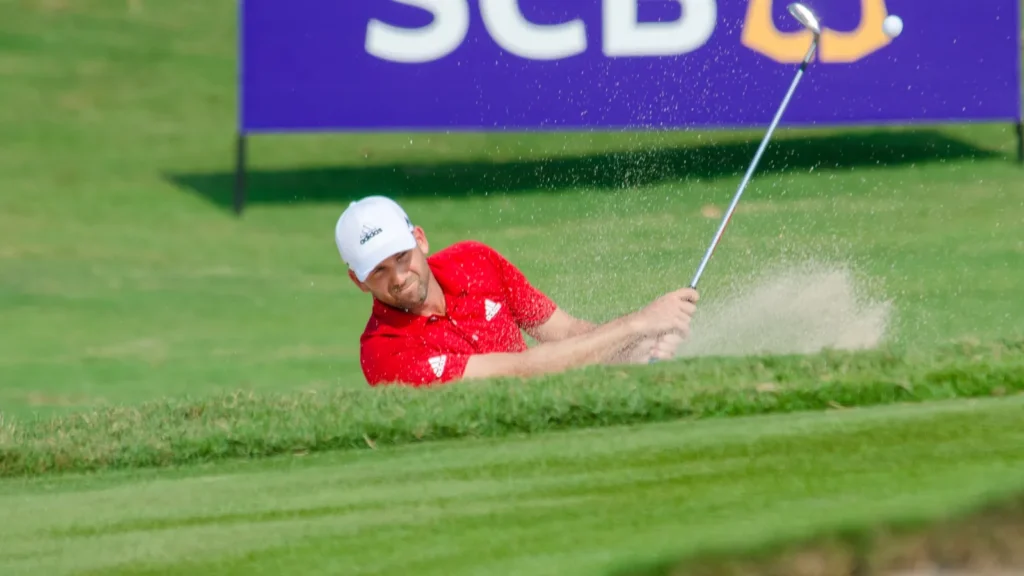
When his drive on the par-5 second hole drifted toward the bunker, something snapped. He immediately slammed his driver into the tee box twice, tearing large chunks of turf out of the immaculate playing surface. Staff had to repair the damage before the next group could tee off.

The moment the driver broke
What happened next made a bad situation genuinely shocking to watch. After damaging the tee box, Garcia walked toward a water cooler situated at the back of the tee. He swung his driver hard into it, snapping the clubhead clean off the shaft. The destruction was total and visible to everyone watching around the hole.
Under the Rules of Golf, a player cannot replace equipment damaged through their own abuse or anger. That meant Garcia had to play the remaining 16 holes of his final round without a driver. Augusta National, where distance off the tee is critical, punished him for it immediately.
Augusta stepped in quickly
The Masters officials did not let the outburst pass without a formal response. Geoff Yang, chairman of the Masters competition committee, approached Garcia two holes later on the fourth tee. He issued Garcia a formal code of conduct warning, making it the first such warning ever handed out at Augusta National in the tournament’s history.
It was a significant and unprecedented moment for one of golf’s most tradition-bound events. Garcia refused to discuss what Yang said to him. When reporters asked after his round, he replied bluntly, “I’m not going to tell you.” He offered no apology that day and gave no indication he felt the situation was serious.
Garcia’s long history of outbursts
In 2019, Garcia was disqualified from the Saudi International for deliberately damaging five greens during his third round after a bunker meltdown the day before. It remains one of the most extreme misconduct penalties in modern professional golf. The disqualification sent shockwaves through the sport at the time.
His track record stretches back further still. He flipped off fans at the 2002 U.S. Open, spat into the cup at a World Golf Championship event at Doral, and nearly struck an official with a shoe he angrily kicked off during a 2001 tee shot. Three incidents at three different tournaments across three different years form an undeniable pattern.
Fun fact: Garcia was widely criticized for his excessive pre-shot “waggle” routine, sometimes regripping the club over 20 times before hitting, so much so that fans at the 2002 U.S. Open audibly counted and shouted at him to “hit the ball.”

A policy enforced for the first time
The conduct policy was implemented at Augusta National for the first time in 2026. The PGA Tour had been developing a code-of-conduct policy for competition, and the Masters was the first event to put it into effect. The Masters became the first major to formally put it into effect, and Garcia became its first test case.
The escalating structure of the policy is straightforward and serious. A first violation earns a warning. A second violation results in a two-shot penalty. A third violation means disqualification. The PGA Championship at Aronimink Golf Club plans to use the same policy next month.
The apology
On Tuesday, April 14, Garcia posted to social media acknowledging his actions. He wrote that he respected everything Augusta National stands for and that his behavior had “no place in our game.” He admitted it did not reflect the appreciation he had for the tournament, its patrons, or its officials.
The apology was welcomed by many but also drew some skepticism. Critics pointed out that Garcia initially showed no remorse and only came forward after intense public and media pressure. For a player with such a long history of similar incidents, the question of whether words alone are enough has become genuinely hard to answer.
Little-known fact: Since winning the green jacket in 2017, Garcia has failed to record a single top-10 finish across 29 major appearances. He finished the 2026 Masters in 52nd place out of 54 players who made the cut.
What does it mean for his Masters future?
Masters officials are expected to review the incident before next year’s invitations go out. Augusta National has the authority to withdraw invitations from past champions if it chooses, and Garcia’s case has renewed that conversation loudly. No formal decision has been announced, but the discussion is very much alive.
A PGA-certified coach argued that the new conduct policy finally creates a structure Garcia cannot simply apologize his way out of. Formalizing consequences means the next incident carries automatic penalties rather than a conversation on the fourth tee. For Garcia, the margin for error is now essentially zero.
Golf’s bigger conduct conversation
Professional golf has always policed itself informally, relying on peer pressure, tradition, and unwritten codes of etiquette. That system worked well enough when incidents were rare and isolated. Augusta’s zero-tolerance culture was already visible that same week when 1989 Open champion Mark Calcavecchia was escorted off the grounds simply for using his cell phone.
The Masters enforcing its new conduct policy on the sport’s most visible stage sends a message that goes beyond Garcia. The PGA Championship, US Open, and The Open Championship are all expected to adopt similar frameworks. The era of unofficial warnings and quiet conversations appears to be giving way to documented, escalating consequences with real competitive stakes attached.
TL;DR
- Sergio Garcia snapped his driver against a water cooler and damaged the tee box on hole two during the 2026 Masters final round.
- Augusta National issued him a code of conduct warning, the first in the tournament’s history.
- Under golf rules, Garcia could not replace his broken driver and played the remaining 16 holes without one.
- The Masters implemented a brand-new conduct policy in 2026, with a second violation carrying a two-shot penalty and a third meaning disqualification.
If you liked this story, don’t forget to follow us for more exclusive content.
This article was made with AI assistance and human editing.
If you liked this, you might also like: