

The highest-paid player in the NBA just said the league’s top earners are still getting shortchanged. And his reasoning might surprise you. Stephen Curry sparked a national debate when he told Complex’s Speedy Morman that NBA players are, in fact, underpaid. Most people heard that and laughed.
For the current 2025–26 season, Stephen Curry’s on-court salary is $59.6 million. He will reach the record-breaking $62.6 million mark next year as part of the one-year extension he signed with the Golden State Warriors in August 2024.
But Curry’s argument isn’t about salary at all. It’s about equity. It’s about the billions of dollars in franchise value that players help create but are legally blocked from ever touching. This isn’t a cry from a broke athlete. It’s a calculated argument from the smartest player in the room.
What Curry actually said
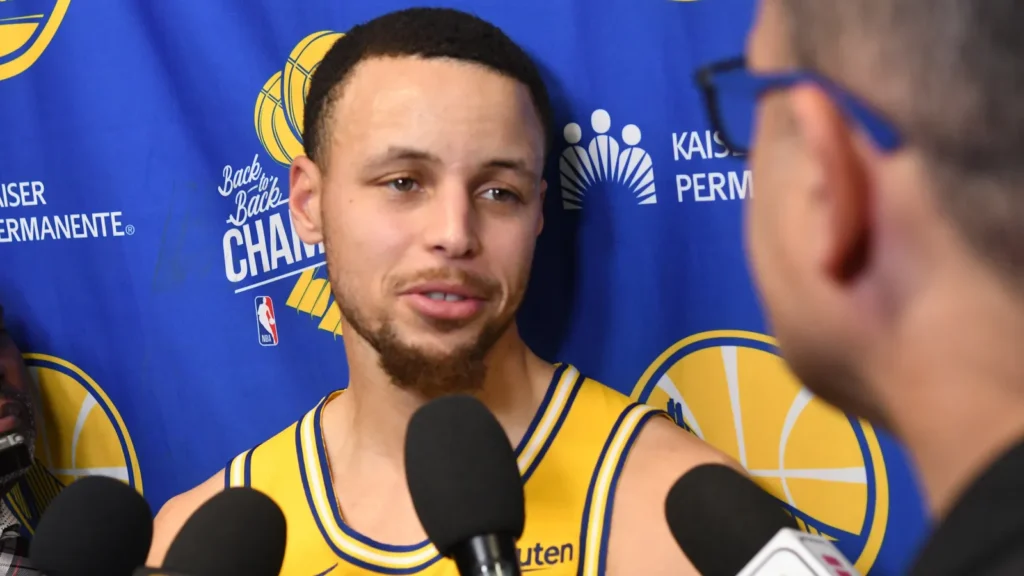
Speaking on Complex’s “360 With Speedy,” Curry said the current CBA structure prevents players from participating in equity. He described it as a real problem because the league is a partnership between players and ownership. Players generate the product. They just don’t own any of it.
He went further, saying that contract numbers may sound enormous, but franchise revenue growth has outpaced them by a factor of ten. His exact words were that what the league is doing is “probably 10x” any comparable era. That’s the core of his argument in one sentence.

The CBA rule that locks players out
Section 12 of Article XXIX of the NBA-NBPA CBA explicitly states that no active NBA player may acquire or hold any direct or indirect ownership interest in any NBA team. The restriction was designed to prevent hidden compensation and protect competitive integrity. It also prevents salary cap circumvention.
If an active NBA player’s investment gave him an NBA-team ownership interest, the CBA would bar it unless resolved under league rules. The line between labor and management must remain clean. That is the legal and structural wall Curry is pushing against.
The Warriors’ valuation tells the whole story
When Joe Lacob and Peter Guber’s group bought the Golden State Warriors in 2010 for $450 million, Stephen Curry was entering only his second NBA season. By Sportico’s 2025 estimate, the franchise is now worth $11.33 billion, an increase of roughly $10.88 billion. Curry’s projected NBA salary earnings through the end of his current contract are about $532.7 million, which works out to roughly 4.9% of that increase.
That gap helps explain Curry’s larger point. Owners put up capital and benefit from a long-term asset that can rise dramatically in value. Players put their bodies, careers, and prime years into creating the product that drives that value, but their compensation comes through salary rather than ownership upside.
One side can hold an appreciating asset for decades. The other is paid during a finite playing career. That difference is the equity gap Curry is talking about.
Curry acknowledged the blessings, too
He made clear that he considers NBA players fortunate. He said players are blessed to earn the kind of money they do just for playing basketball. He called it a special industry with an entertainment value that will not disappear. His argument was never that players are suffering. It was that they deserve more of the upside.
That nuance matters. Curry is not asking for sympathy. He is making a systemic argument about how wealth is distributed in a multi-billion-dollar industry. He wants the rules to evolve so that future players can participate in the rise he helped create but personally missed out on.
Little-known fact: Michael Jordan’s total NBA career salary was $93.8 million. The Chicago Bulls sold for $16.2 million in 1985, the year after Jordan was drafted. The franchise is worth more than $5 billion today. Jordan saw none of that appreciation as a player.
The $77 billion media deal changes everything
In July 2024, the NBA finalized an 11-year, $77 billion media rights agreement with Disney, NBCUniversal, and Amazon Prime Video. The deal kicked off with the 2025-26 season and nearly triples the league’s annual television revenue. It is a financial transformation for ownership groups across all 30 franchises.
Players receive roughly half of BRI, within a 49%-to-51% band under the CBA. But BRI does not capture the full appreciation of franchise value. As team prices soar on the back of this media deal, owners capture those capital gains. Players get a portion of the revenue. They get none of the valuation boom.
Lou Williams pushed back
Lou Williams, who earned about $85.7 million over a 17-season career, said he was shocked to hear the claim coming from the league’s highest-paid player. He appeared on Run It Back and pushed back on the word “underpaid.” Williams said he would not personally use that term, given the salaries players already earn in today’s NBA.
But Williams also didn’t dismiss the broader point. He said if there’s an opportunity to be paid more, players should pursue it. He even acknowledged that the conversation carries more weight because it came from Curry specifically. When the highest-paid player says players deserve more, people listen differently.
The CBA opt-out window is coming
The current CBA runs through the 2029-30 season. Both the NBA and the players’ union have the ability to opt out after the 2028-29 season. That opt-out window is now the most important date on the NBA’s business calendar. Equity access will almost certainly be a central demand from the players’ side.
Owners have historically resisted giving up equity stakes without major concessions elsewhere. The next round of negotiations could be the most contentious in league history. Curry planting this idea publicly now is not accidental. It’s groundwork. He is building the case years before anyone sits at the table.
Little-known fact: The average NBA franchise value has more than doubled since 2022, rising from $2.58 billion to $5.51 billion.
Why this conversation matters beyond basketball
The NBA player equity debate mirrors wider conversations happening in tech, entertainment, and media. Workers who build billion-dollar companies rarely get a proportional share of the wealth they create. The difference is that NBA players are globally famous and have a union with real leverage. That gives this conversation a rare chance of actually going somewhere.
Whether or not Curry personally benefits from a CBA change, he has done something important. He has shifted the public frame from “players are overpaid” to “players are missing out on equity.” That’s a harder argument to dismiss. And as the league’s valuations keep climbing, it gets harder to ignore every single year.
TL;DR
- Curry says NBA players are underpaid because the CBA blocks them from participating in franchise equity.
- The Warriors grew from a $450 million purchase price in 2010 to over $11 billion today. Curry’s entire career salary equals about 4.3% of that growth.
- The NBA’s new $77 billion media deal will drive franchise values even higher. Players receive a share of revenue but not capital appreciation.
- The CBA prohibits active players from holding any ownership stake in NBA teams to prevent conflicts of interest.
If you liked this story, don’t forget to follow us for more exclusive content.
This article was made with AI assistance and human editing.
If you liked this, you might also like: