
If you watch an NFL game, the big hits, long passes, and amazing catches grab the headlines.
But before the snap, there is a hidden battle happening on the field. Quarterbacks and safeties engage in a silent chess match, trying to outsmart each other. Every pre-snap glance, every shift in positioning, can determine whether a play becomes a touchdown or a turnover.
This article explains how quarterbacks read defenses, how safeties and defensive coordinators try to deceive them, and why this mental game has become more important than ever.
How Quarterbacks Read Safeties Before the Snap
Counting Safeties and Observing Alignment
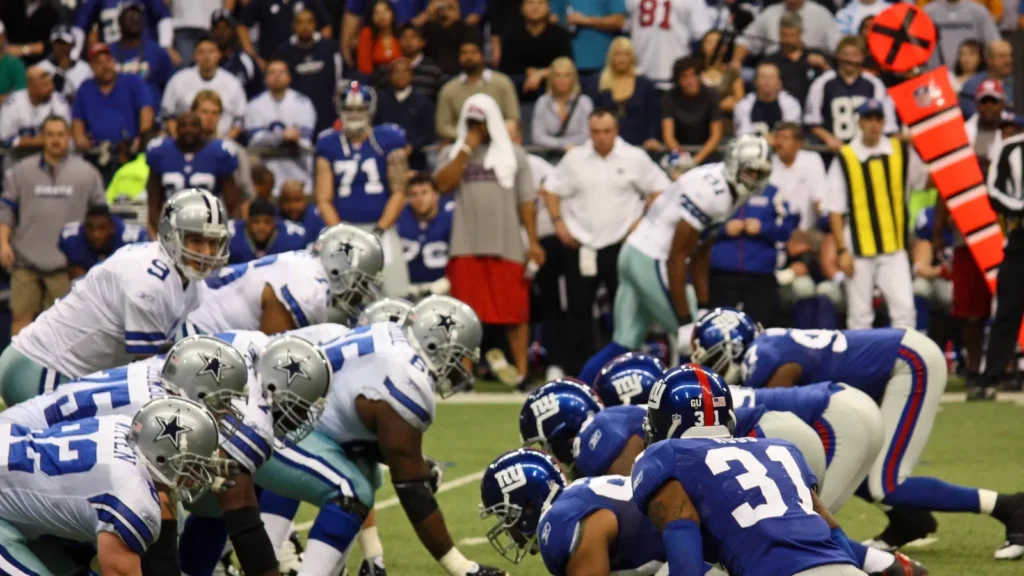
One of the quarterback’s first tasks before the snap is to read the safeties. The number of safeties and their depth can suggest what kind of coverage the defense might run. Two deep safeties often indicate a “two-high shell,” which allows the defense flexibility to play either zone or man coverage.
A single deep safety might signal a different shell, like a one-high look, but the exact coverage can vary depending on the defense. These alignments are just clues, not guarantees.
Checking Cornerbacks and Linebackers
After noting safeties, quarterbacks study cornerbacks and linebackers. Cornerback positioning can suggest man or zone coverage.
If corners are lined up close to receivers, man coverage is possible, but if they are off the receivers, a zone might be in play. Linebacker alignment and depth also give hints about possible blitzes or run support.
Finding Weaknesses and Mismatches
Once the quarterback has a general idea of the coverage, they look for potential weaknesses in the defense. This could be a slow or inexperienced cornerback, gaps in zone coverage, or a linebacker who may struggle in coverage. These observations help quarterbacks plan their first and second reads for the play.
Safeties and Defenses Fighting Back
Disguised Coverages and Shifts
Modern NFL defenses use a variety of disguises. Safeties and other defensive backs may show one alignment before the snap and move to a different coverage after the snap.
These shifts can trick the quarterback and force quick decisions. Sometimes, a two-deep safety look might drop one safety into a short zone or rotate players, creating confusion.
Adjusting on the Fly
After the snap, safeties and linebackers can rotate, drop into zones, blitz, or switch coverage responsibilities. Quarterbacks must read these movements instantly, often in just a few seconds. This fast decision-making is part of what makes passing in the NFL so challenging.
The Mental Battle of Each Play
The quarterback and defense are constantly trying to outthink each other. The quarterback wants to confirm their pre-snap read and find the open receiver. The defense wants to hide its intentions and force mistakes. Each play is a mix of strategy, awareness, and quick reflexes.
Why This Chess Match Matters More Today
More Passing, More Complexity
The NFL has become a pass-heavy league. With more passing plays, defenses must use more complex schemes and disguises to stop offenses. Safeties and linebackers are often moved creatively to defend multiple threats.
Quarterbacks with High Football IQ
Top quarterbacks aren’t just strong arms; they are thinkers. They study defenses, anticipate movements, and adjust their reads at the line. A quarterback’s mental ability to read and react can decide the outcome of games.
Evolving Defensive Schemes
Defenses are constantly evolving. Hybrid players, rotating safeties, and disguised coverages make it harder for quarterbacks to rely on pre-snap reads alone.
Defensive coordinators use creative approaches like showing blitzes or man coverage, only to drop into zone after the snap. The mental game is deeper and more unpredictable than ever.
Speed of the Game
Everything happens quickly once the ball is snapped. Receivers break their routes, defenders move, and safeties rotate. Quarterbacks often have only a few seconds to make a decision, adding pressure to the hidden chess match.
How Film Study Gives Quarterbacks an Edge
Learning Defensive Tendencies
Quarterbacks spend hours studying game film to understand how defenses operate. They watch past games to see how specific safeties, linebackers, and cornerbacks react in certain situations.
This preparation helps them anticipate what a defense might do based on alignment, personnel, or down-and-distance.
Recognizing Patterns and Tendencies
By studying film, quarterbacks can spot patterns in defensive behavior. For example, some safeties may always rotate toward the strong side, or a defense may blitz more often in obvious passing situations. Recognizing these tendencies allows quarterbacks to make faster and more accurate decisions during live games.
Improving Split-Second Decisions
Film study also helps quarterbacks react under pressure. They practice processing multiple visual cues at once, safety depth, cornerback alignment, linebacker movement, and predicting the likely coverage. This mental rehearsal reduces reaction time, giving the quarterback a better chance to complete passes even against disguised coverages.
The Mental Advantage
Overall, film study gives quarterbacks a significant mental edge. They don’t just react to the defense; they anticipate it.
This preparation makes the hidden chess match more about skill, awareness, and intelligence, rather than just raw athleticism. Quarterbacks who excel at film study can often stay one step ahead of even the most creative defensive schemes.
Frequently Asked Questions
What Does Two-High Safeties Mean?
Two-high safeties means both safeties are positioned deep in the defensive backfield. It is a shell that allows flexibility and can be used for either zone or man coverage, depending on the scheme.
Why Do Defenses Disguise Coverages?
Defenses disguise coverages to confuse quarterbacks. By showing one alignment before the snap and moving after, they hope to make quarterbacks guess wrong, forcing mistakes or bad throws.
What Does a Quarterback Watch for After the Snap?
After the snap, quarterbacks track safety rotations, cornerback movements, linebacker actions, and receiver routes. They use this to confirm or adjust their pre-snap read and make quick decisions.
How Do Quarterbacks Practice Reading Defenses?
Quarterbacks study game film, practice recognizing defensive patterns, and develop visual awareness. This training helps them process information faster and make better decisions in real games.
Does This Chess Match Matter for Running Plays?
While most important for passing plays, quarterback reads and safety alignment can affect running plays, too. Safeties may come closer to the line to defend the run, which changes how the offense reacts.
Conclusion
- The battle between quarterbacks and safeties is a mental chess match, not just a physical contest.
- Quarterbacks who read defenses well and make quick decisions can turn disguised coverages into big plays.
- Safeties and coordinators who disguise intentions can disrupt a quarterback’s read and stop drives before they start.
- Modern NFL football demands high awareness, adaptability, and football IQ from both sides.
- This hidden chess match often decides critical outcomes, including touchdowns, turnovers, and game momentum.
Read More:
- The Hidden Strategy Behind NFL Scheduling Each Season
- The Legacy of Iconic NFL Broadcast Voices and Their Impact on Fans
- How Jackie Robinson Changed American Sports Forever
This article was made with AI assistance and human editing.