
The Carolina Hurricanes are no longer waiting for national validation. After defeating the Vegas Golden Knights 3–0 in Game 6 of the 2026 Stanley Cup Final, Carolina has turned years of playoff frustration into the second championship in franchise history.
The run was not built on one lucky bounce or one hot week. Carolina swept its first two playoff series, survived a demanding Eastern Conference Final, and finished the postseason 16–3. Now, the conversation around the Hurricanes has shifted from whether their style can win in June to how long this championship window can last.
Why is public perception shifting so rapidly?
The hockey community is finally realizing that Carolina has shed its reputation of playing a style that cannot win in June. For several seasons, critics claimed that head coach Rod Brind’Amour’s heavy, high-volume shooting system lacked the elite game-breaking talent required to win four grueling playoff series.
However, the narrative completely flipped during the 2026 postseason when the Hurricanes became the first NHL team since the legendary 1984–85 Edmonton Oilers to open the playoffs with a perfect 8–0 record. Sweeping through the Ottawa Senators and Philadelphia Flyers in consecutive rounds proved to the public that this roster possesses a ruthless, killer instinct.

The sudden surge in national respect also stems from how the roster was built to withstand injury crises. When starting goaltender Frederik Andersen faced struggles and maintenance days during the Stanley Cup Final against the Vegas Golden Knights, unheralded backup Brandon Bussi stepped onto the ice and immediately stopped a high-stakes penalty shot in relief. This incredible poise from a backup goalie showed fans across the country that Carolina’s success is driven by a deep, systematic culture rather than a reliance on a few star individuals.
How did roster upgrades change the narrative?
Key offseason and mid-season acquisitions gave the Hurricanes the precise tactical flexibility they previously lacked on the big stage.
The general manager aggressively addressed the team’s historical scoring droughts by bringing in dynamic forward Nikolaj Ehlers on a lucrative six-year free-agent contract.
Ehlers provided a massive injection of speed and zone-entry wizardry that perfectly complemented the elite, reliable playmaking of franchise center Sebastian Aho.
How Nikishin changed the blue line
Furthermore, the emergence of twenty-four-year-old rookie defenseman Alexander Nikishin completely transformed the blue line into a terrifying, two-way weapon.
Nikishin transitioned seamlessly from international ice to rack up thirty-three points in the regular season, giving the team a physical, heavy-shooting presence that balanced out the masterful defensive positioning of veteran Jaccob Slavin.
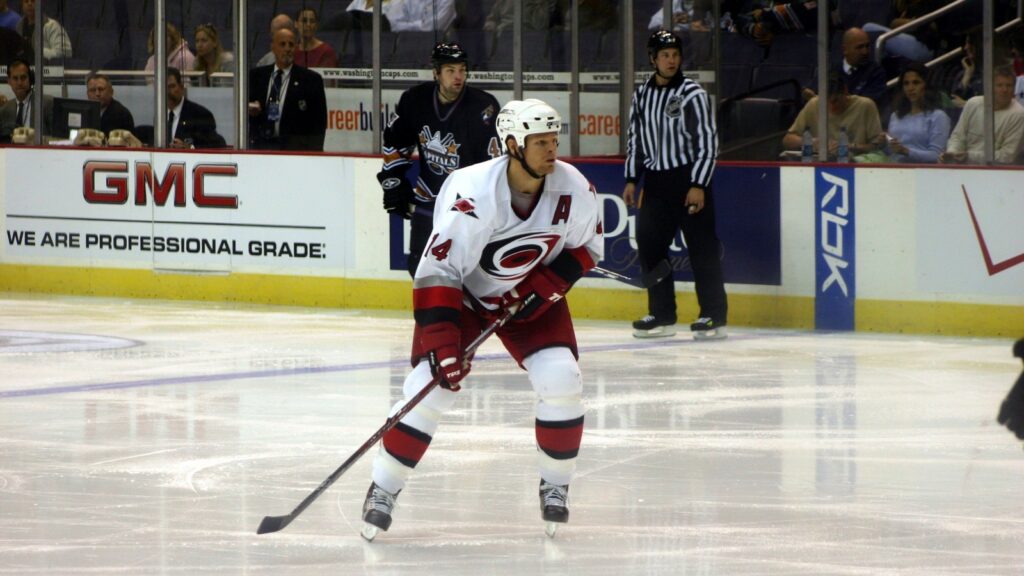
The general public has taken notice of this complete roster, seeing a group that can crush opponents with an aggressive forecheck or beat them in a wide-open, high-scoring track meet.
Little-known fact: When the Carolina Hurricanes first relocated from Hartford in 1997, they temporarily played in Greensboro, North Carolina, making their home arena the single largest by capacity in the entire NHL at the time.
What makes the local fan culture so unique?
The exploding hockey culture in North Carolina has turned the Lenovo Center into arguably the most intimidating environment in professional sports. Nontraditional hockey markets often face skepticism from traditionalists, but Raleigh has completely broken the mold by selling out every single home game with an average of nearly nineteen thousand screaming fans.
The local community has rallied around an identity of “being a little different,” embracing loud, raucous parking lot tailgates and distinct post-game celebrations that break away from stuffy hockey norms. This unified community support has transformed the franchise from a regional sports team into a true cultural phenomenon across the entire state.
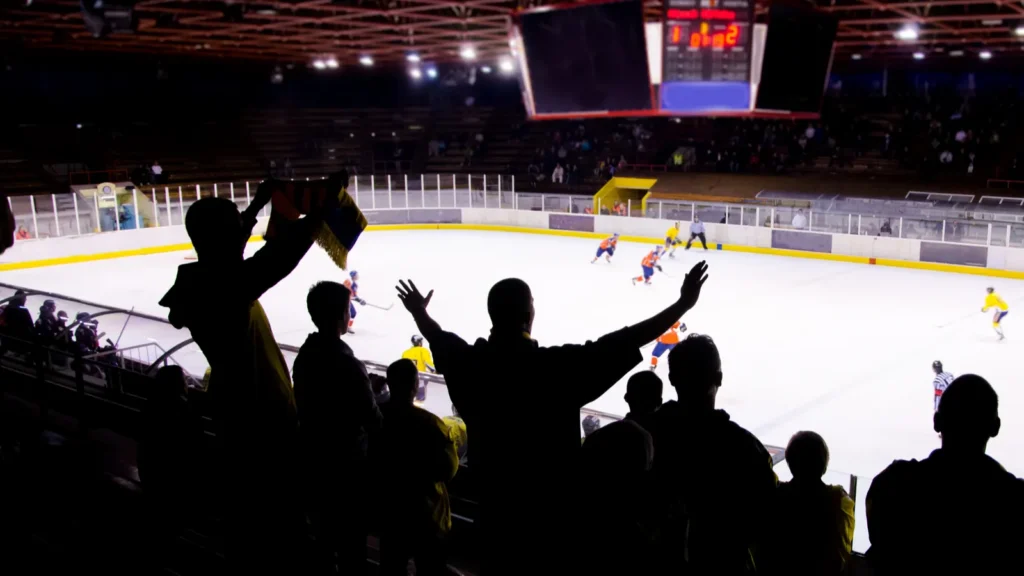
Analysts and opposing players openly comment on how the deafening noise levels in the arena actively disrupt visiting teams during high-pressure playoff moments. This passionate environment has shown a wider NHL audience that the sport is thriving in the American South, forcing the entire league to acknowledge Raleigh as an elite hockey town.
Fun fact: The Carolina Hurricanes averaged a maximum capacity crowd of 18,795 fans at the Lenovo Center throughout the entire year, ranking them among the elite NHL franchises in local television ratings and building-fill percentage.
Can this culture sustain long-term success?
The unwavering organizational stability under Rod Brind’Amour ensures that Carolina’s window of dominance will remain open for years to come. Brind’Amour has instilled a relentless work ethic that defines the franchise, leading the team to its fourth Metropolitan Division title in just six seasons and an incredible eighth consecutive playoff appearance.
Players like young star forward Seth Jarvis, who has eclipsed the thirty-goal mark for three straight seasons, are signing long-term deals because they completely believe in the culture being built.
The broader conversation around the league is no longer about whether the Hurricanes are a good team, but rather how long they can maintain this high standard of excellence.
With young talent locked into affordable deals and a coaching staff that extracts maximum effort every single night, the hockey world is witnessing the birth of a sustainable powerhouse. The days of overlooking the Hurricanes are officially over.
TL;DR
- The Hurricanes won the 2026 Stanley Cup by defeating the Vegas Golden Knights in six games.
- Carolina finished the postseason with a 16–3 record after sweeping Ottawa and Philadelphia to open the playoffs.
- Brandon Bussi became a major Finals story after replacing Frederik Andersen and posting a Game 6 shutout.
- Jordan Staal won the Conn Smythe Trophy as playoff MVP and became the oldest winner in award history.
- Nikolaj Ehlers, Alexander Nikishin, Seth Jarvis, Sebastian Aho, and Rod Brind’Amour helped turn Carolina into a confirmed NHL powerhouse.
If you liked this story, don’t forget to follow us for more exclusive content.
This article was made with AI assistance and human editing.
If you liked this, you might also like:
- How an expensive free agent extension priority changes the trade status of several Buffalo Sabres players
- How a stunning trade rumor involving Connor McDavid could reshape the Edmonton Oilers and Minnesota Wild
- Why Nathan MacKinnon refused to find any positive takeaways from the latest Colorado Avalanche performance