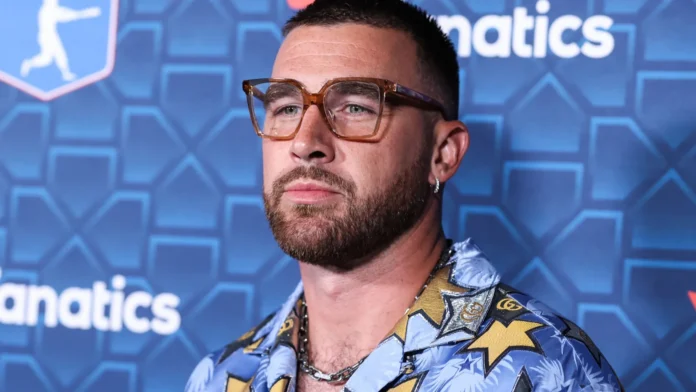
Travis Kelce’s brief exit from the Kansas City Chiefs’ 22-6 victory over the Los Angeles Chargers on Oct. 18 sparked a debate about player safety after a tackle by Chargers linebacker Daiyan Henley left the veteran tight end dealing with an ankle injury.
The incident occurred during the opening offensive drive at Arrowhead Stadium. Kelce went down after contact, appeared uncomfortable as he left the field and received medical attention on the sideline. The tackle immediately drew attention from Chiefs supporters watching the game.
The reaction intensified when fans questioned why officials had not penalized Henley for what they believed was an illegal hip-drop tackle. However, criticism of the play does not establish that a rule was broken, and no confirmed disciplinary action against the Chargers had been announced in the reporting reviewed as of Oct. 19.
Kelce returns after receiving treatment for his ankle
Kelce injured his right ankle during Kansas City’s opening offensive drive after the Chiefs returned from their bye week. He went to the sideline for treatment and had the ankle taped.
The tight end returned for Kansas City’s next possession and finished with 4 receptions for 53 yards in the 22–6 victory.
Afterward, Andy Reid said Kelce had tweaked his ankle and continued playing. The coach expected some soreness the following day.
Daiyan Henley faces criticism over the tackle
Chargers linebacker Daiyan Henley became the focus of online criticism after bringing Kelce to the ground. Some viewers believed the tackle resembled a hip-drop technique, which the NFL has prohibited because of its potential to cause serious lower-body injuries.
The disputed play prompted calls for the league to review the contact and consider whether additional discipline was warranted. Some fans argued that the absence of an on-field flag allowed a potentially dangerous tackle to go unpunished.
However, the distinction between a forceful tackle and an illegal hip-drop tackle depends on the defender’s specific movements. The fact that Kelce sustained an injury does not, by itself, establish that Henley committed a foul or deliberately acted improperly.
Why NFL fans are demanding punishment
The reaction centered on concerns that the league’s restrictions on hip-drop tackles should apply consistently, regardless of the players involved. Supporters argued that an injury scare involving a high-profile star deserved closer scrutiny from officials and league decision-makers.
Posts on social media criticized the lack of a penalty, with some fans calling for the Chargers to face consequences. Others questioned whether the NFL’s efforts to discourage dangerous tackling techniques were being enforced consistently during live games.
Those reactions reflect fan frustration, not an official league finding. The NFL would need to assess the actual tackle against its rules before determining whether a player should face a fine or another disciplinary measure.

What the NFL’s hip-drop tackle rule prohibits
The NFL’s rule applies when a defender grabs a runner with 1 or both hands, or wraps him with both arms, and then unweights himself by swiveling and dropping his hips or lower body, landing on or trapping the runner’s legs at or below the knee.
The penalty is 15 yards and an automatic first down. An injury or awkward landing alone does not establish that the prohibited technique occurred.
Fans questioned whether Henley’s tackle met that definition. The relevant movements, rather than the injury alone, determine whether the rule applies.
Kelce returned and helped the Chiefs secure victory
Despite the initial concern, Kelce returned to the field and contributed to Kansas City’s offensive effort. His 4 catches for 53 yards helped the Chiefs maintain their advantage during a game in which their defense also played a significant role.
Kansas City won 22-6, improving to 5-0 and maintaining its position as the AFC’s only unbeaten team entering the matchup. The Chargers, meanwhile, fell to 0-6 after struggling to turn offensive opportunities into touchdowns.
Kelce’s return offered some immediate reassurance, but it does not establish the full extent of any ankle injury. The team’s subsequent medical assessments and injury reports would provide a clearer indication of whether the incident could affect his availability for upcoming games.
Andy Reid and the Chiefs face questions about player safety
For Kansas City, the immediate priority is ensuring Kelce remains healthy as the season progresses. The tight end’s importance to Mahomes and the offense makes his recovery a significant concern, particularly as the team aims to sustain its unbeaten run.
Head coach Andy Reid and the Chiefs’ medical staff will be responsible for monitoring Kelce’s condition and managing his workload as needed. Any decision about his availability should be based on medical evaluations rather than on assumptions about how he looked after his return to play.
The incident also raises a broader question facing NFL coaches: how can defenders tackle aggressively without resorting to techniques that put opponents at unnecessary risk? The league’s rules establish boundaries, but their effectiveness depends on consistent enforcement and players understanding what constitutes prohibited contact.

Could Henley face an NFL fine?
The NFL can fine a player for prohibited contact even when officials did not flag the play during the game. Postgame discipline is separate from the enforcement of on-field penalties.
The league’s 2026 fine schedule lists $17,911 for a first hip-drop tackle offense and $23,882 for a second offense. Players can appeal a fine through the league’s disciplinary process.
Henley’s tackle drew scrutiny because of its apparent resemblance to the prohibited technique. Fan criticism does not determine the outcome of a league review.
Reid has addressed Kelce’s ankle injury
Andy Reid said after the Chargers game that Kelce had tweaked his ankle and continued playing. He expected the tight end to experience some soreness the following day.
Kelce returned after sideline treatment and finished Kansas City’s 22–6 victory. His participation ahead of the next game will provide further information about his availability.
The tackle also drew criticism from viewers who believed Kelce used a prohibited technique, bringing the NFL’s hip-drop rule into the discussion.
Fun fact: Travis Kelce once considered pursuing professional baseball after being suspended for the 2010 college football season, but his older brother, Jason, encouraged him to return to football.
TL;DR
- Travis Kelce suffered an apparent ankle injury after a tackle by Chargers linebacker Daiyan Henley on Oct. 18.
- Kelce returned to the game and finished with 4 catches for 53 yards.
- Fans criticized the lack of a penalty, arguing the tackle appeared to resemble an illegal hip-drop technique.
- The NFL’s hip-drop rule carries a 15-yard penalty and an automatic first down when a violation is called.
- No confirmed fine or suspension related to the tackle had been established in the reporting reviewed as of Oct. 19.
Read More From This Brand:
- Jason Kelce praises Travis Kelce after NFL record
- Travis Kelce reveals his plans for life after football
- Travis Kelce urges Roger Goodell to reconsider NFL rules
This article was made with AI assistance and human editing.